
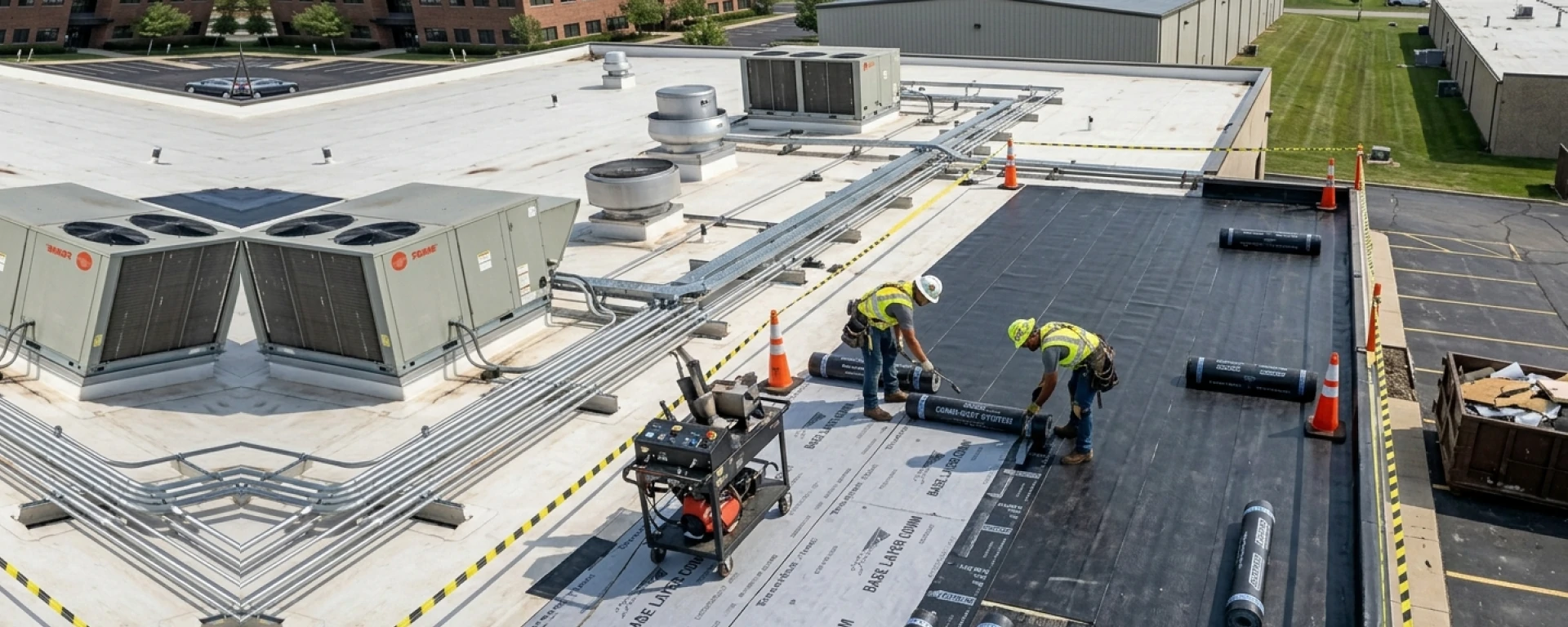
How Long Does Roof Replacement Take in Mason City, IA?
Most roof replacements in Mason City follow a clear path from first call to final cleanup. Here is what to expect:
- Book a free roof replacement check with a licensed Mason City roofer
- Look over the written plan, material choices, and start date
- Pull permits with the City of Mason City building department
- Tear off the old roof and check the deck for damage
- Lay down underlayment, ice and water shield, and the new roof
- Finish flashing, ridge vents, and trim work
- Walk the job, sweep for nails, and clean up the yard
Most home jobs wrap up in one to three days when the weather holds.
What a Full Roof Replacement in Mason City Actually Involves
Commercial roof replacement in Mason City follows a clear process. A qualified Mason City Roofing Contractor will assess your building and recommend the right approach. A partial replacement targets damaged sections when the rest of the roof is sound. A full tear-off strips everything down to the deck and installs a complete new system — the most thorough option that provides the longest service life.
Most commercial buildings benefit from a full tear-off because it reveals hidden deck damage, moisture issues, and insulation problems that patching cannot fix. We inspect the entire roof structure during the first visit and give you a written assessment before you commit to anything.
Clear Signs Your Mason City Commercial Roof Has Reached the End of Its Life
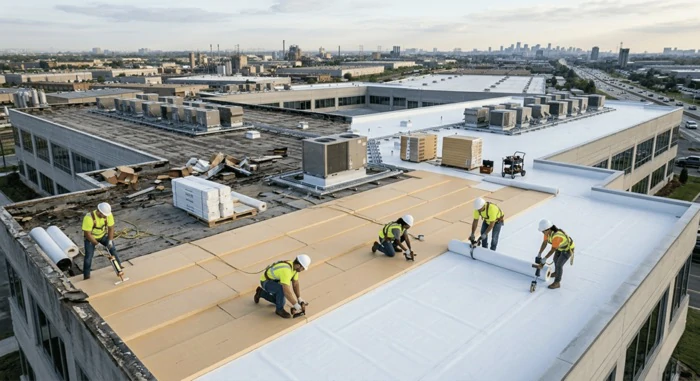
Membrane deterioration is one of the clearest signs a commercial roof is done. Cracks, splits, blistering, or ponding water that stays for more than 48 hours after rain all indicate the roofing system is failing. Visible seam separation on TPO, EPDM, or PVC roofs means the bonds are breaking down.
Interior water stains, recurring leaks after repairs, and visible daylight through the roof deck are stronger signs. A commercial building in Mason City that has weathered 20 years of North Iowa hail storms, freeze-thaw cycles, and heavy snow loads is often past its service life. Commercial roofs wear down faster in harsh climates.
- Membrane cracks, splits, or blistering across the roof surface
- Ponding water that remains for more than 48 hours
- Seam separation on membrane roofs
- Ceiling stains showing up in more than one area
- Leaks that keep coming back after repairs
- Roofing system 20 years old or more
How to Choose the Right Roofing Material for Iowa Commercial Buildings
The right material depends on your building type, budget, and how long you plan to own the property. TPO is the most common choice for commercial buildings in Mason City — strong performance, energy efficiency, and fair cost. PVC costs more upfront but lasts 30 to 50 years and resists chemicals, making it ideal for restaurants and manufacturing facilities.
EPDM rubber roofing is a proven performer in North Iowa. It handles freeze-thaw cycles well and costs less than other membrane systems. Standing seam metal is the premium choice — it lasts 40 to 70 years, sheds snow and ice cleanly, and holds up against hail and high winds better than any membrane system.
- TPO membrane — energy efficient, 20 to 30 year life, fair cost
- PVC membrane — chemical resistant, 30 to 50 year life, best for food service
- EPDM rubber — proven cold-weather performance, lowest upfront cost
- Standing seam metal — longest life, superior hail and wind resistance
What the Roof Replacement Process Looks Like Step by Step
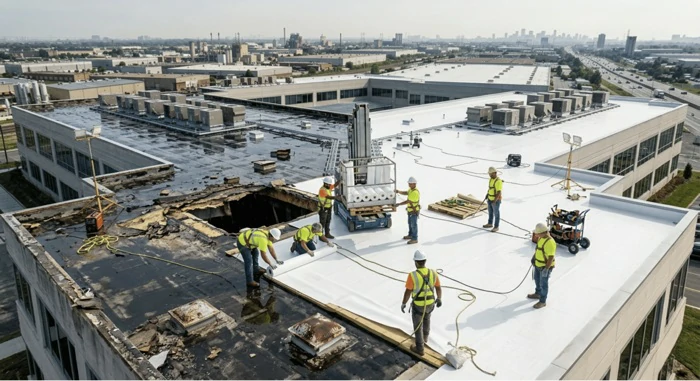
The crew shows up on time and protects your yard before any work starts. Plants, vehicles, and outdoor surfaces get covered. The old roof comes off in sections. As the deck shows, we check it for rot or damage. Any bad decking gets pulled and replaced before the new roof goes on.
Iowa weather is part of every job. Spring and fall need some flex room. Rain or wind can push a job by a day. We give you a real start window upfront and call you the same day if it changes.
- Crew arrives and protects the yard
- Tear off the old roof
- Check and repair the deck
- Install ice and water shield along the eaves and valleys
- Roll out underlayment across the whole roof
- Install new roofing system — membrane, metal panels, or other materials
- Finish flashing, ridge vents, and trim
- Sweep with a magnet for nails and clean the yard
- Walk the job with you before we leave
How to Spot a Trustworthy Roofer Before You Sign a Contract
The check steps matter more than the sales pitch. Ask for the Iowa contractor license number. Iowa requires roofers to show it on their contracts and trucks. Ask for proof of general liability and workers' comp coverage. Ask for three local references in Mason City, Clear Lake, or Cerro Gordo County. Names you can call. Houses you can drive past.
Read the contract close. A real bid lists materials by brand, the start window, payment terms, and warranty details. Storm chasers from out of state often roll in after a hail storm with hard sales tactics — same-day signature demands, big checks upfront, no local references. Those are big red flags in North Iowa.
- Iowa contractor license number on the contract and the truck
- Current certificate of insurance for liability and workers' comp
- Three local references from recent Mason City jobs
- A real local address — not a P.O. box or out-of-state number
- Written scope of work with materials listed by brand
- Manufacturer warranty in writing
How to Make Your New Mason City Commercial Roof Last as Long as Possible
A new commercial roof will last decades when it gets regular maintenance. Two inspections a year is the right pace — one in spring, one in fall. The April inspection is critical in Mason City. Ice dams, heavy snow, and freeze-thaw cycles cause damage that hides for months. The spring inspection catches it early.
Between inspections, a few habits add real years. Keep drains and scuppers clear year-round. Remove debris and ponding water promptly. Check seams and flashing twice a year. Address small issues the same season you spot them — minor repairs prevent major replacements.
- Book inspections in April and October
- Clear gutters and downspouts every spring and fall
- Trim branches back from the roof
- Check attic vents at every inspection
- Fix small flashing or pipe boot issues the same season you spot them
- Save records of every check for your warranty and resale file