
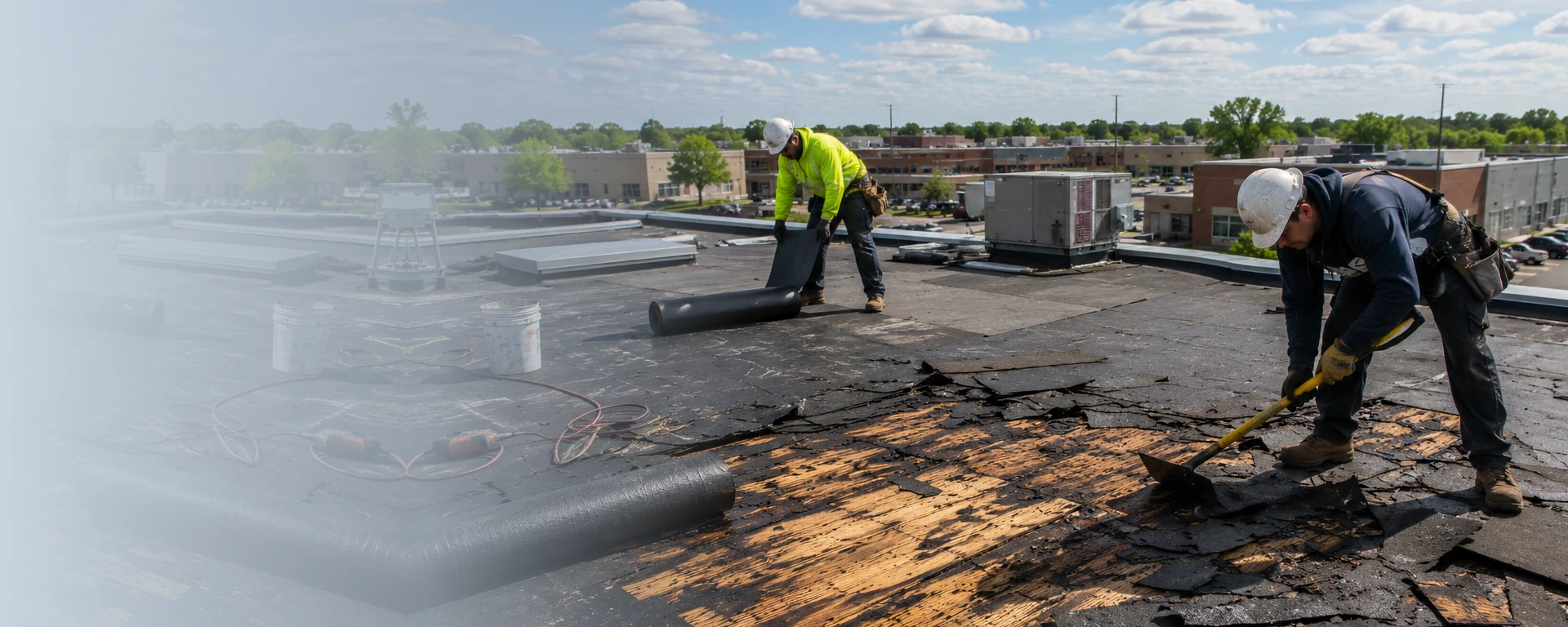
How Do I Prove Wind Damage to My Roof in Mason City, IA?
Proving wind damage comes down to storm data and documentation tied to the right date. Here is what to do:
- Note the exact storm date and pull wind speed data from the National Weather Service for Cerro Gordo County
- Take photos of all visible damage from the ground — membrane billowing, lifted seams, damaged parapet caps, and any debris
- Check soft metals — gutters, vents, and flashing — for bending or displacement from wind
- Book a free wind damage inspection with a licensed Mason City roofer
- Get a written damage report with dated photos tied to the specific storm event
- Call your Iowa homeowners insurance and open a claim with the documentation in hand
- Meet the adjuster on-site with your roofer there to walk through the damage together
The stronger the tie between the storm date and the damage, the better the claim outcome.
What Counts as Wind Damage on a Mason City Roof
Wind damage covers more than just loose membrane sections. Billowing or detached membrane is the most obvious sign, but lifted membrane seams, displaced parapet coping, torn flashing, damaged fascia, and exposed roof decking all count as insurable wind damage when tied to a specific storm event.
Cerro Gordo County sees straight-line wind events and derecho conditions each spring and summer. Iowa insurers recognize damage patterns tied to specific dated wind events. Light wind wear over years is not covered. Documented storm damage from a high-speed event typically is. Damage types that usually qualify as wind-related:
- Detached or billowing membrane sections after a high-wind storm
- Lifted or separated membrane seams that are no longer sealed
- Displaced or torn parapet coping
- Flashing lifted or pulled away from chimneys or walls
- Damaged soffit, fascia, or gutter sections from wind debris
- Exposed roof decking where membrane was stripped
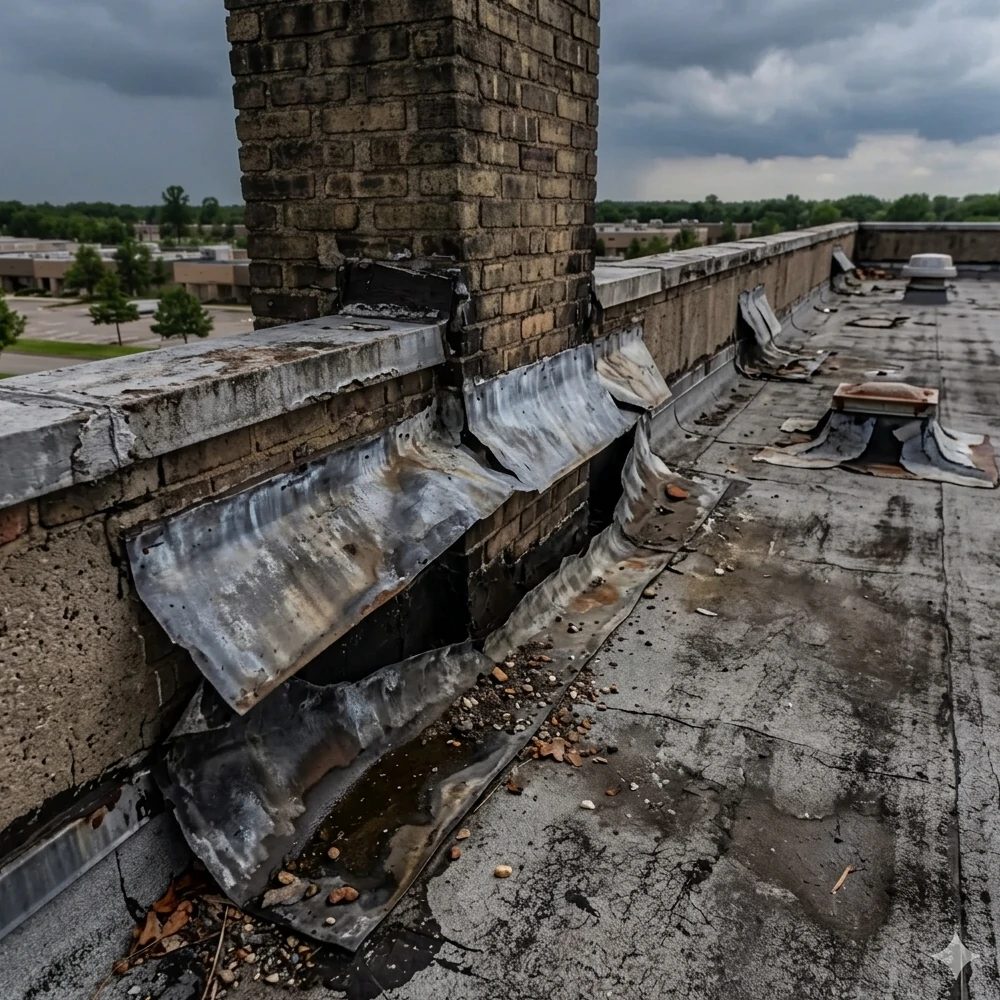
How to Tell If Your Roof Has Wind Damage Worth Repairing or Filing
The most obvious signs show up on the ground — membrane pieces in the yard, sections of parapet coping near the foundation, and pieces of fascia or gutter pulled loose. Those are clear calls for a repair and a claim check. The harder signs to spot are partially lifted membrane seams that look mostly intact from the street but have broken their bond with the underlying substrate — which is why a Top-Rated Roofing Contractor Mason City Iowa commercial property owners trust gets up on the roof to verify before any storm damage claim is filed.
Iowa wind damage often creates partial seam separation that is invisible from the ground but lets water in during the next rain. Any Mason City commercial property that took sustained winds above 50 mph should book a free inspection within two weeks. Ground-level signs worth a professional check:
- Membrane sections, parapet coping, or fascia pieces on the ground
- Billowing or lifted membrane edges visible from the ground
- Exposed nail heads or tar strips showing on the roof surface
- Bent or displaced gutters, downspouts, or vent caps
- Displaced flashing around chimneys or skylights
- Daylight visible through soffits or fascia after the storm
What Wind Damage Does to Different Roofing Systems
Wind damages different roof systems in different ways. On single-ply membrane roofs, the first failure point is almost always the seam bond. Membrane sections are bonded to each other with heat-welded or adhesive seams. High wind breaks that bond, lifts the membrane, and stresses the attachment points. Once the seam is compromised, the membrane never reseals properly and water gets in at the next rain. Detached membrane sections come next — lifted seams eventually tear completely in the next gust.
Older Mason City commercial buildings with aging membrane systems are especially at risk above 50 mph. Mechanically-attached membranes are more vulnerable than fully-adhered systems. Even newer TPO and PVC roofs can experience seam failure and edge lifting during a severe North Iowa derecho above 80 mph. Different commercial roof systems fail differently:
- TPO membranes — seam separation and fastener pull-through at lower wind speeds; full membrane detachment at higher gusts
- EPDM membranes — most vulnerable when mechanically-attached; adhesive failure common in older systems
- PVC membranes — stronger heat-welded seams, but edge and penetration failure still happens in derecho conditions
- Standing seam metal — panel seam stress and fastener pull at extreme wind speeds
- Flat commercial membranes — edge displacement and membrane billowing on low-slope roofs during sustained high winds
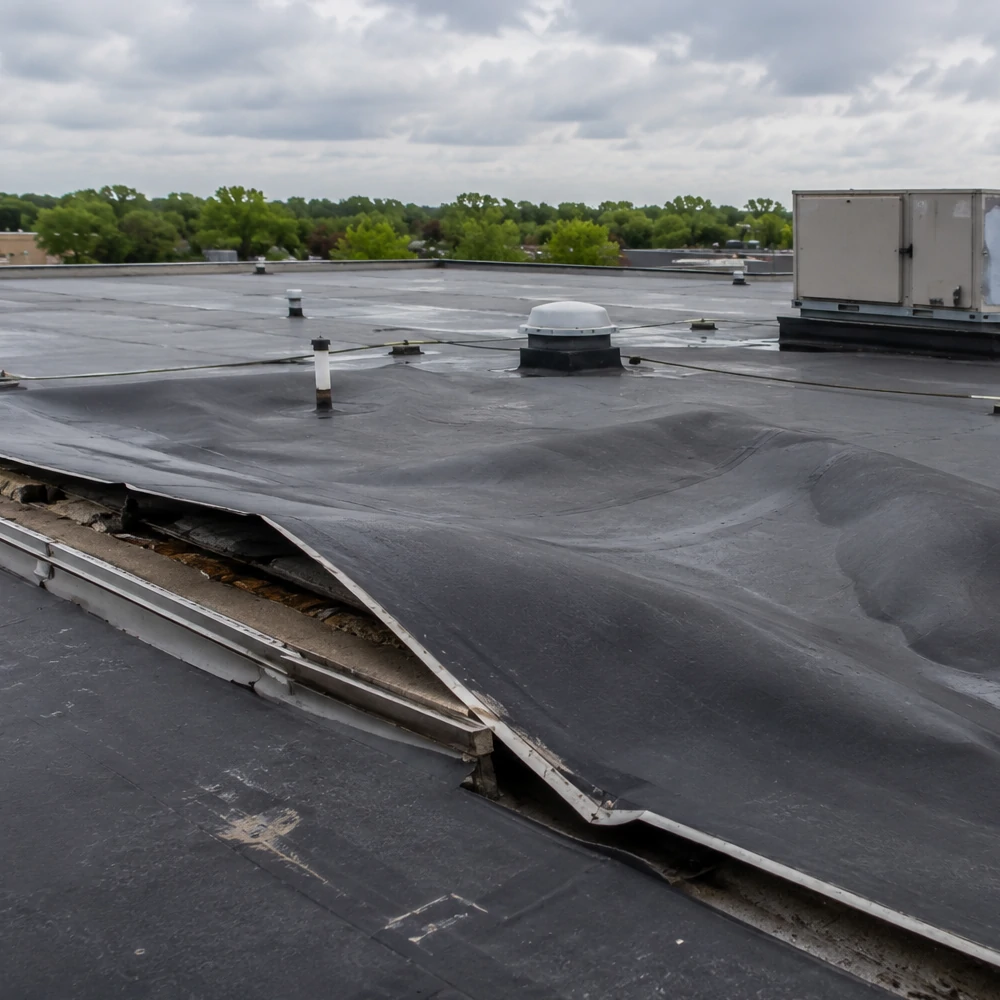
What to Expect During a Wind Damage Roof Inspection
A real wind damage check starts on the ground, not on the roof. We walk the full perimeter and check soft metals — gutters, downspouts, vent caps, and flashing. Bent or displaced soft metals confirm wind speed and direction before we ever get on the roof. Then we check the full roof surface for lifted seams, detached membrane sections, displaced parapet coping, and any exposed decking.
A thorough Mason City wind damage inspection also pulls National Weather Service wind speed data for Cerro Gordo County tied to the storm date. Without that connection, Iowa insurers can deny otherwise solid wind damage claims. We include that data in the written report. What an inspection visit covers:
- Ground-level walk — soft metals, gutters, and yard debris assessment
- Full roof walk with photos of all lifted, detached, or damaged membrane sections
- Parapet coping and flashing check at all penetrations and transitions
- Decking check for any exposed or damaged sections
- National Weather Service wind data pull for the storm date
- Written damage report with dated photos and storm tie-in
- Repair or replacement scope recommendation
How to File a Successful Wind Damage Insurance Claim in Iowa
Document the damage before you make any calls. Photos from the ground, photos of any membrane sections or parapet coping pieces on the property, and the storm date noted clearly. Then call a licensed Iowa roofer for a free inspection and written report before you contact your carrier. Adjusters rely on contractor documentation — not homeowner descriptions — to set the claim scope.
Iowa homeowners insurance policies typically cover wind damage above a certain speed threshold. National Weather Service wind records for Mason City and Cerro Gordo County confirm whether a specific event qualifies. Your roofer pulls that data as part of the inspection. Steps that drive a strong Iowa wind claim:
- Take photos of all visible damage before anything is cleaned up
- Note the storm date and save any local news coverage of the event
- Call a licensed Mason City roofer for a free inspection and written report
- Get storm wind data from the National Weather Service included in the report
- Call your Iowa carrier and open the claim within the policy window
- Meet the adjuster on-site with your roofer present when possible
- Review the approved scope before signing any repair contract
Never accept the first scope without review. If the adjuster misses damage your commercial roofer documented, your roofer can request a re-inspection. That is a normal part of the process in Iowa.
How to Reduce Wind Damage Risk Before the Next Iowa Storm
Spring is the highest-risk wind season in North Iowa. The best time to find loose membrane sections, failed flashing, and vulnerable parapet coping is in April — before the first big storm of the season, not after. A free inspection every spring puts a licensed roofer on your roof while there is still time to fix what is weak.
Beyond inspections, a few targeted steps reduce wind damage risk across the board. Fully-adhered membrane systems are rated for higher wind speeds and resist seam separation better in gusts. Trimming branches that overhang the roof removes one of the most common debris sources in a Mason City wind event. Steps that reduce risk before the next storm:
- Schedule a free inspection every April before severe storm season
- Trim branches that hang over or touch the roof surface
- Consider fully-adhered membrane systems at your next replacement for better wind resistance
- Check and reseal any lifted flashing before storm season opens
- Clear gutters and drains so wind-driven water drains fast
- Confirm parapet coping is fully secured after each winter
- Upgrade mechanically-attached systems to fully-adhered at the next major repair