
Mason City, IA & North Iowa
Roof Leaking in Mason City: Roofer or Insurance First?
Call a Roofer First, Here Is Why the Order Matters
Most folks grab their phone. They dial their insurance agent the second water starts dripping from the ceiling. It feels like the right thing to do. But here's what 25 years on commercial roofs has taught us: that call can often slow everything way down, it just makes things harder on you.
You should call a roofer first.
The order really matters. Your insurance company will hit you with questions you can't answer. How big is the spot? What even caused this mess? Is it storm damage, or just old age? Without a true roof leak detection, you're just guessing. Guesses don't help your claim at all.
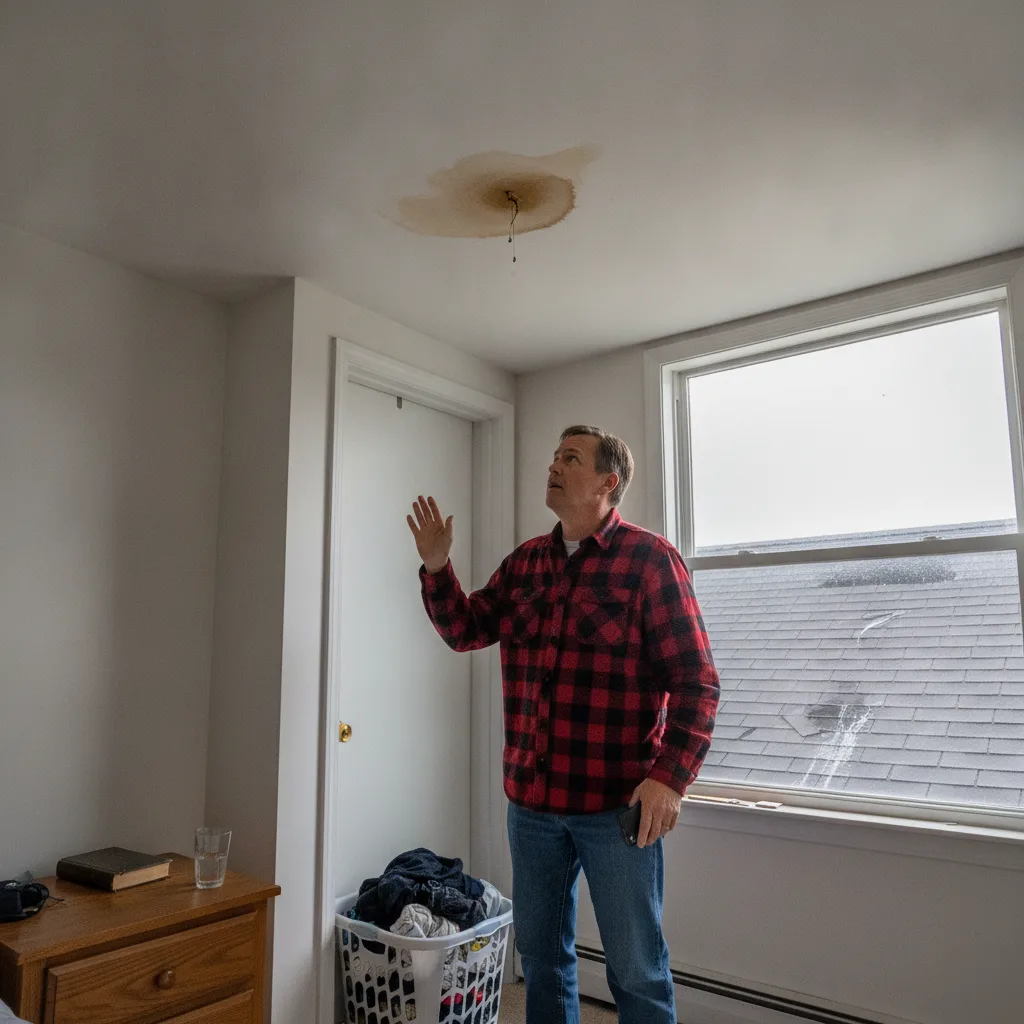
What a Roofer Does Before Insurance Gets Involved
A good roofer shows up. We do three key things right away.
- We stop the active leak. Emergency roof repair keeps water from wrecking your building's inside space, your inventory, all your equipment.
- We document everything. Photos of the damage, measurements of the soaked areas, notes on the cause. This becomes your hard evidence.
- We give you a plain damage report. This report tells your insurance adjuster exactly what happened and what fixing it will take.
That documentation is real gold. We've seen claims right here in Mason City get denied. Why? Because the property owner filed the claim before anyone actually got up on the roof. An adjuster showed up, saw a quickly patched spot, and said the damage was already there. No pictures to say otherwise. Claim denied. End of story.
You don't want that to happen to you.
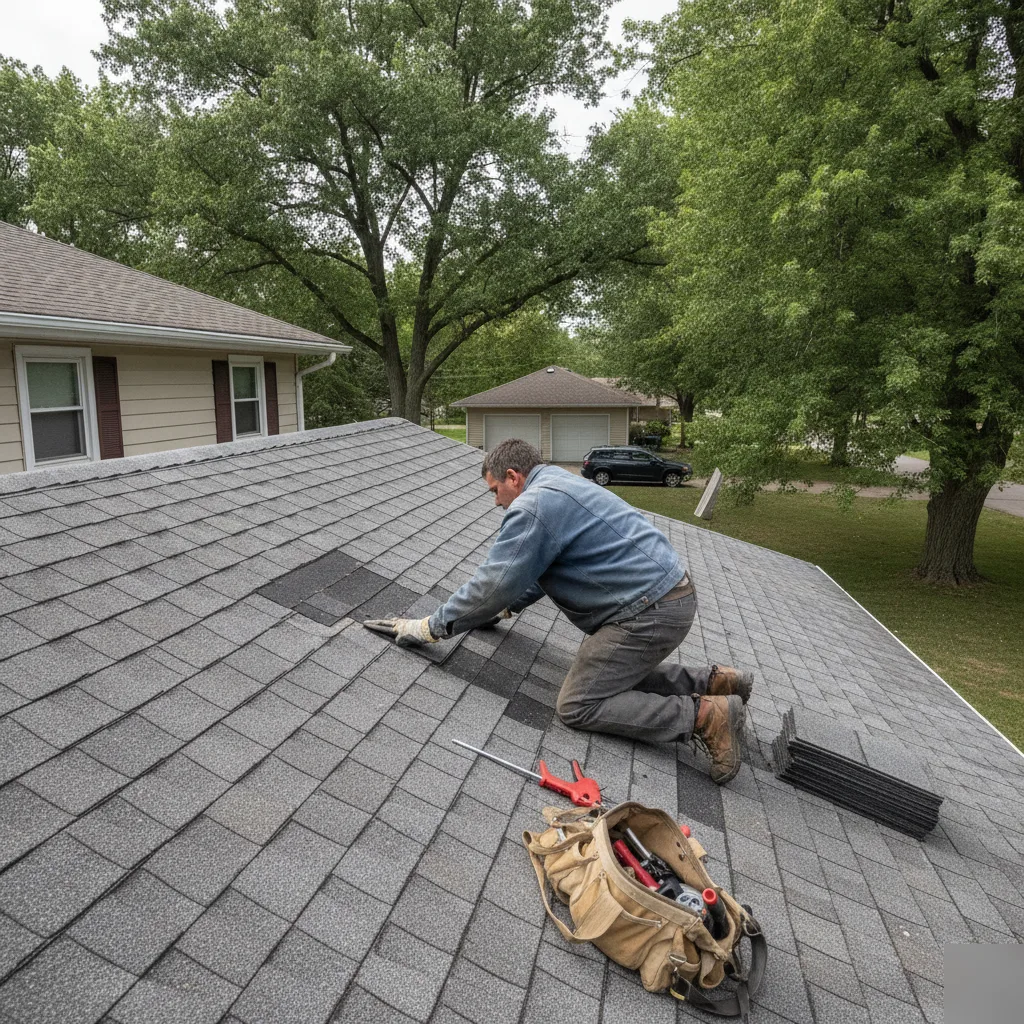
The Insurance Company Isn't on Your Side
A lot of property owners don't realize this going in. Your insurance adjuster's main job is to cut down the payout. That's not a jab at them, it's just how the whole system works. They are always looking for ways to shrink what they cover.
When you have a roofer's detailed inspection report, you go into that chat with facts. You know the cause. You know how bad it is. You have photos with dates proving what that last storm did to your flat roof or metal roof.
That really shifts the whole talk. It changes everything.
We handle roof insurance claim assistance for commercial properties all over Mason City. David has been in adjuster meetings where the building owner had nothing. Those meetings rarely go well. Contrast that with a meeting where we've already done a full storm damage inspection, handing over a complete report. It's night and day.
Timing Matters More Than You Think
Here in Mason City, we get hit with hail and wind. It can rip up a flat roof in minutes. The longer you wait for a roofer, the worse the extra damage gets. Water finds every gap, every loose seam, every low spot. A small roof leak quickly becomes soaked insulation, ruined decking, sometimes even mold. You just don't want that.
Your insurance likely says you have to limit further damage. That means you need to take steps to stop things from getting worse. If you skip the emergency roof repair and just wait for an adjuster to come out two weeks later, you could be stuck paying for all that extra damage yourself. That's a real hit to the wallet.
The smart move is clear. Get a roofer on your roof fast. Let them stop the leak and write down the damage. Then call your insurance company. You'll have a professional report ready to go.
We've seen what happens when this gets ignored, it costs building owners thousands more than it ever should have.
What a Roof Damage Assessment Actually Covers
Most people think a roof damage assessment means someone just glancing up. They say "yep, it leaks." That's not how it works at all. It's not even close.
A real assessment is a careful process. We've done thousands of them. Across Mason City, every single one follows our steps. Here's what happens when David and the crew show up to look at storm damage or a leak.
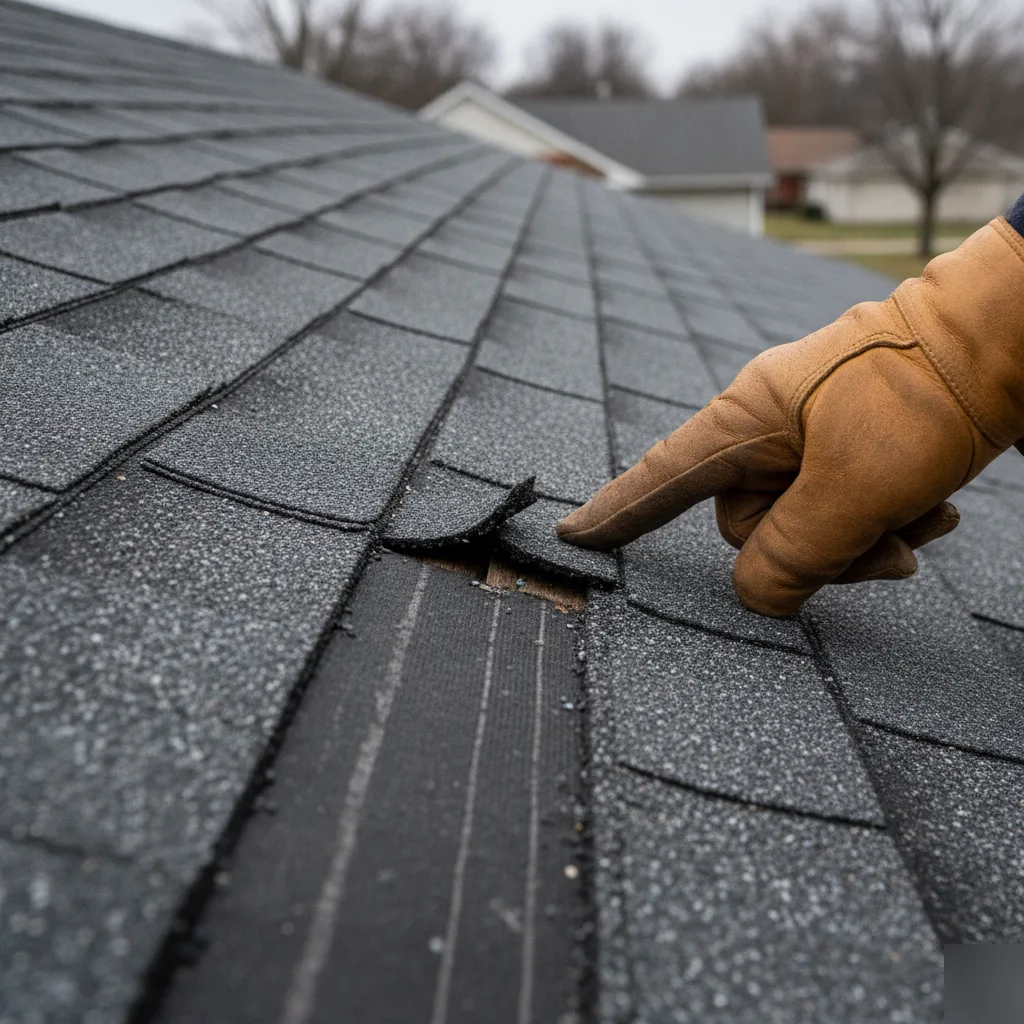
The Exterior Inspection
This is where we begin. The roofer gets up top. We look at everything. On a flat roof or metal roof, we're checking for specific problems.
- Punctures, cracks, or splits in the membrane or panels.
- Pooling water or clogged drainage paths. (Mason City's flat roofs always seem to have ponding issues after a heavy spring rain, even well-maintained ones.)
- Lifted seams, loose fasteners, or broken flashing.
- Hail impact marks on metal surfaces or roofing membranes.
- Wear around roof vents and HVAC units.
Every single one of those items gets written down. Pictures, measurements, notes. David is picky about this, because insurance adjusters demand solid proof, not just opinions. If your records are thin, your claim will be thin too.
The Interior Check
You can't skip this step. Water doesn't always drip straight down. It travels along beams. It runs across decking. It pools in spots you'd never expect. We've seen leaks pop up 15 feet from where they started in commercial buildings right near East State Street.
Inside, the roofer looks for stains on ceiling tiles. We check for soft spots in the decking. Mold gets noted right away. If mold is already present, the EPA's guidance on mold cleanup after water damage is a helpful resource for understanding what steps building owners should take. We also check for any insulation that has gotten wet, because soggy insulation loses almost all its R-value, something the Department of Energy points out quite often.
The inside look often tells us more about the roof than the outside does. That often surprises property owners the first time they see it.
The Written Report
Here's how a good roofer stands out from the rest.
A real roof damage assessment ends with a written report. It has photos of every problem. It maps the damage location on the roof. It explains what caused the issue and what should happen next. This report becomes the absolute backbone of your insurance claim.
Without it, you're guessing. Your adjuster is guessing. And guessing always costs you money.
We put these reports together. We do this before you ever call your insurance company. That way, when the adjuster shows up, you've got everything lined up. You're not trying to recall where the water came in or how bad it looked three days ago.
What Gets Missed Without a Professional Assessment
Here's a situation we see often in Mason City. A building owner spots a drip after a spring storm. They grab a bucket. They wait for the rain to stop. Then they forget all about it. Six months later, the decking is rotted. What was a small roof leak repair now means a full flat roof replacement.
That happens because no one did a real assessment. The leak seemed tiny. But under the membrane, water had been sitting for months.
A roof damage assessment finds the things you can't see from the ground. It finds the problems you wouldn't think to look for. It gives you a clear picture of what's going on. This happens before you spend a dime or even file a claim.
If you've got a leak, or if you've been through a recent storm, getting a professional assessment first is the smartest move. It keeps your building safe and it protects your wallet. If you want to understand your choices for roof leak repair or storm damage roof repair, that's where you need to begin.
Ice Dams, Hail, and Wind, The Most Common Roof Leak Causes in Mason City
Most people think a roof leak always starts with a big, obvious hole. That's not true at all. In Mason City, the three biggest reasons for roof leaks are ice dams, hail damage, and wind. Each one acts differently, and each leaves behind its own set of clues.
Let's start with ice dams. They're a real headache here. Mason City winters often dip below zero. That constant freezing and thawing is just brutal on flat roofs and metal roofs alike. Snow melts on the warmer parts of your roof. It runs down. Then it freezes solid at the edge. This ice buildup traps water underneath. Water pools. It finds seams. Then it gets inside your building. We've peeled back membrane on commercial roofs near East Park. We found water damage that had been getting worse for two whole winters before anyone inside saw a single drip.
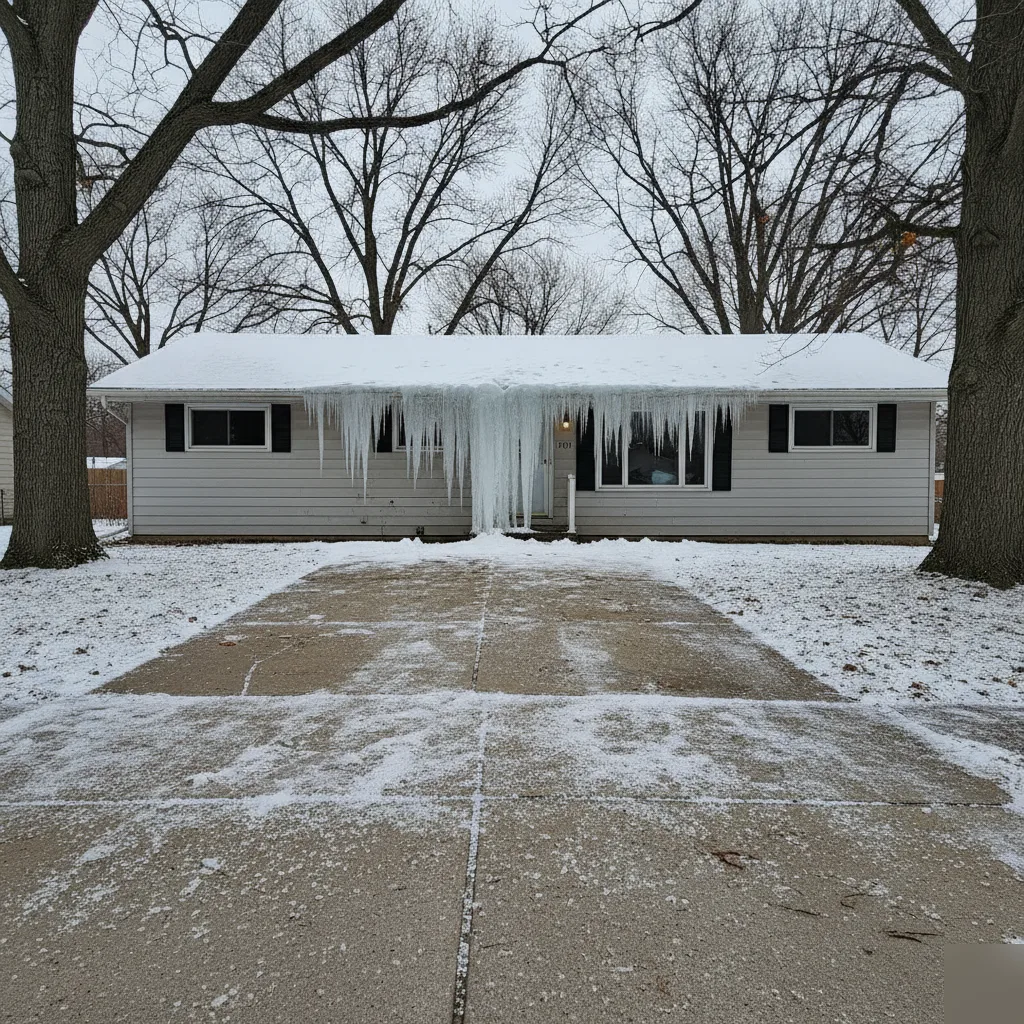
Here's why ice dams are tricky on flat roofs especially.
- Water can't run off fast, so ponding forms quickly.
- Membrane seams can split under that repeated freeze-thaw stress.
- Inside leaks often show up far from the actual break.
- Insulation gets wet and quietly stops working.
By the time you see a stain on the ceiling from an ice dam, the damage hidden underneath is typically weeks old. That's why ice dam leaks often cost more to fix than they first appear.
Hail is the second major one. North Iowa gets hammered. The National Weather Service reports Iowa sees about 30 to 45 hail storms each year across the state. Mason City sits right in that path. Hail doesn't always punch a huge hole in your roof. On TPO or EPDM membranes, it can make tiny cracks you can't spot from the ground. On metal roofing, it leaves dents. This hurts the protective coatings. Either way, those weak spots turn into leaks after the next heavy rain.
And then there's wind.
Wind damage is sly. A strong gust can lift a section of membrane. It can loosen metal panel fasteners. From the parking lot, everything might look fine. But the seal is broken. Water gets in during the next storm. We've seen commercial buildings along Highway 65 where wind just peeled back the flashing at the parapet wall. The building owner had no clue. Not until water started dripping onto their inventory.
Why the Cause Matters for Your Insurance Claim
Here's the thing. Your insurance company really cares about what caused the leak. Storm damage from hail or wind usually gets covered by most policies. But damage from ice dams can be a gray area. Some insurers call it a "maintenance issue." They might deny the claim. That's exactly why having a roofer inspect your roof before you call insurance is so important. A good storm damage inspection documents what happened and why. It gives your adjuster clear evidence to use.
If you've been through a rough storm season here in Mason City, don't wait for a drip to appear inside. By then, the damage has had time to spread. A roof leak detection inspection finds these problems early. It does this before they become truly expensive surprises. We've seen what happens when this gets ignored. It's never good, and it's always more costly than catching it early.