
Mason City, IA & North Iowa
Best Commercial Roof Types for Mason City IA | A1 Roofing
Mason City's Climate Makes Roofing System Selection Critical
If you're asking what types of commercial roofs work in Mason City IA, start with the weather. That's where every good roofing decision begins. Not with a product brochure. Not with what's trending. With what your building actually has to survive.
Mason City sits in USDA Plant Hardiness Zone 4b. Winter temperatures regularly drop below minus 20 degrees. Then summer pushes past 90 with humidity that makes everything feel ten degrees hotter. That swing puts real stress on any commercial roof.
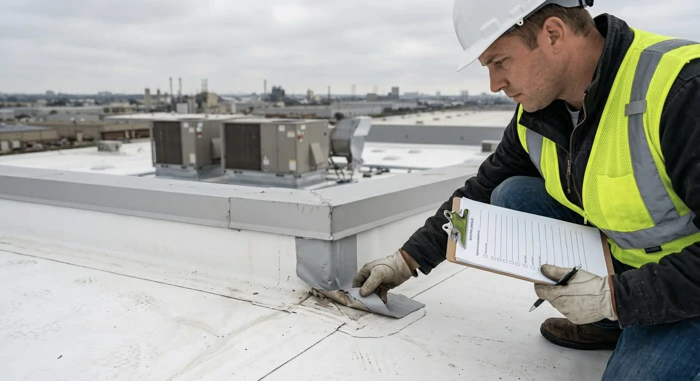
We've pulled back membrane on buildings near East Park and found ice damage the owner never knew existed. Freeze-thaw cycles are the silent killer here. Water gets into a tiny crack, freezes overnight, expands, and tears that crack wider. By spring you've got a leak path that didn't exist in October.
What Mason City Weather Does to Commercial Roofs
Most people think about snow load. That matters, sure. But the real damage comes from the cycle, not any single storm. Here's what we see over and over on commercial buildings around town:
- Ice dams forming along parapet walls and drains, forcing water under membrane seams
- Thermal shock cracking on single-ply roofs that weren't installed with proper expansion allowances
- Hail impacts weakening roof coatings, then UV exposure finishing the job all summer
- Standing water from heavy spring rains pooling on flat roofs with poor drainage
Every one of those problems gets worse if the wrong roofing system was installed in the first place. A roof that works fine in Des Moines might fail early up here. Our winters are colder. Our wind exposure along the I-35 corridor is real, and most contractors from out of the area don't account for it.
Why the Temperature Swing Matters Most
Mason City's average annual temperature range spans over 100 degrees from winter lows to summer highs. That's not a small number. Every roofing material expands when it's hot and contracts when it's cold. Do that thousands of times and materials crack.
TPO roofing installation and EPDM roofing installation are popular here for good reason. Both handle thermal movement well. But they handle it differently, and they perform differently in our specific conditions. A flat roof on a warehouse along Highway 65 South faces different wind exposure than a building downtown near the Music Man Square area. That's not a minor detail.
David has been on roofs in Mason City through some nasty winters. One thing becomes obvious fast. The buildings that hold up aren't always the ones with the most expensive roofs. They're the ones where somebody actually thought about what this climate demands before picking a system.
Standing seam metal roofing handles heavy snow shedding better than almost anything else. PVC roofing installation gives you chemical resistance plus cold-weather flexibility. EPDM stays pliable in extreme cold when other materials get brittle and split.
So which one's right for your building? That depends on your roof slope, your building use, your drainage situation, and how long you plan to own the property. But there is a wrong answer. And it's picking a roofing system without thinking about what minus 25 and 95-degree summers will do to it year after year.
If you want to understand how each system stacks up for your specific building, our commercial roofing services in Mason City breaks down the options we install and maintain here in North Iowa. Or just call and ask for a free inspection. We'd rather show you what your building needs than guess from a distance.
Single-Ply Membranes Dominate Flat and Low-Slope Commercial Buildings
Walk down Federal Avenue or South Monroe. Look at the rooftops. Most commercial buildings in Mason City have flat or low-slope roofs. That's just how they're built. And the protection for those roofs? Single-ply membranes.
We install three main types of single-ply commercial roofing in this area: TPO, EPDM, and PVC. Each one handles Iowa weather differently, each one fits different buildings. But all three share something important. They're lightweight, they go down fast, and they hold up for decades when installed right.
TPO Roofing Installation
TPO is the most popular choice we see on commercial buildings right now. It reflects sunlight, which keeps cooling costs down during those humid Mason City summers. The seams are heat-welded together, creating a bond stronger than the membrane itself. A properly welded TPO seam almost never fails. The membrane around it will wear out first.
TPO works well on retail spaces, office buildings, and warehouses. If your building has a flat roof and you want something proven, TPO roofing installation is where David usually starts the conversation.
EPDM Roofing Installation
EPDM is synthetic rubber. It's been around for over 50 years, and there's a reason it hasn't gone away. This membrane handles temperature swings better than almost anything else on the market. That matters here. Mason City can swing from negative teens in January to the 90s in July.
According to the National Roofing Contractors Association, EPDM remains one of the most widely used low-slope commercial roofing systems in North America. EPDM roofing installation is straightforward. The sheets are large, so there are fewer seams to worry about. Fewer seams means fewer potential leak points. We've seen EPDM roofs on older downtown buildings still performing after 25 years with basic maintenance. And we've seen what happens when that maintenance gets ignored.
PVC Roofing Installation
PVC is the go-to for buildings that deal with grease or chemical exposure. Restaurants, food processing facilities, any building with kitchen exhaust on the roof. PVC handles that without breaking down. It's also heat-welded like TPO, so you get those same strong seams.
What most people don't realize: PVC stays flexible in cold weather better than some alternatives. That's a real advantage when we're dealing with freeze-thaw cycles from November through March.
So how do you pick between these three? Here's the quick framework we use:
- Start with your building's purpose. Kitchens or chemical exposure point toward PVC.
- Look at your roof's sun exposure. Heavy direct sun favors TPO's reflective surface.
- Consider the age of your deck. Older structures sometimes pair better with EPDM's flexibility.
- Factor in your maintenance plan. All three need inspections, but each has different upkeep needs.
- Get a free roof inspection so someone can actually see what's up there before recommending anything.
We've seen what happens when the wrong membrane goes on the wrong building. A restaurant near the Music Man Square had TPO installed years ago by another crew. Grease from the exhaust vents ate into the membrane within five years. That roof needed a full commercial roof replacement. PVC would've handled it without a problem.
All three single-ply systems work well in Mason City's climate. The difference comes down to matching the right membrane to your specific building. That's where experience matters more than a spec sheet.
If you're trying to figure out what your commercial building actually needs, check out our commercial roofing services in Mason City for a closer look at how we approach each project.
Metal Roofing Is a Strong Option for Certain Commercial Building Types
Not every commercial roof is flat. Some buildings in Mason City have pitched roofs or steep slopes. Think of churches along Federal Avenue, older retail buildings near the downtown square, or agricultural structures on the edges of town. For those buildings, metal roofing installation is often the smartest move you can make.
We install standing seam metal roofing on commercial properties where the roof pitch calls for it. It's one of the most durable systems you can put on a building. Here's why metal works so well for certain commercial buildings in this part of Iowa.
The freeze-thaw cycle here is brutal. Snow sits on a roof, melts a little during the day, then refreezes at night. That cycle destroys materials that can't handle expansion and contraction. Metal panels handle it without breaking down. They shed snow and ice faster than most other roof types.
Where Metal Roofing Makes the Most Sense
Metal isn't the right call for every commercial building. But for certain types, it's hard to beat. Here are the situations where we recommend it most often:
- Pitched-roof commercial buildings like churches, lodges, and some retail spaces
- Agricultural buildings and storage facilities that need long service life with low upkeep
- Mixed-use buildings where the owner wants a roof that handles hail and high winds without constant repairs
- Properties where the owner plans to hold the building long-term and wants fewer roof replacements over their lifetime
Worth knowing before you shop around: metal roofing is a poor fit for large flat commercial roofs. A TPO or EPDM membrane system does that job better. Metal earns its keep on slopes. That's where it belongs.
Standing Seam vs. Exposed Fastener Panels
There's a big difference between standing seam metal roofing and cheaper exposed fastener systems. Standing seam panels lock together with concealed clips. No screws punching through the surface. No leak points where fasteners loosen over time. Cleaner look, longer life.
Exposed fastener panels are fine for pole barns. For a commercial building you care about, standing seam is the way to go. David has pulled off exposed fastener roofs that were only eight years old and already failing at every screw point. We've seen it more than once. The owners thought they were saving money upfront — they weren't.
Standing seam metal roofing also handles Mason City's wind loads better. The National Roofing Contractors Association notes that standing seam systems resist uplift forces more effectively than through-fastened panels. That matters here. We get straight-line winds off the prairie that'll test any roof system, and there's nothing between us and the Dakotas to slow them down.
Hail Performance
Metal roofs dent. Let's be straight about that. But denting and failing are two different things. A hail-dented metal roof still keeps water out. A hail-damaged membrane roof might not. We've done storm damage roof repair on buildings where the metal roof took cosmetic hits but never leaked a drop. The flat-roofed building next door needed emergency work.
If you're considering a commercial roof for a pitched building in Mason City, metal roofing installation deserves a serious look. It handles our winters, our storms, and our wind. And when it's installed right with standing seam panels, you're looking at decades before you think about that roof again.
For buildings where modified bitumen systems are being considered alongside metal, the modified bitumen commercial roofing guide from Roofer's Coffee Shop is a solid resource for understanding how that system compares in cold-climate applications.