
Mason City, IA & North Iowa
What Is the Most Expensive Part of a Commercial Roof Replacement?
Labor Costs Drive More of the Total Price Than Most Building Owners Expect
Let's be straight. Most commercial building owners around Mason City figure the roofing materials cost the most. They're usually mistaken. Labor? That's almost always the biggest single expense on any full replacement.
It surprises people every time.
The National Roofing Contractors Association says labor often makes up 40% to 60% of a commercial roof job. That's a big chunk. For a big flat roof, labor can even cost more than all the materials put together. You'd be surprised how few contractors will even show you that breakdown unless you ask.
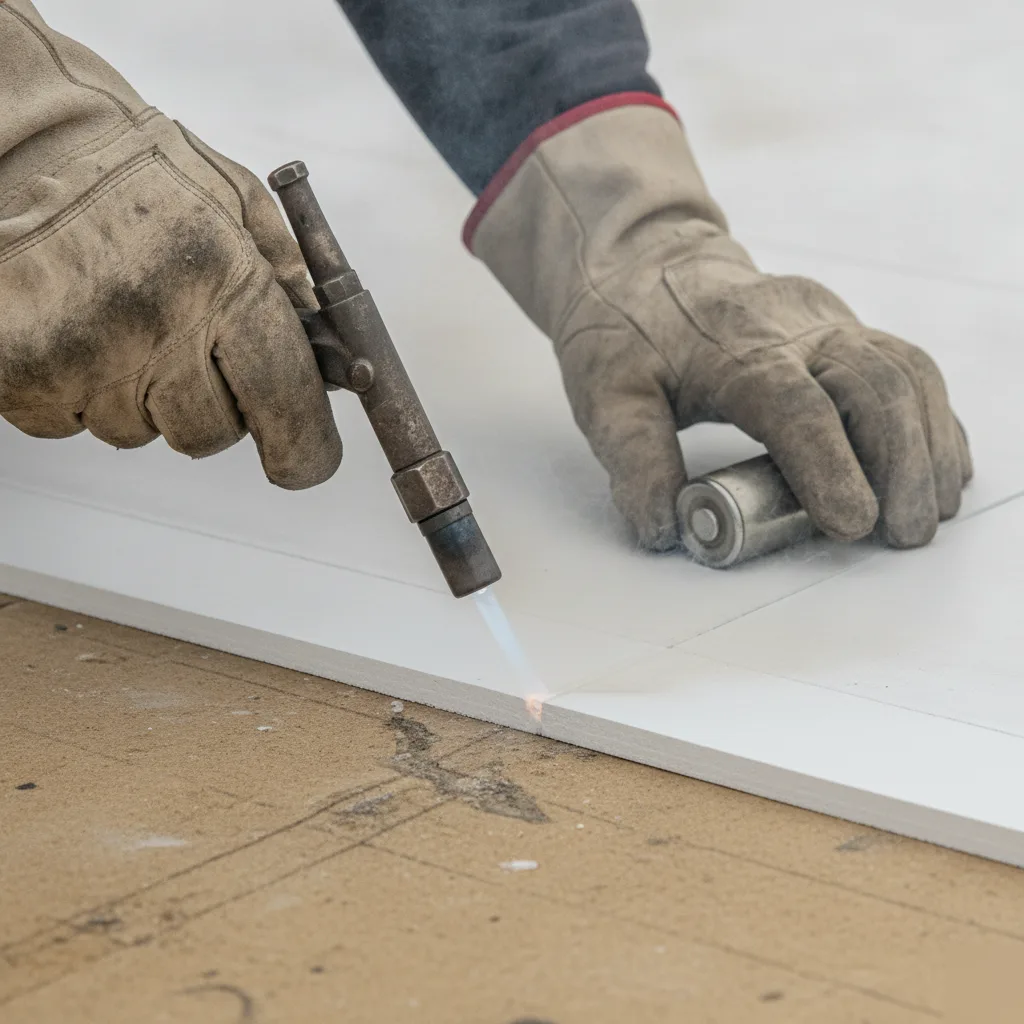
So, why the big labor bill? A few things add up.
- Skilled people are hard to come by. Our commercial roofing crews? They need real training in TPO, EPDM, PVC, and metal roofing. These aren't weekend projects.
- Safety takes time. OSHA rules mean harnesses, guardrails, fall protection, everything. Getting all that set up takes hours before anyone can even start working up there.
- Tear-off is tough work. Yanking off old roofing by hand is slow. It's hard on the body. And we have to get it right. If not, your new system won't last.
- Weather delays hit hard. Our North Iowa winters and spring storms constantly mess with schedules. We still pay our crew even when they're just waiting for a clear day to get up there.
Consider a 15,000-square-foot place, maybe one of the businesses off North Federal Avenue. That roof could easily need six to eight people working solid for two weeks. Every day of labor piles up. Overtime? That piles up even faster.
But here's what really bumps up the cost. It's not just the crew on the roof. You're also paying for project managing, running equipment, and getting materials where they need to go, safely. Renting a crane, even for just a day, can chew up your budget. And those big dumpsters for tear-off debris? They're not free.
We've had owners come to us after getting a quote, wondering why the price was so high when the materials looked fine. The answer is almost always labor. David personally sits down with them, going through the estimate line by line. It shows them exactly where the hours go. Then it just makes sense.
Here's what people often miss until it's a problem: skimping on labor means skimping on the work itself. A less experienced crew might work quicker, they might also mess up flashing around vents or weld TPO seams wrong. We constantly repair roofs in Mason City where the first crew clearly rushed the job. Those fixes wouldn't have been needed if the initial installation was done with proper care.
The labor pool around Mason City has shrunk over the last few years. Not many young people are getting into roofing. So, our experienced commercial crews charge more. They earn it. This work is tough, dangerous even.
Planning a new commercial roof? Ask your contractor for a separate breakdown of labor costs. Any good contractor will share that openly. If they hide it, consider that a real warning sign.
Roofing Materials Vary Widely in Cost, and Not All Systems Are Equal
Most contractors won't bring this up. The material you pick for your commercial roof replacement? It shapes the whole budget. It's not just about the membrane or panels. It impacts the labor, the fasteners, the insulation, everything below it.
We often see building owners in Mason City think all flat roof systems cost the same. They just don't.
The difference between the and most expensive options can be enormous. This gap grows wider on bigger roofs. A 20,000-square-foot building shows every per-square-foot cost difference. So, choosing the right system is a big deal.
Common Commercial Roofing Systems
Most commercial buildings here in North Iowa use one of these setups:
- TPO roofing. It's a single-ply membrane. We use it a lot because it bounces off heat. And it lasts well in our shifting Iowa weather.
- EPDM roofing. This rubber membrane has been around for years. People know it lasts in cold weather.
- PVC roofing. It's like TPO but fights chemicals better. We often put this on buildings with kitchen exhaust or manufacturing fumes.
- Standing seam metal roofing. This is a tough panel system. It costs more upfront, but it outlasts most other options.
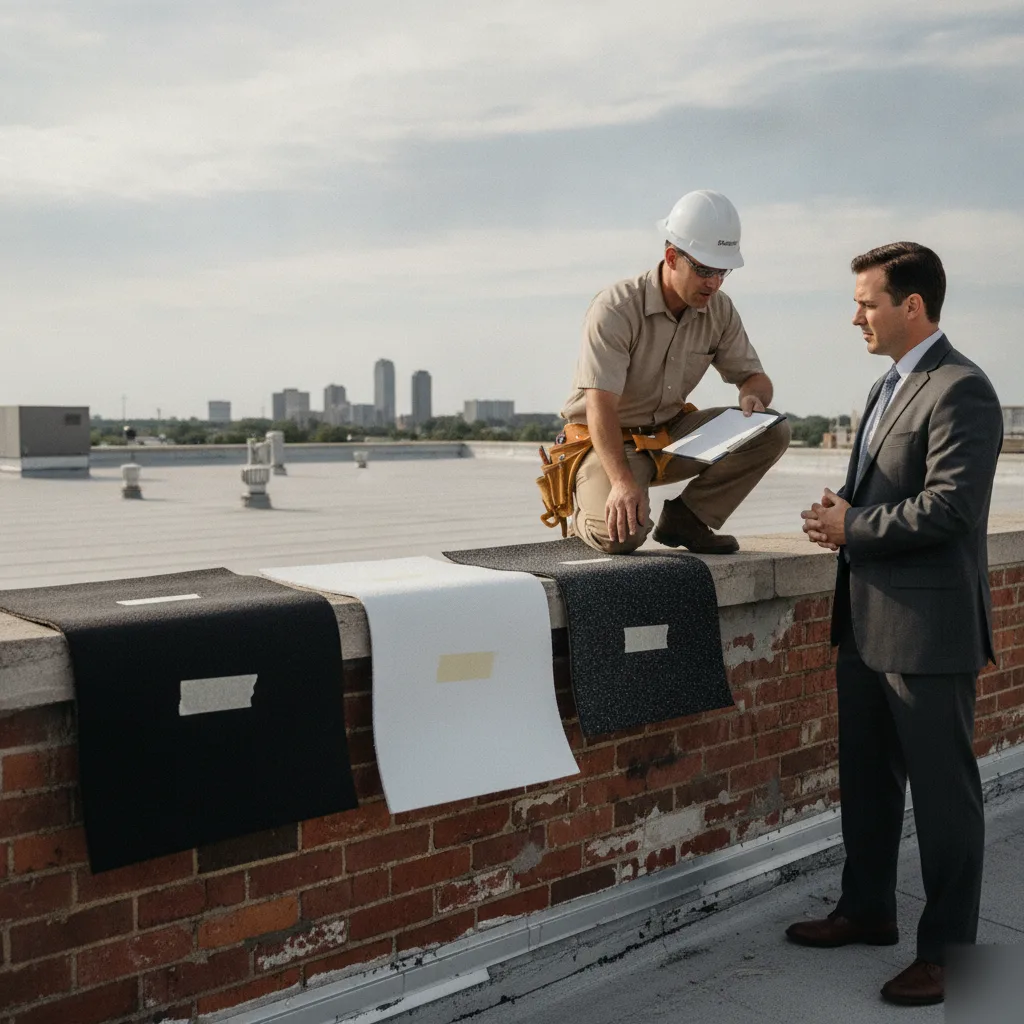
Every single one performs differently. Each one has a different cost. And each one needs different skills to get installed correctly.
Why Metal Costs More Than Membrane
Standing seam metal roofing? That's usually the most expensive material option for a commercial roof job. The panels cost more than membrane rolls. But that's not the only reason.
Metal needs exact fabrication. Every panel is custom-cut. Details around HVAC units and vents, the flashing? That takes more time. The way it fastens down is complex. All of that adds hours of labor. (We went over labor costs earlier, remember?)
But metal lasts a lot longer than single-ply systems. The National Roofing Contractors Association says metal roofs can hold up for 40 years or more, with good upkeep. So, yes, the upfront price is higher. But the cost per year, over time, can actually be less.
We've put standing seam metal on commercial buildings across Mason City. Places along North Federal Avenue, for example. Those roofs really handle our rough freeze-thaw cycles. And the heavy wind loads. Much better than other choices.
Single-Ply Isn't Always the Budget Option
People just assume TPO or EPDM is always the. It often is. But not every time.
Thicker membranes cost more. A 60-mil TPO? That costs a good bit more than a 45-mil one. Some buildings need that thicker choice. Maybe because of a lot of foot traffic up there. Or if it's exposed to a lot of debris. If your building has a bunch of rooftop equipment needing regular service, you'll probably need heavier material.
PVC roofing usually costs more than TPO and EPDM. It works better for restaurants. Or industrial places where grease and chemicals would trash other membranes. We've seen EPDM fail too soon on buildings that really needed PVC, fixing that? It's a real headache and a costly mistake.
Your material choice also impacts the insulation needed. Some systems call for stiffer board insulation underneath. Others use fastening methods that change the labor involved. For a deeper look at how system selection affects the whole roof assembly, the commercial roof design considerations from Building Science Corporation lay out how each layer works together. David always goes over these choices during a free roof inspection. No surprises later.
The main thing is this: the roofing material is a huge cost driver for any commercial roof replacement. But it's not just about picking a membrane. It's about fitting the system to your specific building. To our North Iowa climate. And how long you plan to keep the property. Want to figure out the right system for your place? Check our commercial roofing page.
Roof Deck Condition Is the Biggest Wildcard Cost in Any Replacement Project
Most contractors won't mention this. The roof deck, hidden under your old membrane, could seriously double your whole project overnight. You can plan for materials. You can plan for labor. But the deck? Nobody sees that until we rip off the old stuff.
The roof deck is the structural layer, the thing everything else rests on. For most commercial places here in Mason City, it's steel, concrete, or wood. It holds the weight of the whole roofing system. If it's rotten? Nothing else matters.
Why Deck Problems Stay Hidden
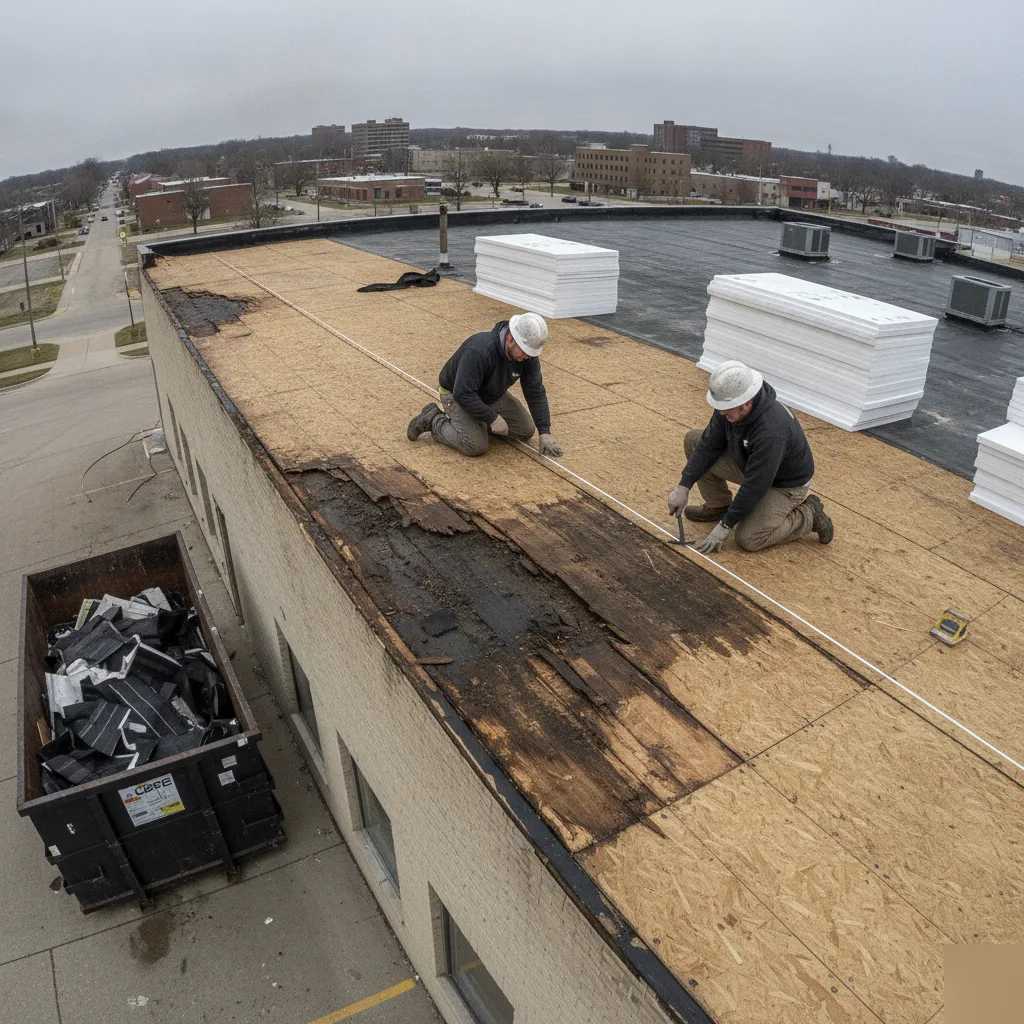
Water doesn't usually yell for attention. A slow leak might rot wood decking for years. You won't see a thing inside the building. We've peeled back membranes on flat roofs downtown in Mason City. Found deck boards so soft you could push a finger right through them. The owner? They had no clue.
Steel decks rust from moisture trapped in the insulation. Concrete decks crack and chip from our freeze-thaw cycles. Mason City winters are brutal, truly. That constant freezing and thawing just tears up materials way faster than you'd think.
The issue is simple. You can't truly check a deck until the old roof is gone. So every commercial roof replacement has this big unknown.
What Happens When Deck Damage Shows Up
Once we strip the old system and find damaged decking, the job changes quick. Here's what usually happens next:
- Damaged spots get marked. We measure them during tear-off.
- A structural check tells us if the damage is just on top or deep down.
- Rotted or rusted deck parts get cut out. We replace them with the same kind of material.
- New insulation and membrane? That can't go down until the deck passes inspection.
- The project takes longer, sometimes by several days.
Every single one of those steps adds labor hours. And material. There's no easy way around it. You can't just lay a new TPO or EPDM membrane on a bad deck. It's like painting a wall that's about to fall apart.
Real Situations We've Walked Into
David personally inspected a flat roof on a retail building last year. It was right there on North Federal Avenue. The owner just wanted a simple flat roof replacement, from the top, everything looked fine. But when we tore it off, nearly 40% of that wood deck had water damage. That owner's project? It grew fast.
Another building, this one off South Monroe, had a steel deck. Its fastener points were rusted out. The screws holding the old system had let water sit around each hole for over ten years. Every single fastener spot needed fixing. Only then could we put on new standing seam metal roofing panels.
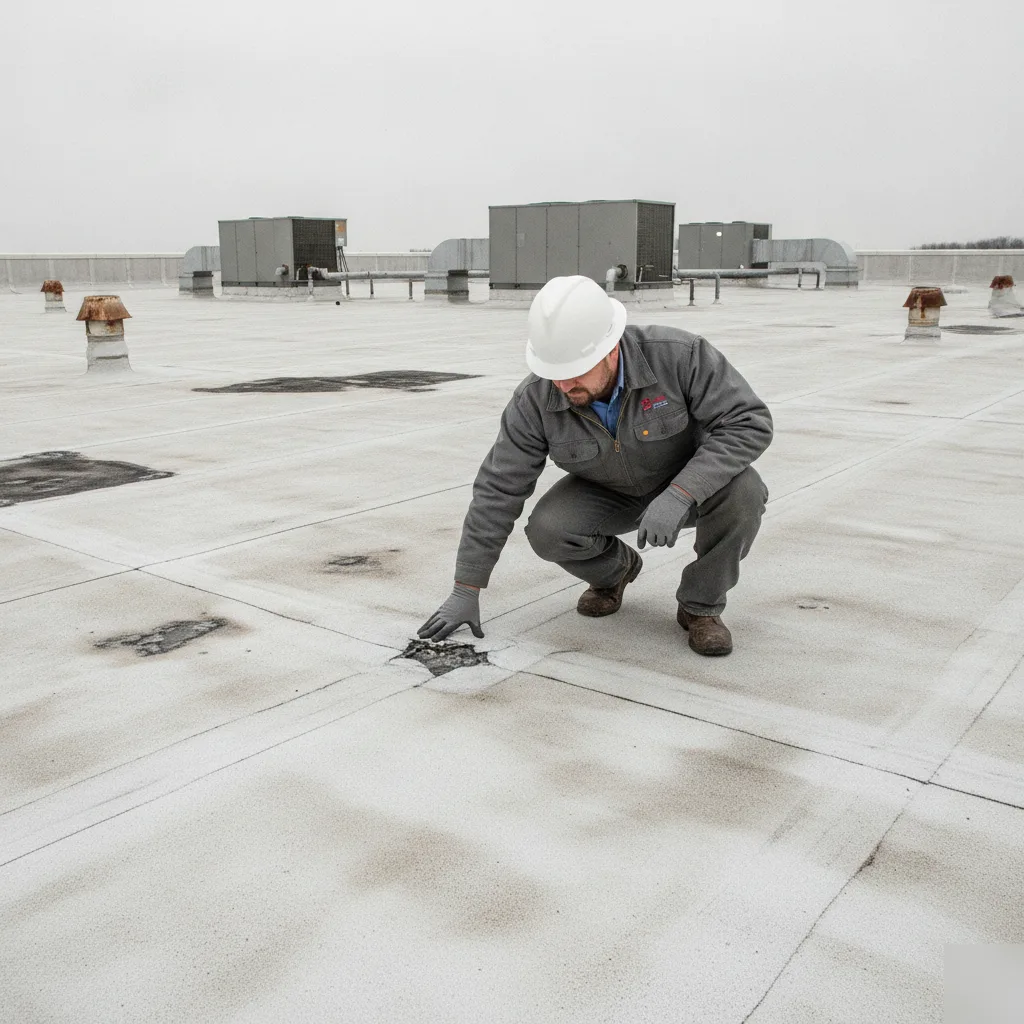
Most folks don't realize this until it's too late. That's why we really push for a free roof inspection first. Infrared scans and core samples can find moisture in the deck before tear-off. It won't show every single issue. But it does cut down on the unexpected problems.
How to Protect Yourself
You can't completely remove this risk. But you can lessen it.
- Get a professional roof inspection. It should include moisture detection. Do this before you commit to anything.
- Ask your contractor straight up. How do they handle surprise deck repairs?
- Check your building's old maintenance records. Look for past leak fixes or patches.
- Plan for possible deck work in your budget. That way, you won't be caught off guard.
We've seen what happens when owners ignore deck damage. Someone skips the repair. The new membrane goes onto a bad surface. Then, in just a few years, they're calling about leaks all over again. Don't let that happen to your building.
Thinking about a commercial roof replacement in Mason City? The smartest first move is figuring out what's actually under your current roof. That single detail changes everything else about your entire project.