
Mason City, IA & North Iowa
Commercial vs Residential Roofing: Key Differences
Building Use, Not Building Size, Determines the Roofing Category
Here's something most people get wrong. They assume a big building needs commercial roofing and a small one needs residential. That's not how it works. The category depends on how the building gets used.
A small coffee shop on Federal Avenue? Commercial roofing. A 4,000-square-foot home with a flat roof? Residential. We've worked on tiny commercial buildings in Mason City that were half the size of the house next door, and size had nothing to do with what each one needed.
What Makes a Roof "Commercial"
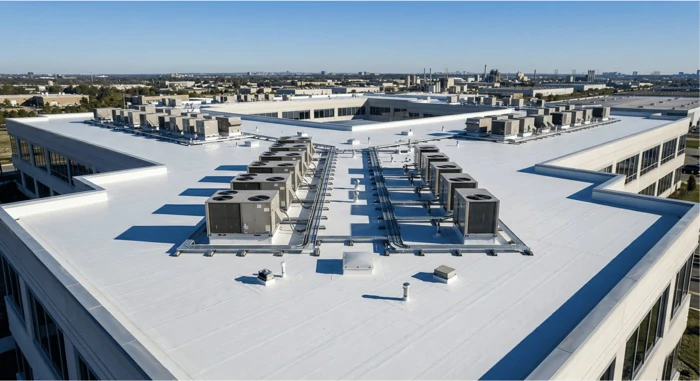
Commercial roofing covers any structure used for business. Offices, retail stores, restaurants, warehouses, churches, schools. If people work there or the public walks in, it's commercial. The roof system has to handle different loads, different codes, and different equipment sitting on top of it — HVAC units bolted to the deck, drainage systems for wide flat surfaces, foot traffic from maintenance crews.
Most commercial buildings in Mason City are built with flat or low-slope roofs. That means TPO roofing, EPDM roofing, or PVC roofing. These membrane systems cover wide spans without pitch. They handle standing water, resist chemical exposure, and last decades when installed correctly.
What Makes a Roof "Residential"
Residential roofing covers homes. Most around here are steep-slope shingle roofs, but not every home fits that mold. Some have flat sections over garages or additions. Some homeowners want standing seam metal roofing for durability and energy savings.
We focus on flat roof repair and metal roofing installation for residential projects. David doesn't do shingle work. Most contractors won't tell you when something isn't their specialty — they'll just take the job. We'd rather send you to someone who does shingles every day than put our name on work that isn't our lane.
Why the Distinction Matters for Your Roof
Building use dictates the code requirements. Commercial structures must meet stricter fire resistance and wind uplift standards than most homes. That changes the materials, the installation method, and the inspection process.
A commercial roof on a Mason City storefront needs to pass different inspections than the flat roof on your house. The membrane might look similar. The fastening system, insulation layers, and drainage design won't be.
We've seen what happens when that gets ignored. A property owner hires a residential crew to patch a commercial flat roof. They use the wrong adhesive, skip the vapor barrier, and six months later there's water pooling under the membrane. Now you're looking at a full flat roof replacement instead of a simple repair.
And it goes the other direction too. A homeowner with a flat-roofed addition doesn't need a full commercial spec system. They need someone who understands flat roof waterproofing at a residential scale without overbuilding the whole project.
So before you call anyone, ask yourself one question. Is this building used as a business or a home? That answer points you toward the right roofing system, the right materials, and the right crew. If you're not sure where your project falls, a free roof inspection can sort it out fast.
Roof Slope and Drainage Design Work Differently on Each Building Type
Here's something most people never think about until water's pooling somewhere it shouldn't. Slope changes everything. It affects what materials you can use, how water leaves the building, and how long the whole system holds up. We've seen roofs fail in Mason City not because the materials were bad, but because the slope and drainage were wrong for the building type. (If you want to see how we handle it, check out our commercial roofing services in Mason City.) Here's how it actually breaks down.
Residential Roofs: Steep Slopes, Gravity Does the Work
Most homes have pitched roofs. Rain hits, gravity pulls it down, it rolls into gutters. The steep angle means water moves fast, so shingles and metal panels work well. That pitch also helps shed snow, which matters here in Mason City where winter dumps real weight on rooftops — we're not talking a light dusting.
A typical home roof sits at a 4:12 pitch or steeper. For every 12 inches of horizontal run, the roof rises 4 inches. Some homes go much steeper. The steeper the pitch, the faster water and snow clear off.
But steep slopes have limits. You can't walk them easily, repairs take more safety equipment, and not every material works on every pitch.
Commercial Roofs: Low Slopes, Engineered Drainage
Commercial buildings are a different situation. Pitches below 2:12 are standard, sometimes barely sloped at all. Water doesn't just roll off these roofs. It needs help leaving.
That's where drainage design becomes the whole game. On a commercial flat roof, you'll typically see one of these systems:
- Internal drains placed at low points across the roof deck
- Scuppers cut into parapet walls that channel water to downspouts
- Tapered insulation systems built underneath the membrane to direct water toward drains
- Cricket or saddle structures installed behind rooftop units to prevent ponding
Every one of those details matters. Miss one and you get ponding water. Ponding leads to membrane breakdown, leaks, and eventually structural damage. The National Roofing Contractors Association lists ponding water as one of the top causes of premature commercial roof failure.
Most contractors won't tell you this, but we've pulled up commercial roofs in Mason City where the tapered insulation was installed backward. Water was flowing away from the drains. The building owner had no idea why they kept getting leaks — they just kept patching. The real fix was redesigning the drainage slope from scratch.
Why This Matters for Your Building
If you own commercial property along Federal Avenue or near the Southbridge Mall area, your building almost certainly sits under a low-slope roof with minimal pitch. Your roofing system depends entirely on proper drainage engineering. TPO roofing, EPDM roofing, PVC roofing, flat roof repair — all of it requires getting the slope right first.
A residential metal roof on a home sheds water naturally. A commercial flat roof fights water constantly. Two completely different jobs.
So when someone asks what is the difference between commercial and residential roofing, drainage design is one of the biggest answers. It's not just about picking materials. It's about understanding how water behaves on your specific building and planning for it before anything gets installed.
David has spent years solving drainage problems on commercial roofs across Mason City and into southern Minnesota. Getting the slope wrong costs more than getting it right the first time.
Commercial and Residential Roofing Use Different Materials for Different Reasons
The roof on your house and the roof on a warehouse near Southbridge serve completely different jobs. So they need completely different materials.
Most people assume a roof is a roof. It's not.
Residential roofing in Mason City usually means asphalt shingles on a steep-slope structure. Shingles shed water fast because gravity does most of the work on a pitched roof. They're lightweight, they go on quick, they look the way people expect a house to look. But that's where our work on residential projects stops — David doesn't do shingle work, and we'll tell you that upfront rather than take a job that isn't our lane.
Commercial roofing is a different animal. Most commercial buildings are designed with minimal pitch, sometimes nearly level. Water doesn't run off those the way it runs off your house. That changes everything about what materials belong up there.
What Goes on a Commercial Roof
Commercial roofing relies on membrane systems built to handle standing water, foot traffic, and big temperature swings. The main options we install in Mason City include:
- TPO roofing — a single-ply membrane that reflects heat and welds together at the seams for a watertight bond
- EPDM roofing — a synthetic rubber membrane that stays flexible even during our harsh Iowa winters
- PVC roofing — tough against chemicals and grease, matters a lot for restaurants and industrial buildings
- Metal roofing — standing seam panels that handle snow loads and last decades when installed right
Each one solves a specific problem. A restaurant near East State Street doesn't need the same roof system as a metal fabrication shop. We pick materials based on what the building actually deals with day to day, not just what's popular or easy to source.
What Goes on a Residential Roof
For homes, shingles dominate the market. Asphalt shingles cover roughly 80 percent of homes in the United States, and they work well on steep slopes.
But not every home has a steep slope. That's the part most contractors won't bring up.
Plenty of homes in Mason City have flat sections, additions, sunrooms, attached garages with low-pitch roofs. Shingles fail on flat surfaces because water pools instead of draining. David sees this during free roof inspections more often than you'd think. Someone put shingles on a flat section years ago, now there are leaks nobody can trace back to the source.
That's where residential roofing overlaps with commercial roofing materials. A flat roof on a home needs TPO, EPDM, PVC, or metal. Same materials we'd put on a commercial building, same installation methods. We handle residential flat roof repair and metal roofing installation for homeowners who need that kind of work done correctly.
Why the Material Choice Matters So Much
Wrong material on the wrong roof slope is the fastest path to water damage. Period.
A membrane system on a steep residential roof would be overkill and look out of place. Shingles on a flat commercial roof would leak within a year — we've torn off plenty of those mistakes left by other crews. The slope of your roof dictates the material. The building's use dictates the specifics within that category.
Commercial roofs also carry HVAC units, vents, and sometimes heavy equipment. The materials need to handle that weight and the foot traffic from maintenance crews. Residential roofing materials don't face those demands on most homes.
And by the way, if your commercial building is more than ten years old and you haven't had a formal roof assessment done, that's worth thinking about. We've pulled up membranes on Mason City buildings that looked fine from the ground and found serious problems underneath.
So when you're figuring out what your building needs, start with two questions. Is the roof flat or steep? And what sits on top of it? Those answers narrow your options fast.