
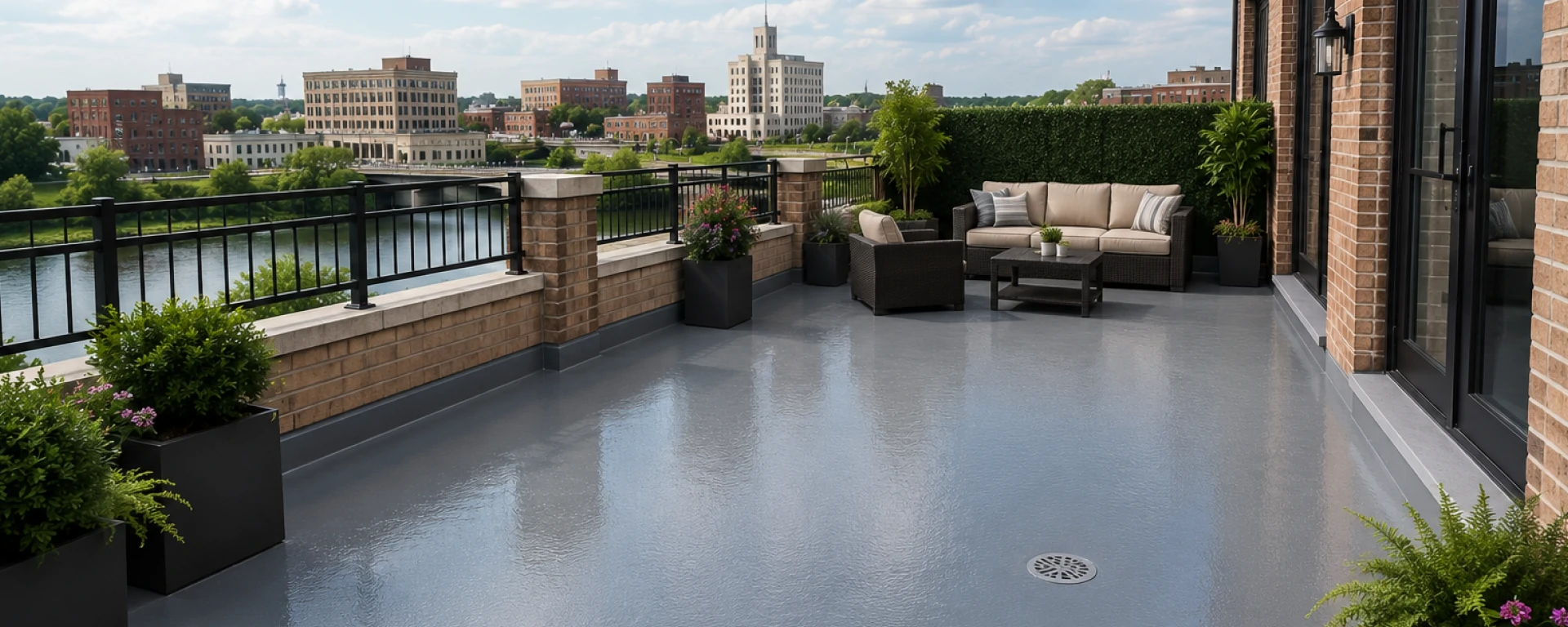
What Is the Best Waterproofing Method for a Terrace in Mason City, IA?
The best terrace waterproofing method for Mason City depends on whether the terrace carries foot traffic, holds planters or garden beds, and what living spaces or structural components sit directly below. An experienced Mason City IA roof waterproofing contractor matches the system to those conditions — traffic-bearing polyurethane membrane systems provide the most durable combination of waterproofing integrity and pedestrian wear resistance for Iowa's extreme freeze-thaw and UV conditions. For terraces with garden beds or heavy planters, a root-resistant waterproofing membrane with a drainage mat layer is required to prevent root intrusion from destroying the waterproofing system over time.
- Traffic-bearing terraces over living spaces — polyurethane or hot-applied rubberized membrane with wearing course
- Terrace garden and planter areas — root-resistant sheet membrane with drainage mat and filter fabric layer
- Low-traffic rooftop terraces — fully adhered TPO or EPDM with complete parapet, drain, and transition flashing
What Professional Terrace Waterproofing in Mason City Actually Involves
Professional terrace waterproofing is not a deck sealer applied over the existing surface. It starts with substrate inspection and moisture assessment, followed by structural joint and crack repair, primer application, membrane system installation, root barrier where planters are present, parapet and transition flashing, drain and scupper waterproofing, and a wearing surface suited to the traffic and use.
Mason City rooftop terraces face some of the most demanding waterproofing conditions in the Midwest. Concentrated snowmelt and ice loading in spring, combined with Cerro Gordo County's hail exposure and summer UV intensity, require a membrane system with proven flexibility, impact resistance, and UV stability. Surface coatings adequate for milder climates are not adequate here. What a complete terrace waterproofing job covers:
- Substrate inspection and moisture probe testing
- Structural joint, crack, and fastener hole repair
- Removal of failed existing coating or membrane where required
- Primer application and full cure before membrane begins
- Primary membrane installation starting at drains and transitions
- Root-resistant membrane and drainage mat for planted areas
- Parapet wall base flashing and railing post penetration sealing
- Drain collar and scupper waterproofing to manufacturer spec
- Wearing surface appropriate to traffic load and use
- Final inspection and documentation for warranty records
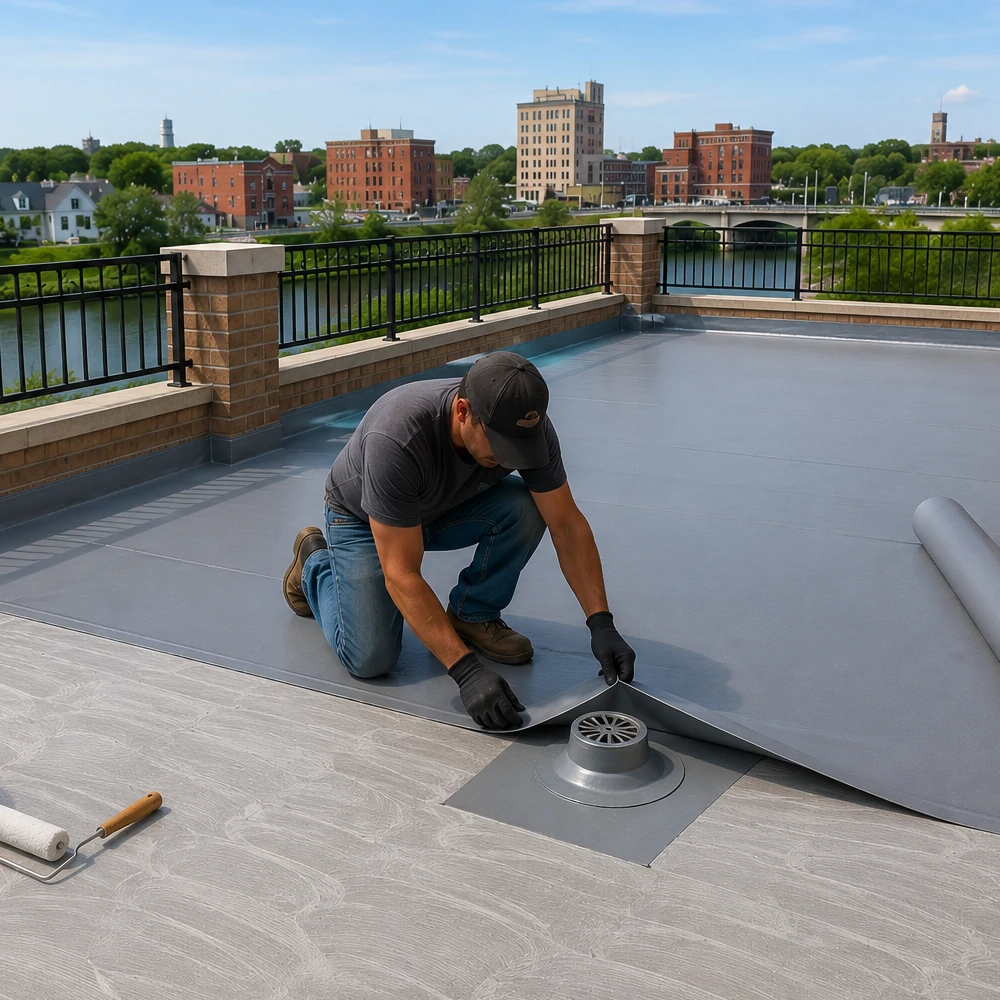
How to Know If Your Mason City Terrace Needs Waterproofing Now
Ceiling staining below a Mason City terrace during spring snowmelt is the most urgent warning sign in North Iowa. By the time a stain appears inside, water has typically been penetrating through failed flashings or membrane seams during multiple freeze-thaw events — damaging insulation, decking, and structural members well beyond the visible stain location. Acting at the first stain is faster and cheaper than acting after the second or third.
Other warning signs that call for a professional assessment now:
- Standing water that does not drain within 24 hours of a rain event
- Visible membrane cracking, bubbling, or delamination on the terrace surface
- Efflorescence — white salt deposits — on parapet walls or vertical surfaces
- Railing or parapet wall movement — signs of substrate deterioration at the base
- Plant root intrusion visible at drain collars or membrane edges in planted areas
- Visible caulk separation at parapet base or railing post transitions
The Three Best Terrace Waterproofing Methods for Iowa's Climate
Three primary methods cover the full range of Mason City terrace applications. Each serves a different combination of use, substrate, and climate demand.
Traffic-bearing polyurethane membrane systems are the first and strongest choice for terraces over living spaces. They accommodate Iowa's temperature swings from -20°F to 100°F without cracking or separating at transitions. Fully adhered TPO or EPDM membrane systems are the right choice for low-traffic rooftop terraces where a heat-welded or bonded membrane with complete parapet and drain flashing is the primary goal. Drainage mat systems over the primary waterproofing membrane are the required approach for any Mason City terrace with planters or garden beds. Iowa's freeze-thaw cycling accelerates root growth into membrane seams as plant roots seek unfrozen moisture pathways through winter. A root-resistant membrane combined with a drainage mat layer is the only reliable protection for planted terrace applications in North Iowa. The three methods matched to terrace use:
- Traffic-bearing polyurethane — pedestrian terraces over living spaces; best flexibility and wear resistance
- Fully adhered TPO or EPDM — low-traffic rooftop terraces; heat-welded seams, strong parapet detailing
- Root-resistant membrane plus drainage mat — any terrace with planters, garden beds, or planted zones
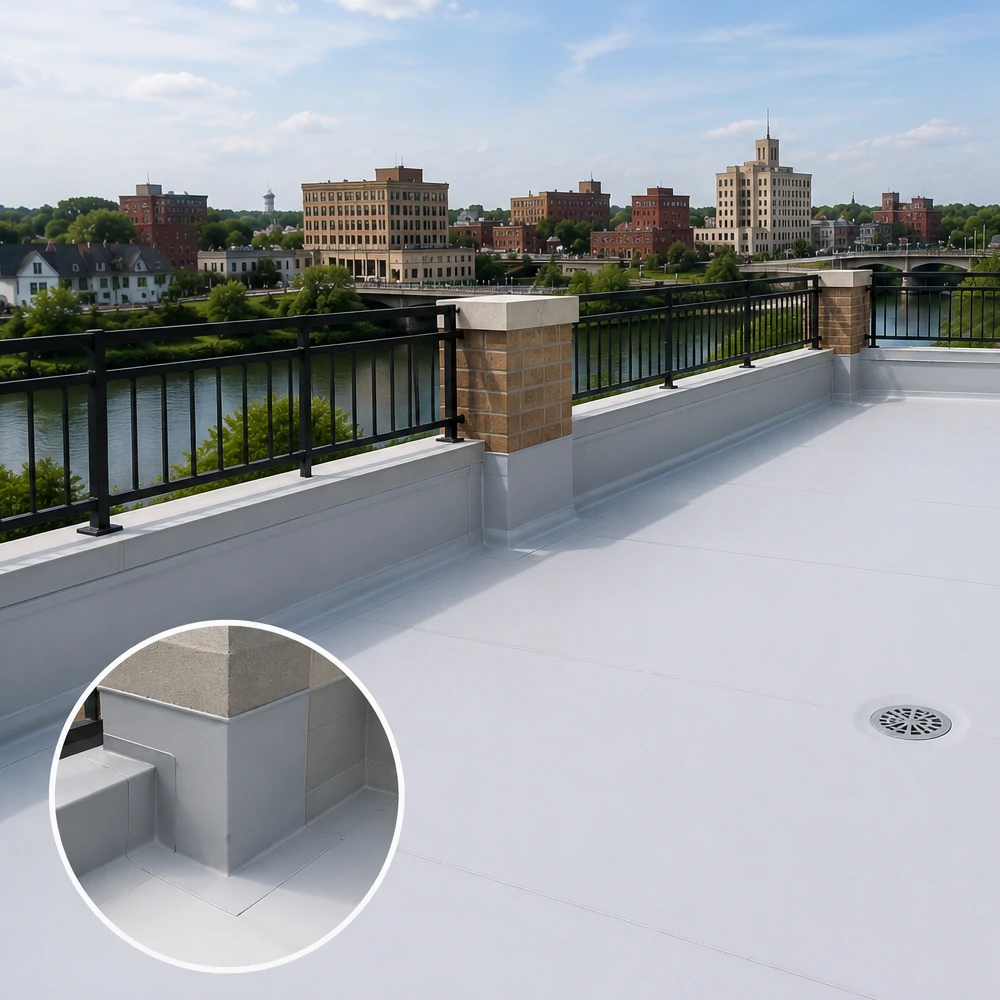
What the Terrace Waterproofing Process Looks Like From Start to Finish
Day one covers substrate inspection and preparation. Moisture probe testing happens in multiple locations. Any failed existing coating or membrane comes off. Cracks, joints, and fastener holes get repaired with compatible filler. Primer goes on and cures fully — never compressed to fit a schedule. Planted area substrates get evaluated for root damage before the root barrier goes down.
Iowa spring and fall provide narrow application windows. Polyurethane and hot-applied rubberized systems require surface temperatures above 40 degrees and no rain for 24 to 48 hours after application. We monitor the forecast and stage materials around confirmed dry windows. An experienced local contractor never rushes the application to meet an artificial deadline — the cost of a timing shortcut shows up during the first Iowa winter after installation. What the full process looks like:
- Free assessment and moisture probe testing
- Written scope with system specification and prep requirements
- Failed membrane or coating removal
- Crack, joint, and fastener hole repair
- Primer application and documented cure time
- Primary membrane installation — drains and transitions first, then field
- Root-resistant membrane and drainage mat for planted areas
- Parapet base, railing post, and HVAC curb flashing
- Wearing surface installation after membrane reaches specified cure
- Final inspection — all transitions, drain collars, and parapet flashings verified
Most Mason City terrace waterproofing projects complete in three to seven days depending on size, substrate condition, and planted area complexity.
How to Prevent Terrace Leaks Before They Reach the Level Below
Parapet wall base transitions and drain collars are the two most common terrace leak sources on Mason City commercial and residential buildings. Parapet bases expand and contract with temperature changes that separate improperly installed flashing from the deck membrane. Drain collars crack under ice loading from standing water that freezes in shallow drain sumps during Iowa winters. Both are preventable when installation follows manufacturer spec and the work is inspected annually.
Other high-probability leak origins on Iowa terraces:
- Railing post penetrations — each post base is a potential water entry point if not properly flashed
- Planter edge transitions — roots and moisture work together to find membrane gaps over time
- HVAC equipment curbs — foot traffic and vibration stress membrane at curb perimeter flashing
- Inside corner transitions — bridging without cant strips is a common failure point
Prevention is simple: keep drains clear, inspect transitions every April, and reseal any separation the same season it appears. The cost of annual maintenance is a fraction of what a full membrane failure and structural repair runs.
How Long Terrace Waterproofing Lasts in North Iowa and How to Protect It
Traffic-bearing polyurethane membrane systems last ten to twenty years with maintenance. Fully adhered TPO and EPDM systems last fifteen to twenty-five years. Hot-applied rubberized systems last fifteen to twenty-five years. Liquid-applied systems last eight to fifteen years. All lifespans require biannual inspection and prompt repair of transition flashings and drain collar separations that experience the most stress from Iowa freeze-thaw cycling.
The April post-winter inspection is the single most important maintenance window for any waterproofed Mason City terrace. Freeze-thaw cycles stress parapet base flashings, drain collars, railing post penetrations, and planted area membrane edges every winter. A small separation found in April is a sealant repair. The same separation left through a full rain season becomes a full membrane failure and structural repair below the terrace deck. Maintenance steps that protect the investment:
- April inspection after freeze-thaw season — parapet bases, drain collars, and railing posts
- October inspection before freeze — clear all drains and scuppers, confirm no open laps
- Prompt resealing of any separation — never let a gap run through a rain season
- Drain and scupper cleaning every spring and fall without exception
- Recoat or reapply within the manufacturer's recommended window before failure
- Document all inspections and repairs for warranty and insurance records