
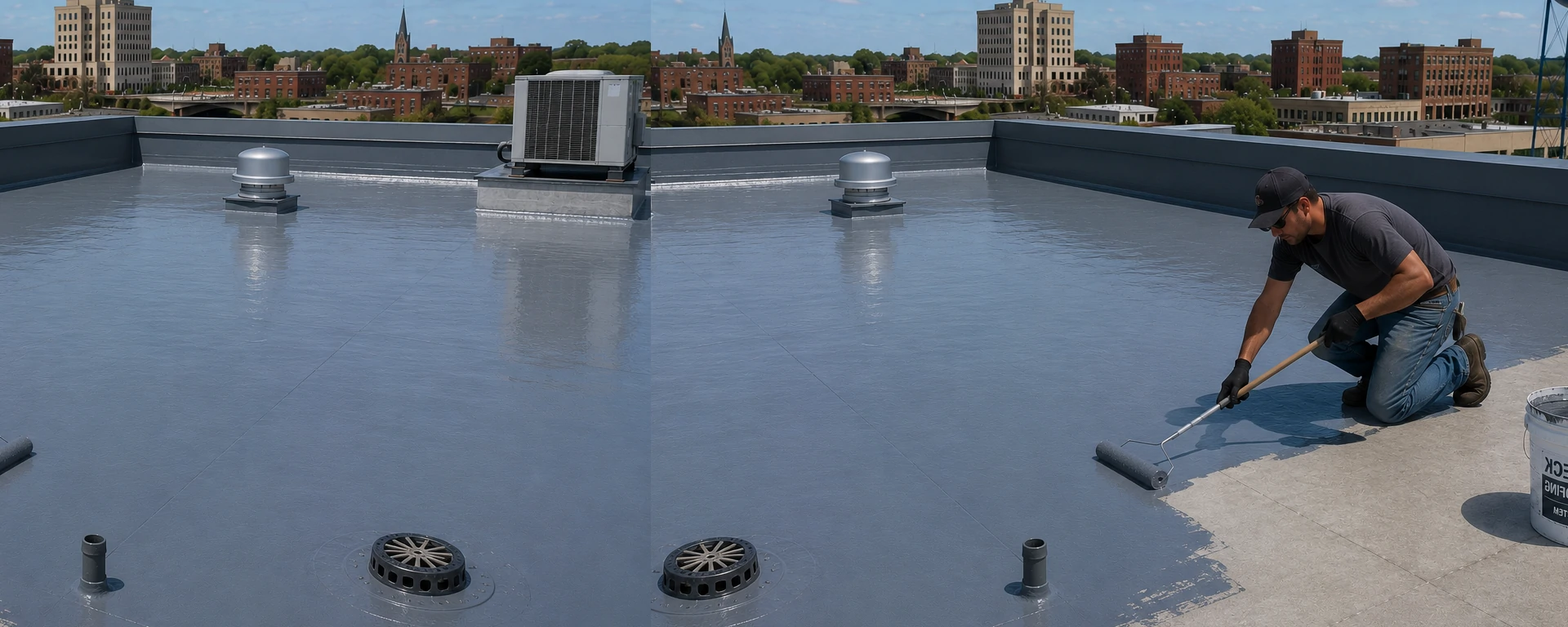
What Is the Best Waterproofing for a Roof Deck in Mason City, IA?
The best roof deck waterproofing system for Mason City depends on whether the deck sees foot traffic, how much structural movement it experiences, and what living space or building components sit directly below it. Traffic-bearing polyurethane membrane systems provide the most durable combination of waterproofing and pedestrian wear resistance for Iowa❜s freeze-thaw and UV conditions. For decks over unconditioned spaces, under-deck drainage systems combined with proper membrane flashing offer a reliable alternative that manages water away from the structure below.
- Pedestrian roof decks over living spaces — traffic-bearing polyurethane or hot-applied rubberized membrane with wearing course
- Low-traffic or non-accessible roof decks — EPDM or TPO membrane with full perimeter and penetration flashing
- Elevated wood decks over conditioned spaces — under-deck drainage system plus joist and ledger flashing protection
What Roof Deck Waterproofing in Mason City Actually Involves
Roof deck waterproofing covers far more than a paint-on sealer from the hardware store. A professional job starts with substrate inspection and moisture assessment. Then comes structural joint and crack repair, primer application on porous surfaces, membrane or coating system installation, transition and perimeter flashing, drain and scupper waterproofing, and a wearing surface where foot traffic requires it.
Mason City's freeze-thaw cycles subject every roof deck joint, fastener hole, and surface crack to repeated expansion and contraction stress that ordinary sealers cannot handle. A proper waterproofing system must be flexible enough to move with the deck structure through Iowa❜s extreme temperature range — from -20°F in winter to 100°F in summer. Mason City roof coating and waterproofing specialists match the right system to your deck type and exposure conditions before any product goes down. What professional roof deck waterproofing covers:
- Substrate inspection and moisture probe testing
- Structural joint and crack repair before any product application
- Primer application on porous or existing coated surfaces
- Traffic-bearing membrane or coating system installation
- Full perimeter flashing at all transitions — walls, rails, and curbs
- Drain collar and scupper waterproofing to spec
- Wearing course installation where pedestrian traffic requires it
- Written scope and product documentation for warranty records
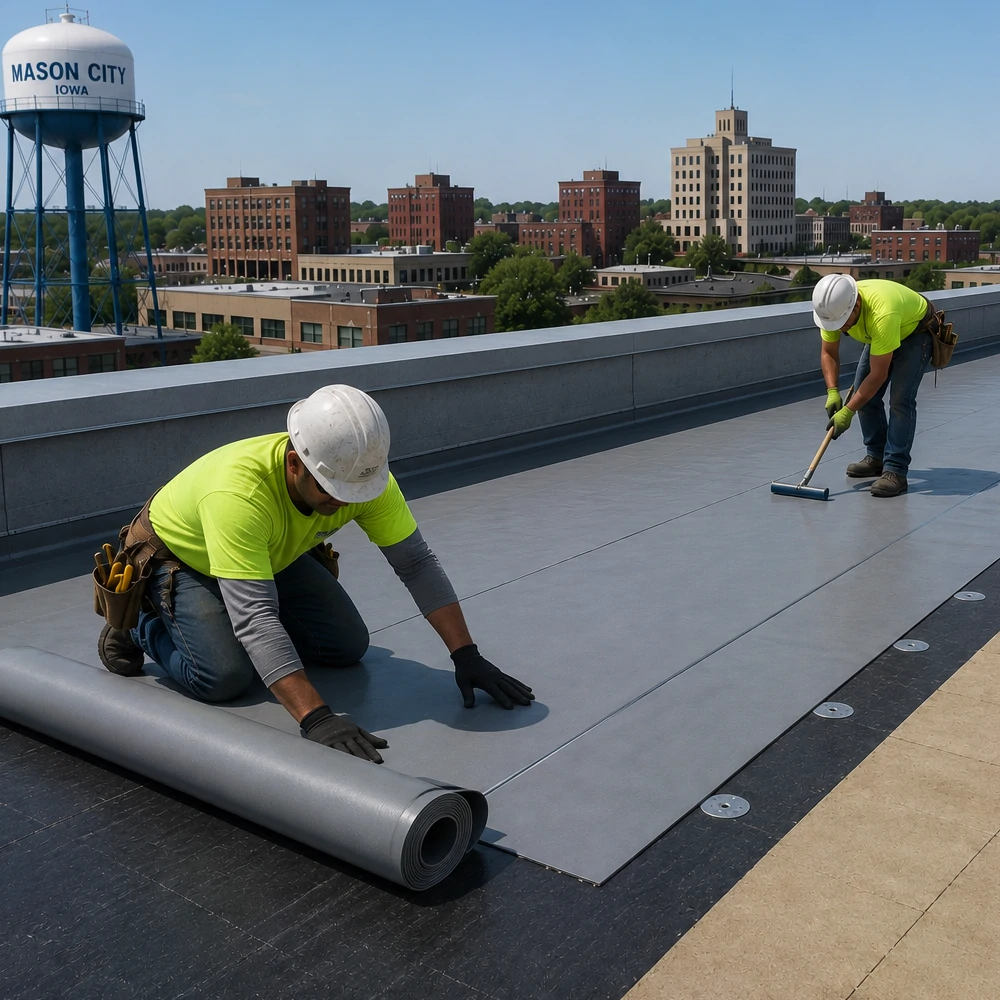
How to Know If Your Mason City Roof Deck Needs Waterproofing or Structural Repair First
Waterproofing works when the deck structure is sound. It makes things worse when applied over rotted joists, failed ledger connections, or saturated sheathing. Applying any membrane or coating over those conditions seals the damage in place and accelerates hidden structural decay.
The right sequence is always structural repair first, then waterproofing. The assessment visit determines which category your deck falls into. Assessment criteria that separate the two:
- Deck boards that flex or feel soft underfoot — probe for rot before any waterproofing
- Visible joist or ledger staining through the underside of the deck — moisture has already entered the structure
- Active leaks dripping into the space below — waterproofing alone will not solve a structural moisture problem
- Existing coating or membrane that is peeling or bubbling — check what is underneath before re-coating
- Sound deck with isolated joint and surface failures — waterproofing is the right next step
- Free assessment identifies which category applies before any scope is written
The Best Waterproofing Systems for Iowa Roof Decks and Elevated Outdoor Spaces
Traffic-bearing polyurethane membrane systems are the recommended choice for Mason City residential roof decks over living spaces. They accommodate the structural movement produced by North Iowa❜s temperature swings while maintaining waterproofing integrity under pedestrian foot traffic and patio furniture loading throughout the year.
For low-traffic or non-accessible roof sections, EPDM and TPO membrane systems provide the most durable long-term waterproofing. For elevated wood decks over conditioned spaces where a full membrane is not practical, under-deck drainage systems combined with proper joist and ledger flashing manage water away from the structure below. Systems matched to Mason City deck conditions:
- Traffic-bearing polyurethane — pedestrian roof decks over living spaces; best flexibility and wear resistance in Iowa climate
- Hot-applied rubberized membrane — heavy-use commercial rooftop terraces; seamless coverage over complex shapes
- EPDM or TPO membrane — low-traffic or non-accessible elevated roof sections
- Liquid-applied polyurethane coating — smaller residential applications with moderate traffic
- Under-deck drainage system — elevated wood decks over conditioned spaces where full membrane is not practical
- Never standard elastomeric deck paint — will not accommodate Iowa freeze-thaw movement or pedestrian wear
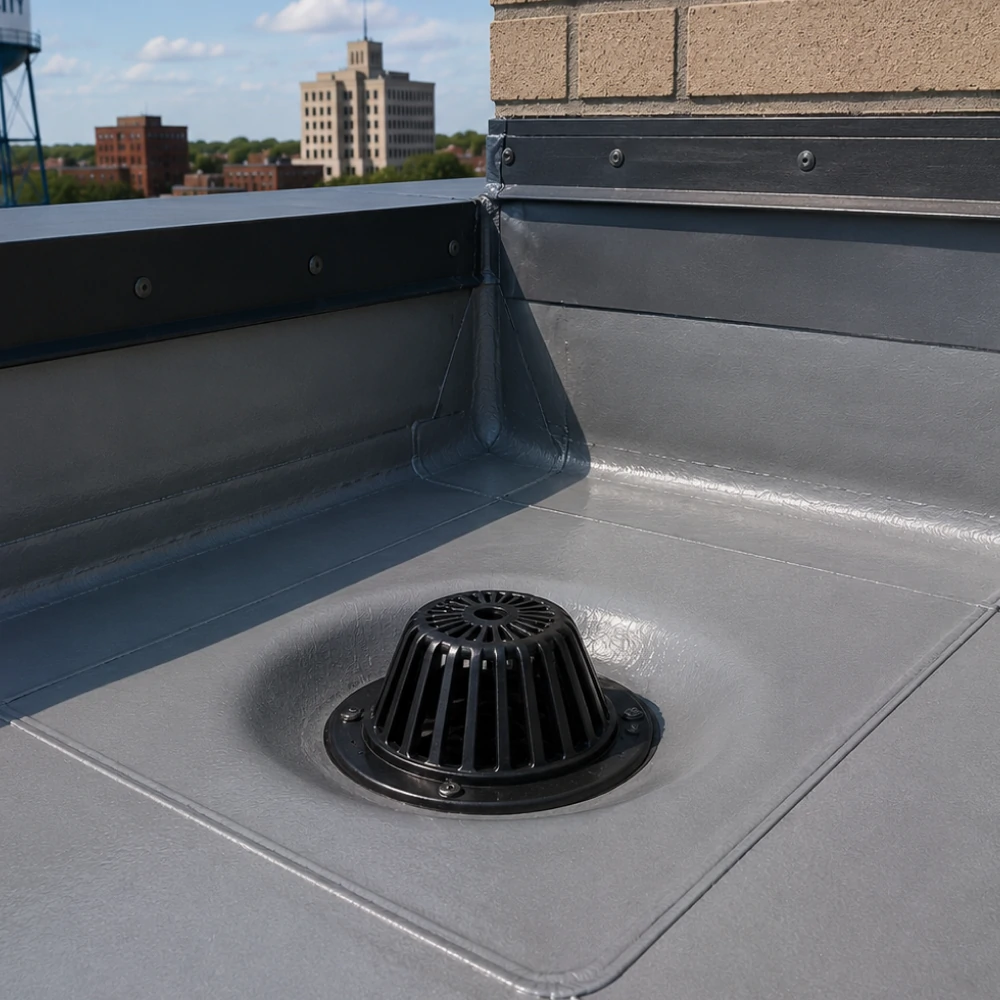
What the Roof Deck Waterproofing Process Looks Like From Start to Finish
Iowa spring and fall provide narrow application windows between rain events, morning dew, and afternoon temperature drops. We monitor the 72-hour forecast and stage materials to complete each application phase without interruption from moisture or cold. What the full process looks like:
- Free assessment and moisture probe testing
- Written scope with system specification and prep requirements
- Structural repair if needed — joists, ledger, or sheathing
- Existing coating or membrane removal where required
- Crack, joint, and fastener hole repair
- Primer application on porous or previously coated surfaces
- Base membrane or coating installation at specified thickness
- Transition, perimeter, and drain flashing to spec
- Wearing course or finish surface installation after cure
- Final inspection and documentation for warranty records
How Long Roof Deck Waterproofing Lasts in North Iowa and How to Maintain It
Traffic-bearing polyurethane membrane systems last ten to twenty years with proper maintenance in Mason City's climate. EPDM and TPO membrane systems last fifteen to thirty years. Liquid-applied coating systems last five to ten years. All lifespans shorten significantly without biannual inspection and prompt repair of edge and transition separations.
The April post-winter inspection is the most critical maintenance window for any waterproofed Mason City roof deck. Maintenance steps that protect the investment:
- April inspection after freeze-thaw season — check all transitions, edges, and drains
- October inspection before first freeze — clear drains and confirm no open laps
- Prompt resealing of any separation found — never let a gap run through a rain season
- Reapplication within the manufacturer's recommended recoat window
- Keep all inspection and application records for warranty and insurance
- Coordinate HVAC and service access — foot traffic from service calls is a common puncture source