
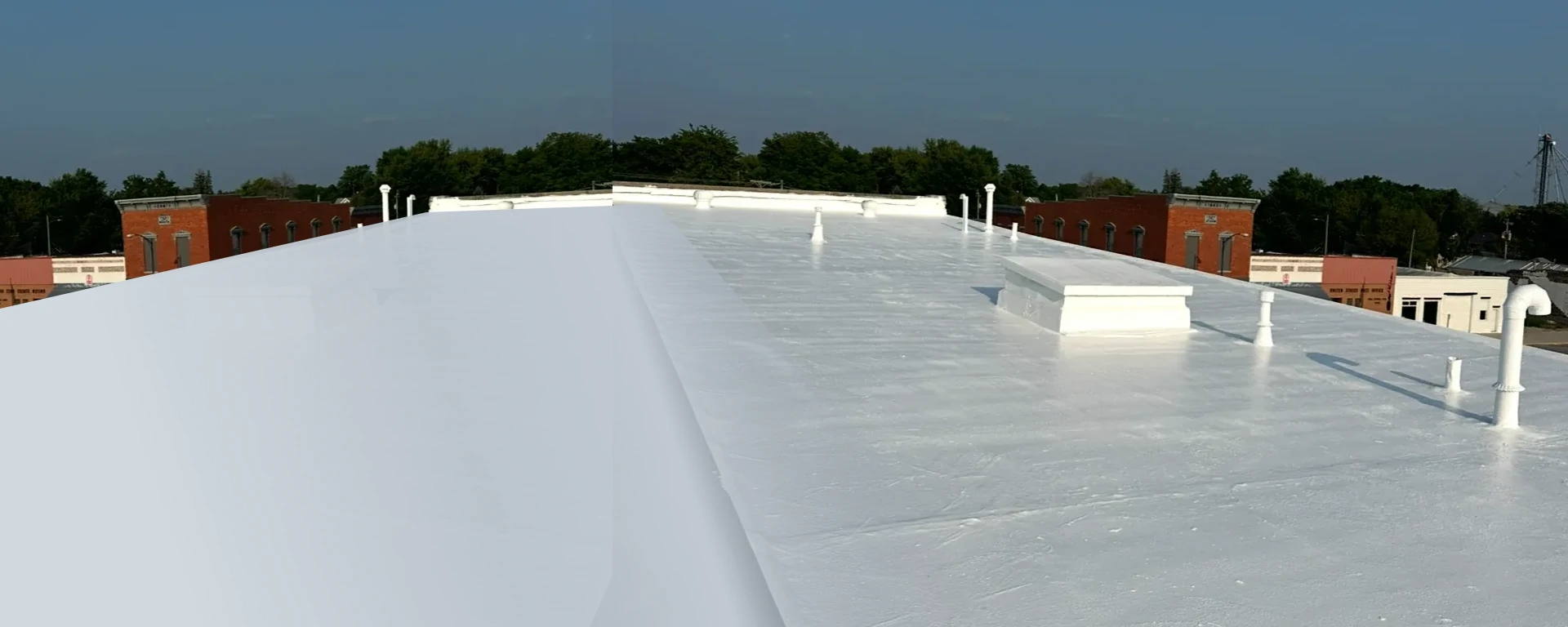
What Type of Roof Coating Is Best for a Flat Roof in Mason City, IA?
The best roof coating for a Mason City flat or low-slope roof depends on the existing membrane type, roof condition, and the specific performance demands of Iowa❜s freeze-thaw and UV environment. Mason City Roof Waterproofing specialists recommend silicone coatings for ponding water conditions common on North Iowa flat roofs because silicone does not degrade when water sits on the surface for extended periods. Acrylic coatings work well on metal roofs and sloped commercial surfaces but are not recommended for flat roofs in Mason City where ponding water is likely.
- Silicone — best for flat roofs with ponding water exposure; excellent UV and freeze-thaw resistance in Iowa conditions
- Acrylic — best for metal roofs and sloped commercial surfaces with good drainage; cost-effective and easy to recoat
- Polyurethane — best for high-traffic roofs needing impact resistance; superior durability in North Iowa temperature swings
What Professional Roof Coating in Mason City Actually Involves
A real professional coating job is not a roll-on application from a hardware store product. It starts with a surface inspection and substrate moisture testing. A wet or compromised surface that passes inspection on a dry day can trap moisture under the coating and peel within the first Iowa winter. Surface preparation — cleaning, aggregate removal, crack and seam repair, and primer where the manufacturer requires it — happens before a single drop of coating goes on.
Iowa freeze-thaw damage leaves flat roof surfaces with loose aggregate, adhesion failures, and moisture-compromised areas that prevent new coatings from bonding correctly. Skip them and the coating peels within one to two winters — and the damage underneath is worse than before. What a professional coating job actually covers:
- Roof surface inspection and substrate moisture testing
- Full surface cleaning — dirt, loose aggregate, mold, and failed material removed
- Crack and seam repair before coating begins
- Primer application where required by the product manufacturer
- Base coat applied to manufacturer-specified wet mil thickness
- Top coat finish to full dry film thickness spec
- Penetration and flashing detailing at all transitions
- Written mil thickness verification for manufacturer warranty documentation
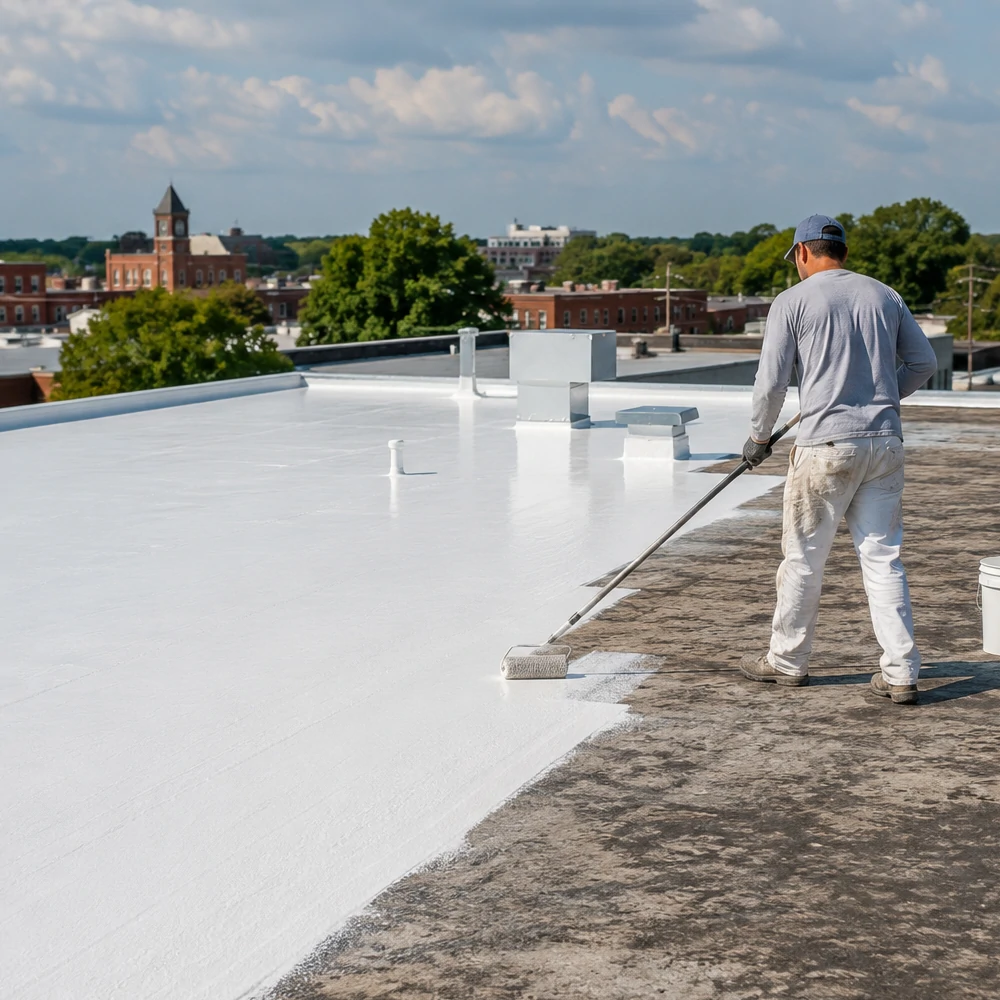
How to Know If Your Mason City Roof Qualifies for Coating or Needs Replacement
Coating adds real value when the existing system is structurally sound, the insulation is dry, and the membrane still has workable life. It wastes money when applied over wet insulation, widespread seam failures, or a system with significant structural deflection. The coating seals the surface appearance while the decay accelerates underneath — and eliminates recover options that would otherwise be available at replacement time.
The single most expensive waterproofing mistake on Mason City flat roofs is coating over wet insulation. The coating traps the moisture below it, accelerating the exact problem it was meant to prevent. Qualification criteria for coating vs. replacement:
- Membrane in fair to good condition with isolated seam issues — coating is a candidate
- Insulation dry when probed or scanned — coating is appropriate
- No significant structural deflection or deck rot — coating may extend life
- Wet insulation anywhere on the roof — replacement, not coating
- Widespread seam failure or active ponding damage — replacement first
- Roof past its expected system lifespan — replacement, not a coating extension
How to Choose the Right Coating Type for an Iowa Roof and Climate
Iowa❜s climate puts specific demands on every coating chemistry. Temperature extremes from -20°F in January to 100°F in August, spring UV load, freeze-thaw cycling, and hail exposure all affect which coating holds and which fails before its rated life. The right match is between the coating chemistry and the existing membrane material, roof slope, drainage characteristics, and traffic exposure.
Silicone is the recommended coating for most Mason City commercial flat roofs. Cerro Gordo County's spring snowmelt and heavy rain seasons create ponding conditions that degrade acrylic coatings fast — silicone maintains its waterproofing properties regardless of how long water sits on the surface. Coating chemistry matched to Iowa conditions:
- Silicone — flat commercial roofs with any ponding exposure; best freeze-thaw and UV performance
- Acrylic — metal roofs and sloped commercial surfaces with clean drainage; good recoatability
- Polyurethane — rooftop areas with regular foot traffic, equipment access, or impact exposure
- Elastomeric — smaller residential flat sections; adequate performance on limited-use low-slope additions
- Never acrylic on flat Mason City roofs — ponding water degrades it quickly and causes premature failure
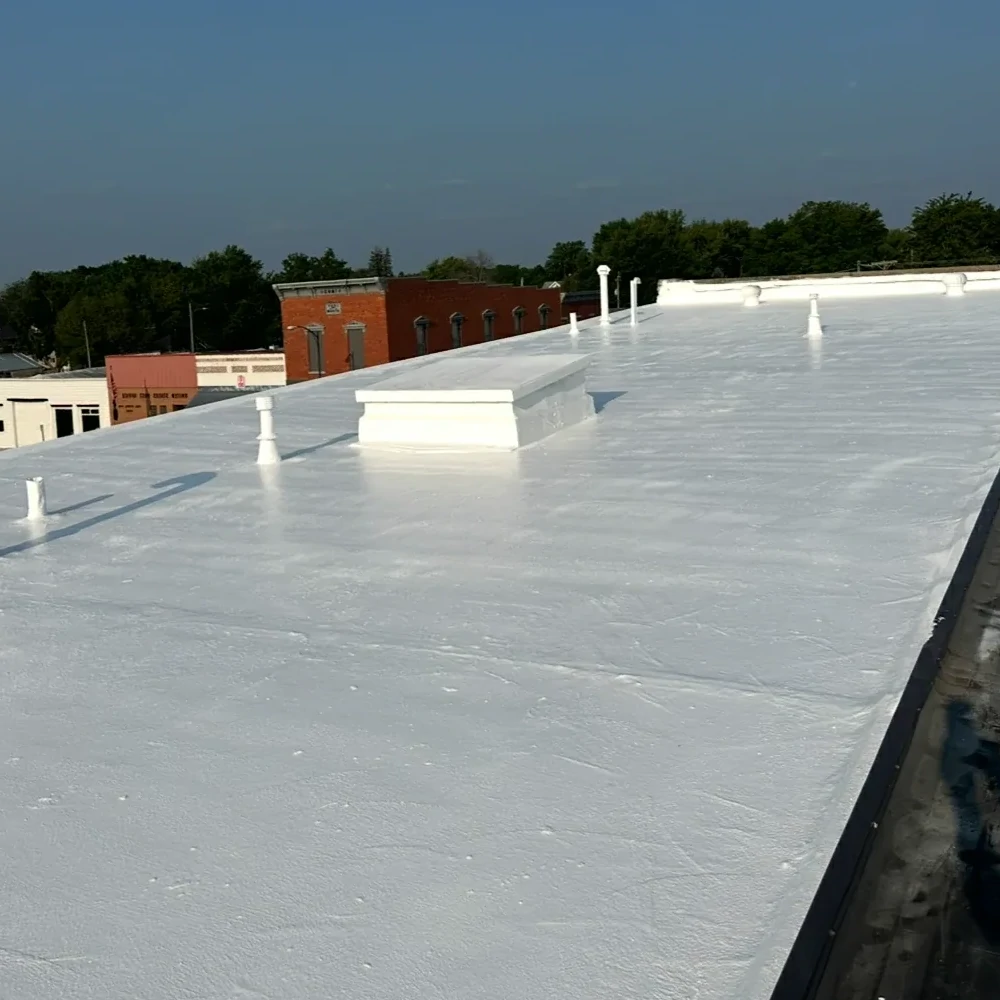
How to Verify Your Coating Contractor Will Apply the System Correctly
Coating quality varies more than almost any other roofing service. A contractor who regularly applies commercial coatings owns a wet mil gauge, knows the manufacturer's application guide for the specific product going on the roof, and documents dry film thickness for the warranty file. A contractor who offers coating as an add-on service applies a single coat, skips the primer, and moves on before the surface is truly ready.
Ask every bidding contractor for the manufacturer's application guide for the specific product they are proposing. Then check whether their written scope matches what the guide requires — step by step. If the scope is missing surface prep steps, primer requirements, or mil thickness verification, those steps are not being done. Verify before you sign:
- Iowa contractor license number on the contract and the truck
- Manufacturer certification for the specific coating system proposed
- Written scope that matches the manufacturer's application guide requirements
- Ownership of a wet mil gauge for thickness verification during application
- Number of commercial coating projects completed in North Iowa in the last 12 months
- Three local coating references on similar roof types — drive past at least one
- Documentation process for dry film thickness to support manufacturer warranty
How Long Roof Coatings Last in North Iowa and How to Get the Most From Them
Acrylic coatings on metal roofs last five to ten years in Iowa with proper maintenance. Silicone coatings on flat commercial roofs last ten to fifteen years. Both lifespans shorten significantly without biannual inspection and prompt resealing of any edge or seam separations that develop during winter.
The April inspection is the single most important maintenance step for any coated Mason City roof. Iowa freeze-thaw cycles stress coating edges, lap seams, and penetration flashings every single winter. A small separation found in April is a tube of sealant and thirty minutes of work. The same separation left through a rain season saturates insulation and causes delamination across a wide area. Maintenance habits that extend coating life:
- April inspection after freeze-thaw season — check all seams, edges, and penetration flashings
- October inspection before winter — clear drains and confirm no open laps
- Prompt resealing of any separation found — never let a small gap run through another winter
- Recoat within the manufacturer's recommended reapplication window — before the surface fails
- Keep all inspection and application records for warranty and insurance documentation
- Coordinate with HVAC service — rooftop equipment traffic is a common source of coating punctures