
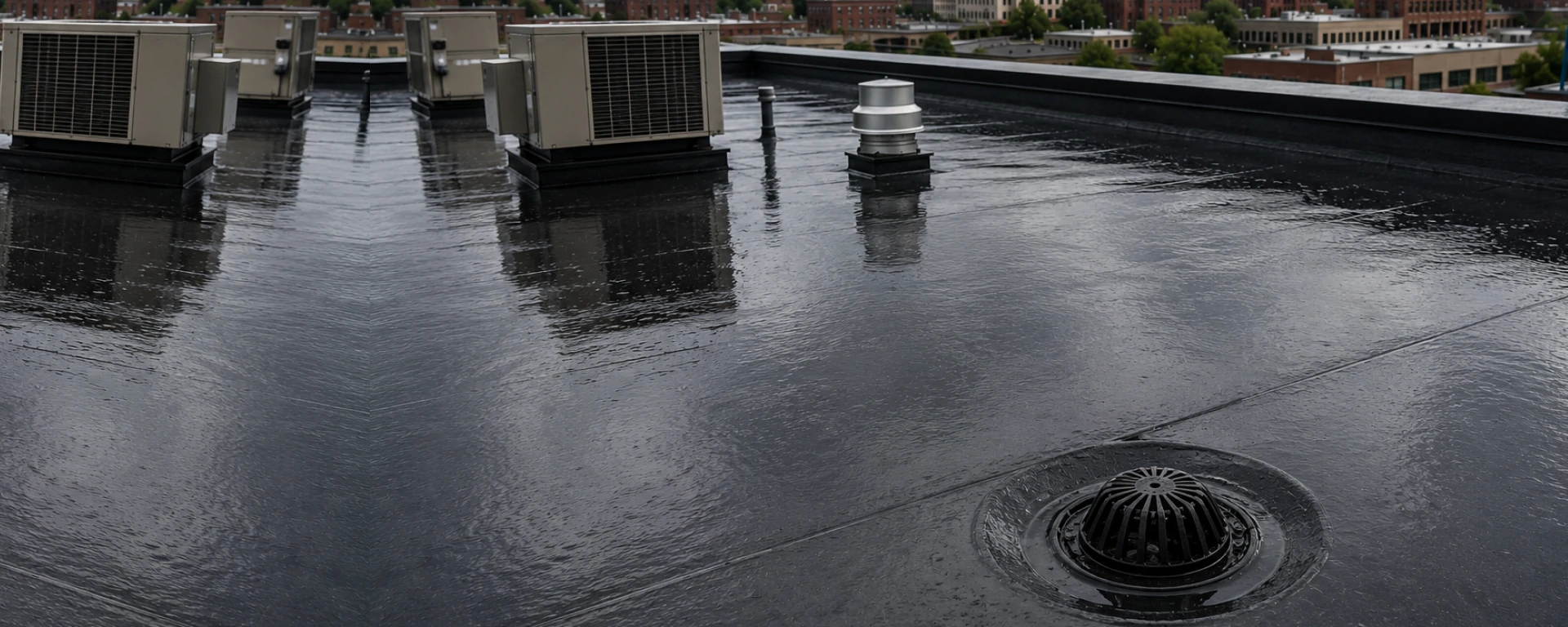
What Is the Best Way to Waterproof a Flat Roof in Mason City, IA?
The best flat roof waterproofing in Mason City starts with a properly installed membrane system — TPO, EPDM, or modified bitumen — with all seams heat-welded or fully adhered and all penetrations and drains properly flashed and sealed. For existing flat roofs in sound condition, Professional Roof Waterproofing in Mason City IA adds a silicone coating layer that resists Iowa❜s ponding water and freeze-thaw conditions without requiring full system replacement. Spray-on sealants and DIY products are not adequate waterproofing solutions for Mason City flat roofs — they mask surface conditions without addressing the seam and flashing failures where nearly all flat roof leaks originate.
- New flat roof — proper membrane system with heat-welded or fully adhered seams is the only permanent waterproofing solution
- Existing sound flat roof — professionally applied silicone coating extends system life in Iowa❜s ponding water conditions
- DIY spray sealants — temporary at best, and frequently cause more damage by trapping moisture under the surface
What Professional Flat Roof Waterproofing in Mason City Actually Involves
A real flat roof waterproofing job is not a spray application over whatever surface exists. It starts with a surface inspection and moisture assessment — finding what is actually failing before any product goes on. Then comes complete cleaning and preparation, seam and flashing repair, primer application where the product manufacturer requires it, waterproofing applied to specified thickness, and penetration detailing at every drain, curb, and pipe boot.
Many older Mason City commercial buildings have flat roofs with decades of accumulated patches, multiple membrane layers, and chronic drainage problems. Identifying what is actually failing before applying any waterproofing product is the step that determines whether the investment holds or fails within the first Iowa winter. What a professional flat roof waterproofing job covers:
- Surface inspection and moisture probe testing before any product selection
- Full surface cleaning — dirt, loose material, failed caulk, and debris removed
- Seam and flashing repair before waterproofing application begins
- Primer application where required by the product manufacturer
- Waterproofing product applied to manufacturer-specified thickness
- Penetration detailing — drain collars, pipe boots, HVAC curbs, and parapet edges
- Written scope and product documentation for warranty records
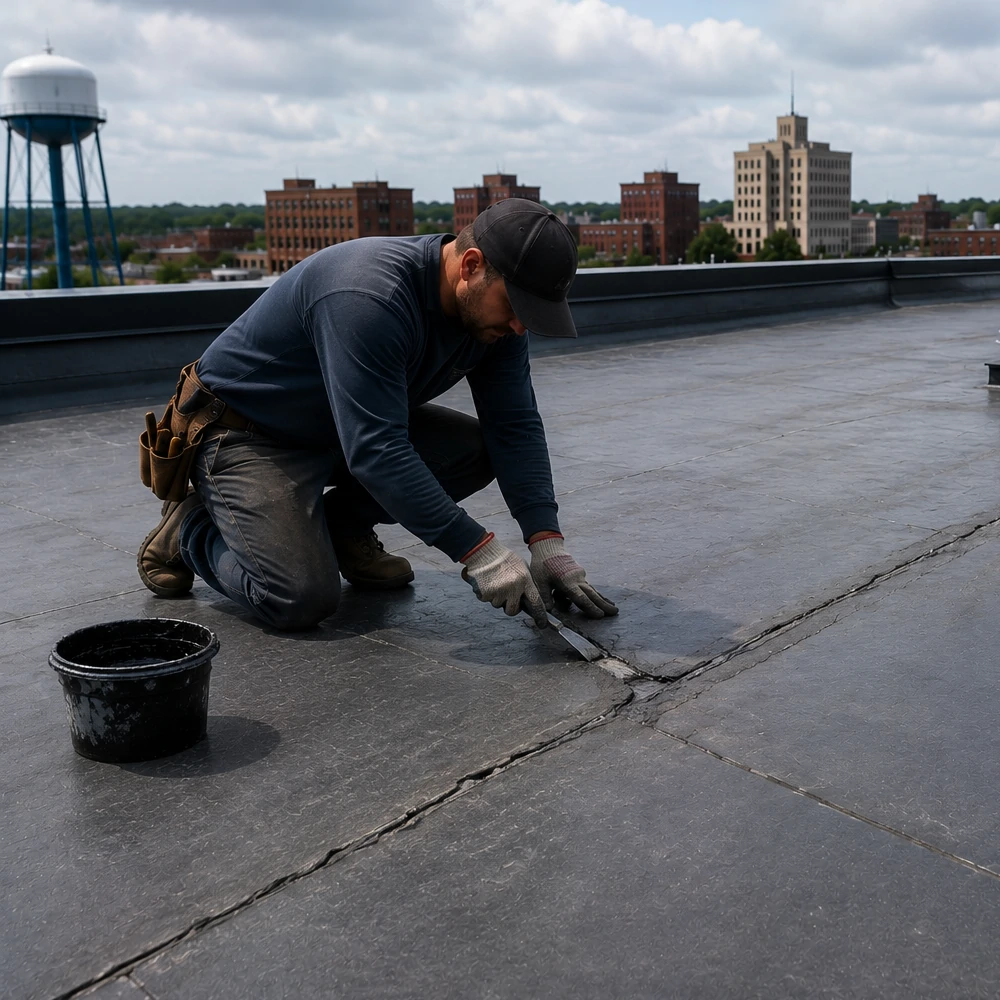
How to Know If Your Mason City Flat Roof Needs Waterproofing or Full Replacement
Waterproofing adds real value when the existing membrane is structurally sound, the insulation is dry, and the failure points are isolated to seams, flashings, and penetrations. It wastes money when applied over wet insulation, widespread seam delamination, or a system with significant structural deflection.
The costliest flat roof mistake in North Iowa is applying a waterproofing coating over wet insulation layers or widespread seam failures. The surface looks treated. The moisture underneath continues destroying the insulation and decking — eliminating recovery options that would otherwise be available at replacement time. Qualification criteria for waterproofing vs. replacement:
- Membrane in fair to good condition with isolated seam issues — waterproofing is appropriate
- Insulation dry when probed or moisture-scanned — waterproofing is appropriate
- No significant structural deflection or deck rot — waterproofing may extend life
- Wet insulation anywhere on the roof — replacement, not coating
- Widespread seam delamination or active ponding damage — replacement first
- Roof past its expected system lifespan — replacement before any coating investment
The Best Flat Roof Waterproofing Methods for Iowa❜s Climate
Iowa❜s climate demands specific performance from every waterproofing product. Freeze-thaw cycling, spring snowmelt ponding, summer UV load, and fall hail impact all affect which waterproofing method holds long-term and which fails before its rated life.
Silicone coating systems are the recommended waterproofing treatment for existing Mason City flat roofs in sound condition. Cerro Gordo County's snowmelt and heavy rain seasons create standing water conditions that degrade acrylic coatings within a few seasons. Silicone maintains full waterproofing integrity regardless of how long water sits on the surface. Flat roof waterproofing methods matched to Iowa conditions:
- New flat roof — TPO or EPDM membrane with heat-welded or fully adhered seams
- Existing sound membrane — silicone coating for maximum ponding water resistance
- Metal flat or low-slope roof — acrylic coating with documented drainage performance
- Recover over built-up roof — modified bitumen torched or self-adhered system
- Penetrations and drains — two-part polyurethane sealant or membrane-compatible butyl tape
- Parapet and wall flashings — membrane-compatible flashing system, not caulk alone
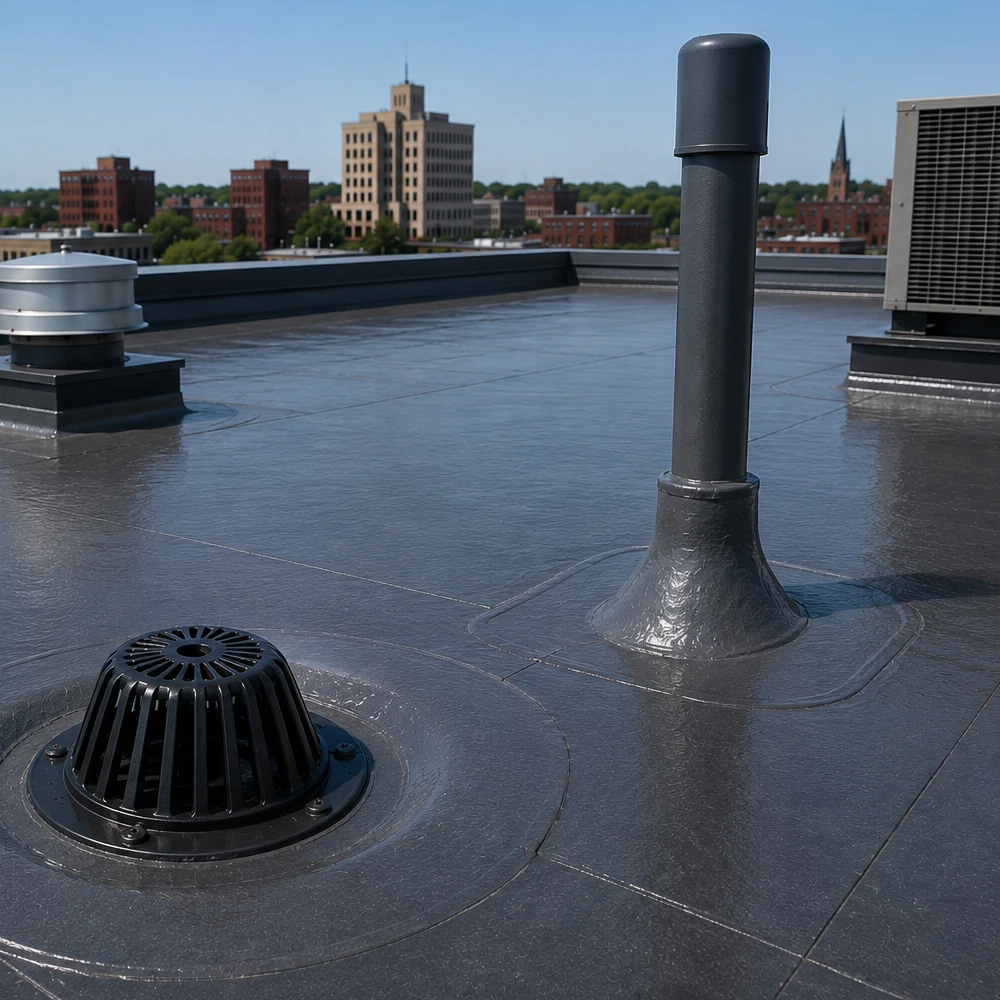
What the Flat Roof Waterproofing Process Looks Like From Start to Finish
Iowa humidity, morning dew, and afternoon rain probability all affect application timing. Experienced local contractors monitor forecasts carefully and do not apply waterproofing products on surfaces that are even slightly damp from overnight moisture. We give you a real start window based on the forecast and call you the same day if conditions push the schedule. What the process looks like:
- Free assessment and moisture probe testing
- Written scope with product specification and prep requirements
- Surface cleaning — power wash, aggregate removal, and debris clear
- Seam and flashing repair before any waterproofing product goes on
- Primer application where manufacturer requires it
- Waterproofing application in specified thickness passes
- Penetration and flashing detailing — drains, pipe boots, curbs, and parapets
- Final inspection and mil thickness documentation
- Site cleanup
How Often Mason City Flat Roofs Need to Be Sealed and Maintained
Penetrations and flashing sealants on Mason City flat roofs should be inspected every year and resealed every three to five years depending on product and condition. Silicone coating systems require full reapplication every ten to fifteen years. Acrylic coatings need reapplication every five to eight years with proper maintenance between cycles.
The April post-winter inspection is the single most critical maintenance window for any waterproofed flat roof in Mason City. Freeze-thaw cycles stress coating edges, lap seam adhesion, and penetration flashings every single winter. A small separation found in April is a tube of compatible sealant and an hour of work. The same separation left through a full rain season saturates insulation and forces a much larger repair. Maintenance intervals by system type:
- Penetration and flashing sealant — inspect annually, reseal every 3 to 5 years
- Silicone coating — inspect annually, full reapplication every 10 to 15 years
- Acrylic coating — inspect annually, full reapplication every 5 to 8 years
- Membrane systems — biannual inspection, seam sealing as needed after inspection
- Drain and scupper cleaning — every spring and fall without exception
- Documentation — keep all inspection and application records for warranty and insurance