
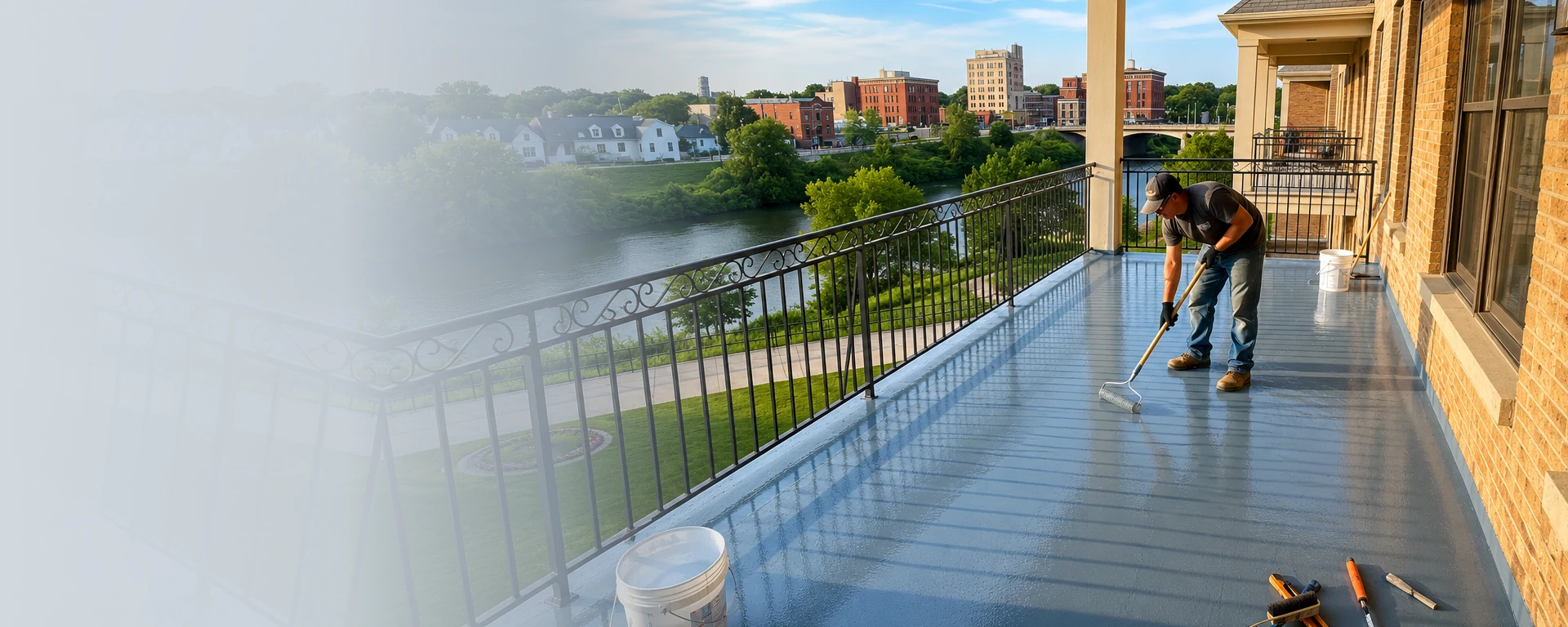
What Is the Best Way to Waterproof a Balcony in Mason City, IA?
The best balcony waterproofing in Mason City combines a traffic-bearing flexible membrane system with complete flashing at all transitions, railing posts, drains, and ledger connections — the locations where water consistently finds its way into the structure below. Liquid-applied polyurethane membrane systems are the most effective option for Iowa balconies because they accommodate the structural movement produced by freeze-thaw temperature swings while maintaining a seamless watertight surface under foot traffic. Surface sealers and deck stains are not waterproofing systems — they protect the walking surface but allow water to penetrate through joints and fastener holes and damage the structural components below. Learn more about our waterproofing services to see which system is right for your balcony, terrace, or rooftop deck.
- Traffic-bearing polyurethane membrane — best for Mason City balconies over living spaces requiring full waterproofing integrity and foot traffic durability
- Liquid-applied EPDM or rubberized systems — suitable for low-traffic balconies with sound substrates and good drainage
- Surface sealers and stains — surface protection only, not a substitute for a proper waterproofing membrane on balconies over conditioned spaces
What Professional Balcony Waterproofing in Mason City Actually Involves
Professional balcony waterproofing is not a sealer brushed over the existing deck surface. It starts with substrate inspection and moisture assessment. Then comes structural joint and crack repair, primer application, traffic-bearing membrane installation, railing post and transition flashing, drain collar waterproofing, and a wearing surface where traffic exposure requires it.
Mason City balconies on multi-story homes and apartment buildings across Cerro Gordo County face concentrated snowmelt and ice loading each spring. That pressure drives water into every unprotected joint and fastener penetration. A system that only seals the walking surface leaves the structural connections, ledger board, and rim joist completely exposed to the moisture that causes the most expensive damage. What a complete balcony waterproofing job covers:
- Substrate inspection and moisture probe testing
- Structural joint, crack, and fastener hole repair
- Removal of failed existing coating where required
- Primer application on porous or previously coated surfaces
- Traffic-bearing membrane installation at manufacturer-specified thickness
- Railing post flashing — the most common failure point on Mason City balconies
- Drain collar and scupper waterproofing to spec
- Ledger and transition flashing at the wall connection
- Wearing surface installation where foot traffic requires it
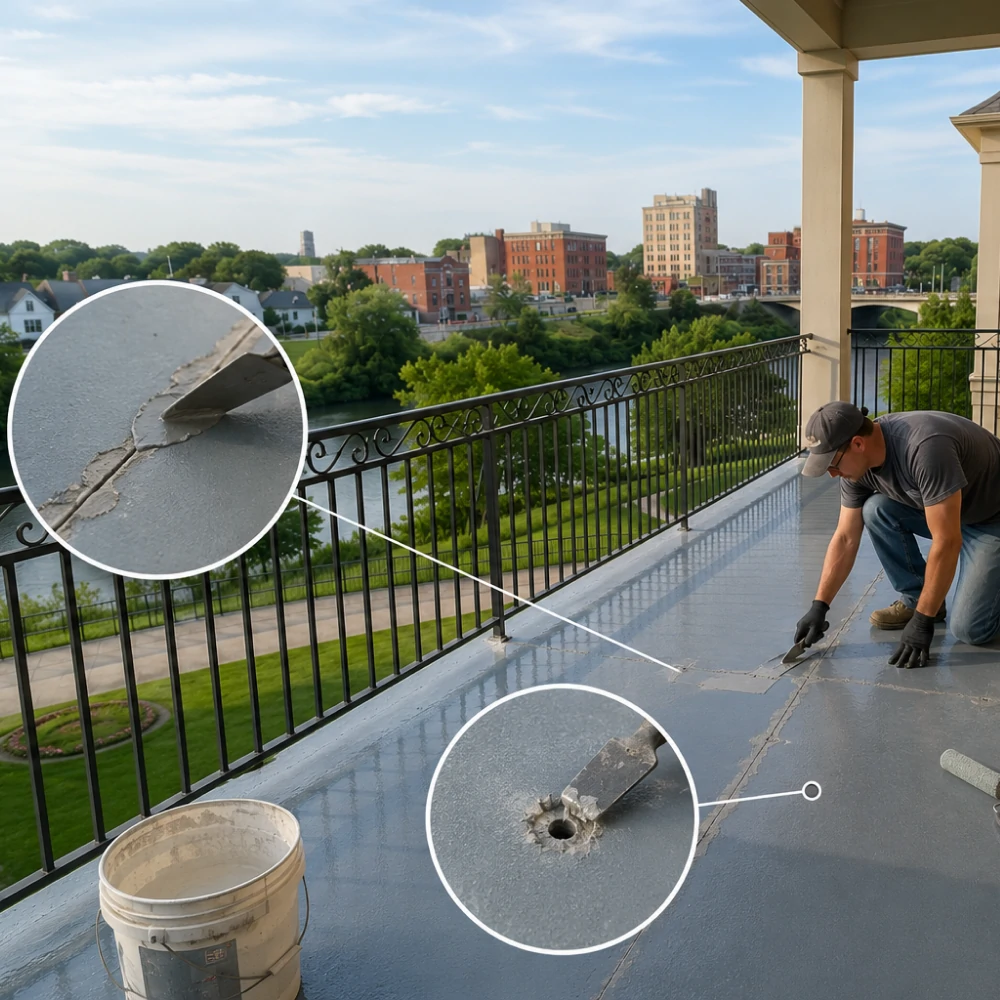
How to Know If Your Mason City Balcony Needs Waterproofing Now
Ceiling staining below a balcony during spring snowmelt is the most urgent warning sign in North Iowa. Water that has found a path through the balcony substrate during winter freeze-thaw events has typically been damaging structural components for longer than the visible stain suggests. Delaying waterproofing at that point risks ledger failure and structural repair costs that far exceed a timely waterproofing investment.
Less urgent signs that still call for a professional assessment:
- Ceiling or wall staining below the balcony — especially during snowmelt season
- Efflorescence — white salt deposits — on concrete balcony surfaces
- Cracked, peeling, or bubbling existing coating
- Railing post wobble from substrate deterioration at the base connection
- Standing water that does not drain within 24 hours of a rain event
- Visible separation at caulk joints between the deck surface and the wall
The Best Waterproofing Systems for Iowa Balconies and Elevated Decks
Traffic-bearing polyurethane membrane systems are the preferred choice for Mason City balconies over living spaces. They stay flexible through Iowa❜s temperature range from -20°F to 100°F, accommodate the structural movement that every elevated deck experiences through seasonal temperature cycling, and provide a seamless watertight surface that protects interior spaces and structural connections for ten to twenty years with proper maintenance.
Systems matched to Mason City balcony conditions:
- Traffic-bearing polyurethane membrane — over living spaces, primary choice for Iowa❜s temperature range
- Liquid-applied EPDM — low-traffic balconies with sound substrate and clean drainage
- Hot-applied rubberized membrane — complex shapes and transitions with heavy hydrostatic exposure
- Under-deck drainage system — wood decks over conditioned spaces where full membrane is not practical
- Never standard elastomeric deck paint — will not accommodate Iowa freeze-thaw movement or pedestrian wear
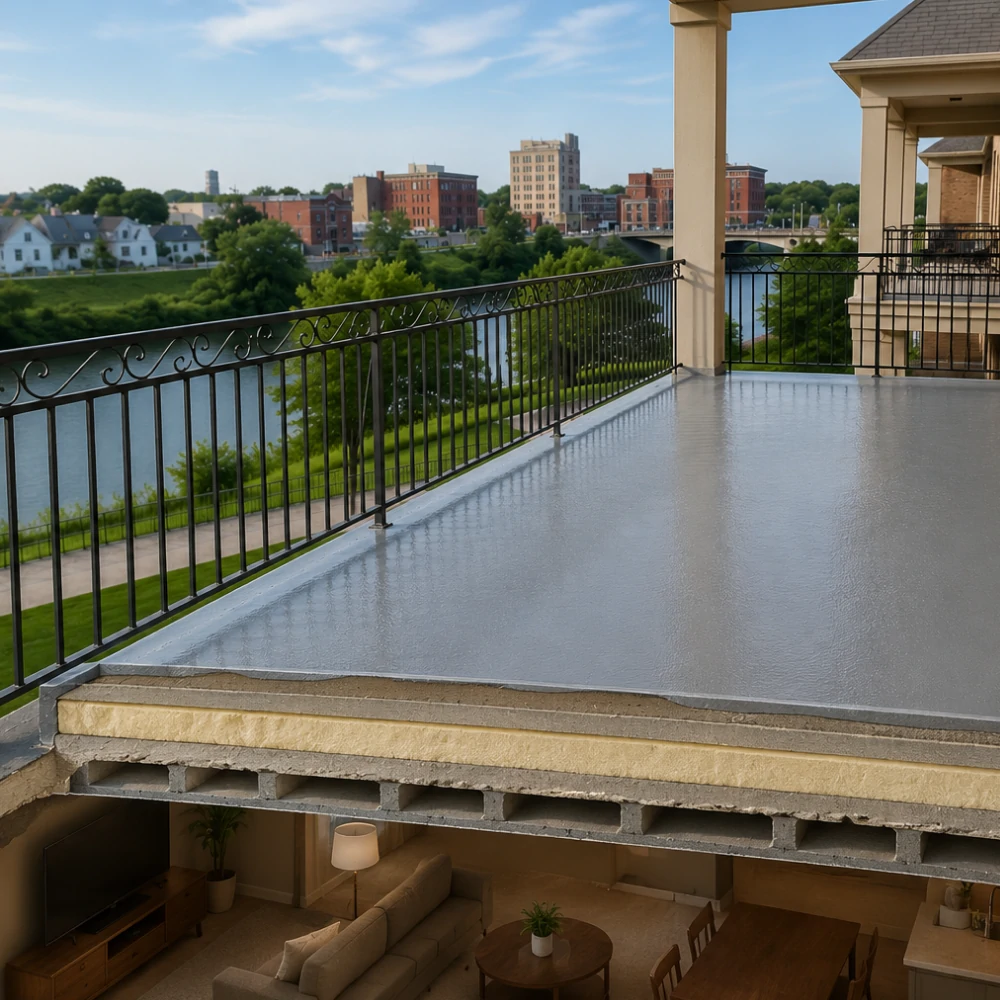
How to Avoid the Most Common Balcony Waterproofing Mistakes
The most common balcony waterproofing failure on Mason City properties is applying elastomeric deck coating over an existing deteriorated surface without removing the failed layer and repairing the substrate below. The new coating bonds to the old failing layer rather than the structural deck. It separates at railing posts and transitions during the first freeze-thaw cycle and creates new water entry points at the exact locations — posts, corners, and drains — where the original system was already inadequate.
Mistakes that cause early balcony waterproofing failure:
- Applying any product over damp, dirty, or structurally compromised substrate
- Skipping manufacturer-required primer on porous or previously coated surfaces
- Incomplete railing post flashing — the top failure point on most Mason City balconies
- Insufficient drain collar detailing — water tracks in at every unflashed drain
- Using non-traffic-rated coatings under regular pedestrian load
- Applying products outside their temperature and humidity application windows
- Rushing primer cure time before membrane application begins
How Long Balcony Waterproofing Lasts in North Iowa and How to Maintain It
Traffic-bearing polyurethane membrane systems last ten to twenty years with maintenance in Mason City's climate. Liquid-applied EPDM systems last ten to fifteen years. Surface coating systems last five to eight years. All lifespans shorten significantly without biannual inspection and prompt repair of railing post and transition flashings.
The April post-winter inspection is the single most important maintenance step for any waterproofed Mason City balcony. Freeze-thaw cycles stress railing post flashings, drain collar transitions, and perimeter termination edges every winter. Maintenance steps that protect the investment:
- April inspection after freeze-thaw season — check all railing posts, drains, transitions, and edges
- October inspection before winter — confirm no open laps or separated flashings
- Prompt resealing of any separation — never let a gap run through a rain season
- Recoat or reapply within the manufacturer's recommended window before surface fails
- Keep all installation and inspection records for warranty and insurance
- Limit foot traffic during HVAC or repair service calls — punctures are common at post bases