

How Roof Leaks Are Found and Fixed in Mason City
Finding the leak source is harder than fixing it. Water entry points on a Mason City roof are rarely directly above the ceiling stain — water travels along rafters, sheathing, and underlayment before dripping to a visible point inside. A thorough leak diagnosis starts at the attic, traces the moisture path back to the deck, then identifies the failure on the roof surface. Common sources include failed pipe boots, lifted flashing at valleys and chimneys, deteriorated ridge cap, and open membrane seams from wind damage.
- Attic inspection — trace moisture staining to the deck entry point
- Roof walk — check all penetrations, flashings, and field membrane
- Photo documentation of the confirmed leak source
- Written scope of work before any repair begins
- Repair verified with follow-up inspection after the next rain event when warranted
What Roof Leak Repair in Mason City Covers
Roof leaks come from a narrow list of sources. Every active leak we find in Mason City traces back to one of these failure types. Knowing which one is causing your leak determines exactly what the repair involves and how long it takes. We diagnose the source on every visit before recommending any repair scope — because the wrong fix wastes money and leaves the original failure open.
- Pipe boot failure — the most common single-point leak source on Mason City homes
- Flashing failure at chimneys, skylights, and dormers
- Valley flashing open seams and corrosion
- Ridge cap deterioration and blow-off
- Ice dam damage at eave flashings and underlayment
- Membrane punctures or splits exposing the substrate
- Improperly sealed roof penetrations from HVAC or ventilation work
Roof Leaks on Older Mason City Homes — What Changes After 20 Years
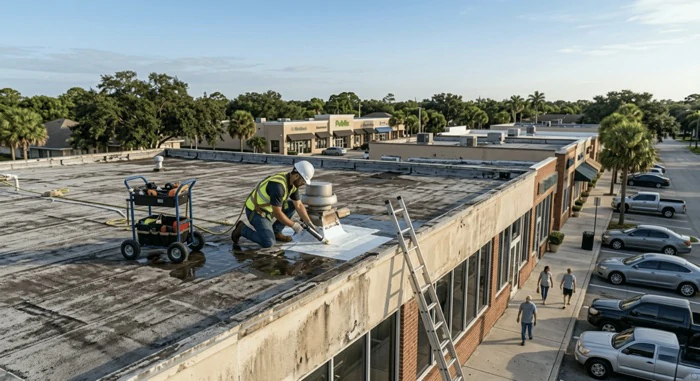
Mason City has a substantial commercial building stock from the 1950s through 1980s. Buildings in these decades were constructed with built-up roofing (BUR) or modified bitumen systems with a design lifespan of 20 to 25 years. Many of these roofs have been re-covered with TPO, EPDM, or PVC membrane systems, and some still have the original substrate and deck underneath. On older roofs, hiring the Best Roofing Contractor Mason City homeowners can find pays off on these older roofs — because a licensed inspector who knows what to look for will diagnose whether a single repair fixes the leak or whether the roof has reached the point where a full replacement is the more cost-effective path.
Pipe boots on older homes fail first — the rubber collar that seals the pipe penetration cracks and splits from UV exposure over time. Chimney step flashing is the second most common failure on pre-1990 Mason City homes, because the original flashing was often caulked rather than mechanically fastened and the caulk fails after 10 to 15 years.
- Pipe boots degrade in 15 to 20 years — replacement is straightforward and inexpensive
- Step flashing at chimneys on older homes is often caulked, not mechanically set
- Deck boards on 1950s–1970s homes may have gaps or soft spots under active leaks
- Layered roofing systems hide base sheet failures between plies
- Inadequate roof ventilation on older buildings accelerates membrane aging and leak risk
How Iowa Winters Create Roof Leaks in Mason City
Ice dams are the primary cause of winter roof leaks across Mason City. They form when heat escaping through a poorly insulated building envelope melts snow on the upper roof, and that meltwater refreezes at the cold parapet or eave. The ice builds up and backs water underneath the roofing membrane — past the base sheet, past the flashing terminations if improperly sealed, and into the building interior below. Ice dam leaks appear in January and February but the underlying attic insulation and ventilation problem was present all along.
- Ice dam leaks appear at interior walls and ceilings near parapets and roof edges
- The source is at the roof edge — water backed up under membrane terminations by the dam
- Fixing the active leak requires addressing the ice dam first
- Long-term prevention requires proper attic insulation and ventilation
- Ice and water shield replacement at eaves resolves recurring ice dam leaks
Maintenance Habits That Prevent Future Roof Leaks in Mason City
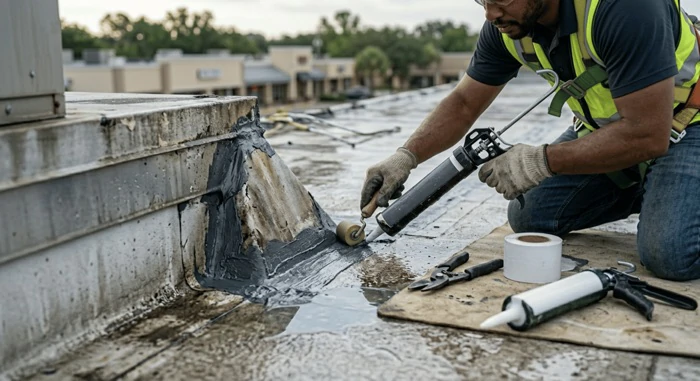
Most roof leaks in Mason City are preventable with two scheduled inspections per year. The April inspection catches ice dam damage, lifted flashing, and freeze-thaw cracking before the spring rain season opens those failures into active leaks. The October inspection clears debris and checks the roof system before snow and ice load it for five months. Maintenance habits that prevent future roof leaks are far cheaper than the repair and interior damage that follows a missed season.
- Spring inspection in April — check eave flashings, pipe boots, and valley condition
- Fall inspection in October — clear debris, check seals, confirm gutter attachment
- Gutter and downspout cleaning in fall to prevent ice dam formation at eaves
- Attic insulation and ventilation check — prevents ice dam source at the roof deck
- Seam and flashing check after every major wind or hail event
- Keep overhanging tree limbs trimmed away from the roof surface
What Happens If a Roof Leak Goes Unrepaired in Mason City
Active roof leaks do not stay contained. Water follows the path of least resistance through the building — from the deck into the insulation, from the insulation into the ceiling drywall, from the drywall into wall cavities. Mold begins growing on wet organic material within 24 to 48 hours. A small roof repair that costs a few hundred dollars becomes a full remediation and interior rebuild when the leak runs through one Iowa winter unaddressed. The longer the delay, the larger the repair bill — and the harder the insurance claim becomes to document as storm-related rather than maintenance-related.
- Wet insulation loses thermal performance and must be replaced
- Mold growth begins within 48 hours on wet drywall and framing
- Roof deck rot spreads under active leaks — decking replacement adds significant cost
- Interior damage from a single leak season can total 5 to 10 times the repair cost
- Insurance claims become harder to separate from maintenance exclusions over time