
How Long Does Commercial Roof Installation Take in Mason City, IA?
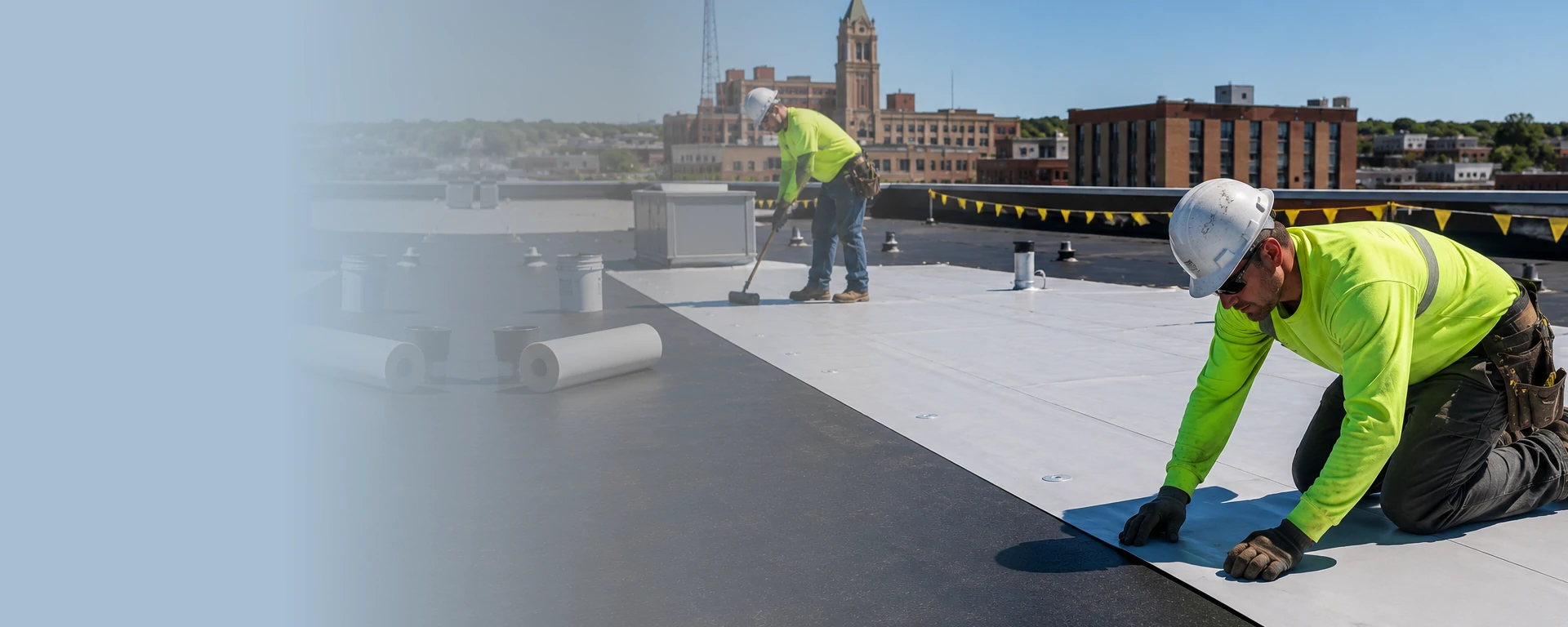
Most commercial roof installs in Mason City follow a clear path from first call to final inspection. A licensed roofing contractor will book a free install check, review system options and scope in writing, pull permits with the City of Mason City building department, prep the substrate, install the new system to manufacturer spec, and finish with a site cleanup and final walkthrough. Most commercial jobs wrap up in three to ten days depending on building size and system type when the weather holds.
- Book a free install check with a licensed Mason City commercial roofer
- Review system choices, scope of work, and start date in writing
- Pull permits with the City of Mason City building department
- Prep the substrate — check, repair, and install insulation if specified
- Install the new roof system to manufacturer spec
- Finish flashing, penetrations, edge details, and drainage work
- Final inspection, leak test if applicable, and site cleanup
What a Professional Commercial Roof Installation in Mason City Actually Includes
A real commercial roof install is more than just replacing the membrane. Any experienced roofing contractor knows the job includes substrate prep, insulation boards, membrane or panel installation, flashing systems, penetration seals, and proper drainage. Each part has a role — skip one and the whole system gets weaker.
Iowa code requires specific R-values for commercial roof insulation in Mason City buildings. Some bids skip proper insulation to lower the price. That single shortcut increases heating and cooling costs every year and may fail building inspection. We install every part of the system the right way.
- Substrate check and repair before any new material goes down
- Insulation boards to meet Iowa commercial energy code
- TPO, EPDM, PVC, modified bitumen, or metal panel system
- Base flashing, counterflashing, and penetration boots
- Edge metal, gravel stops, and fascia details
- Proper drainage slope and scupper or drain integration
- Walkway pads around rooftop equipment
When New Construction and Tear-Off Installs Need Different Approaches
A new construction commercial roof and a tear-off install on an older Mason City building are not the same job. New construction has a clean deck, modern structural design, and no surprises. A tear-off install on an older commercial building is a different story — many warehouses and retail buildings near downtown Mason City still have original built-up roofing (BUR) or deteriorated substrate. Modern single-ply membranes need a sound surface to seat and seal, so older substrates often need overlay boards or full replacement before the new system can be installed to spec. We catch this during the substrate check and tell you upfront.
- New construction has a clean, modern deck — older buildings may need substrate repair
- Permits and code rules can differ between new builds and replacement installs
- Tear-off jobs may turn up wet insulation or damaged decking that needs replacement
- Older buildings often need updated flashing details to match modern membrane systems
- Timing differs — new construction fits a build schedule; replacements fit a weather window
How to Choose the Right Commercial Roofing System for Iowa❜s Climate
The right system depends on the building type, the roof slope, your budget, and how long you plan to own the property. TPO membranes are the most common pick for Mason City commercial roofs — fair price, heat-welded seams, and 15 to 25 year life. EPDM rubber membrane costs less upfront but seams are adhesive-bonded rather than welded. PVC costs more but offers superior chemical resistance and longer warranties.
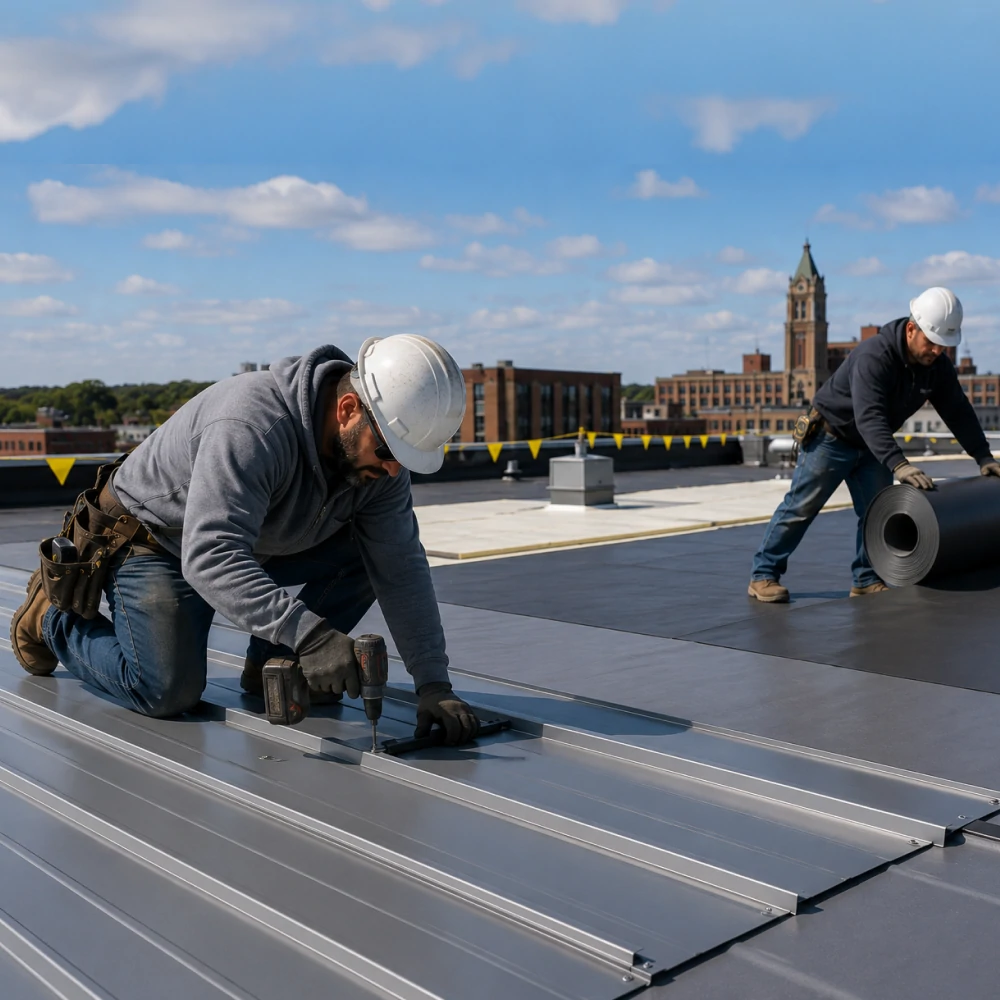
Metal panel systems — standing seam or corrugated — handle hail and heavy snow well and can last 40 to 50 years with proper maintenance. Modified bitumen is a solid choice for moderate-slope roofs. Each system has trade-offs in upfront cost, lifespan, maintenance needs, and insurance considerations. Ask your agent about any premium discounts for impact-resistant or Class A fire-rated systems before you pick.
- TPO single-ply membrane — heat-welded seams, 15 to 25 year life
- EPDM rubber membrane — lower cost, adhesive seams, proven track record
- PVC membrane — chemical resistance, longer warranties, higher cost
- Standing seam metal — 40+ year life, excellent hail resistance
- Modified bitumen — torch-applied or self-adhered, good for moderate slopes
- Built-up roofing (BUR) — multi-ply system, still used on some flat roofs
What the Commercial Roof Installation Process Looks Like Day by Day
Day one starts with the crew arriving on time and protecting your site. Entryways, landscaping, and parking areas get marked off before any tear-off or material movement. The substrate gets checked and prepped. Insulation and cover boards go down before the new membrane or panel system starts.
Iowa weather is part of every job. Spring and fall need flex room. Rain, wind, or a sudden cold snap can push the schedule by a day or two. We give you a real start window upfront and call you the same day if it changes. Most commercial jobs can proceed with the building occupied — we coordinate access, staging areas, and noise-sensitive work around your operations.
- Day 1-2 — Site protection, tear-off if needed, substrate check and repair
- Day 2-4 — Insulation boards, cover boards, and membrane or panel installation
- Day 4-6 — Base flashing, penetration seals, edge metal, and drainage integration
- Final day — Leak test if applicable, site cleanup, and walkthrough with property manager
How to Verify Your Installer Will Build the Roof to Code and Spec
Ask for the Iowa contractor license number — Iowa requires commercial roofers to display it on contracts and trucks. Ask for proof of general liability and workers' comp coverage. Ask if the crew is certified by the manufacturer of the system going on your building. Manufacturer certifications often unlock longer warranties and may be required for warranty transfer if you sell the property.
Read the contract close. A real bid lists materials by brand, the start window, payment terms, and warranty details. Storm chasers from out of state often roll in after a hail storm with hard sales tactics — same-day signature demands, big deposits upfront, no local references. Those are red flags in North Iowa.
- Iowa contractor license number on the contract and the truck
- Current certificate of insurance for commercial liability and workers' comp
- Manufacturer certification for the system going on your building
- Three local references from recent Mason City commercial projects
- Written scope of work with materials listed by brand and specification
- Named project lead — the person running your job on-site
How Proper Installation Prevents the Most Common Commercial Roof Failures
Most early commercial roof failures do not come from bad membranes. They come from install errors. Improperly welded or sealed seams are the most common cause — seams that fail leak tests or separate under thermal stress void warranty coverage. Missing or improper flashing around penetrations, HVAC units, or parapet walls is the second most common cause. Inadequate drainage is third.
Ponding water is the leading cause of premature failure on Mason City commercial roofs. The fix starts during the install — not after the first leak. Proper substrate slope, correctly positioned drains or scuppers, and tapered insulation systems prevent most ponding issues before they can ever start. We check drainage design during the initial assessment and flag any slope concerns upfront.
- Improperly welded or sealed membrane seams
- Missing or inadequate base flashing around penetrations and walls
- Poor drainage design that allows standing water
- Insufficient fastening or adhesion in high-wind zones
- Punctures from foot traffic or rooftop equipment without walkway pads
- Membrane installed in temperatures outside manufacturer specifications