
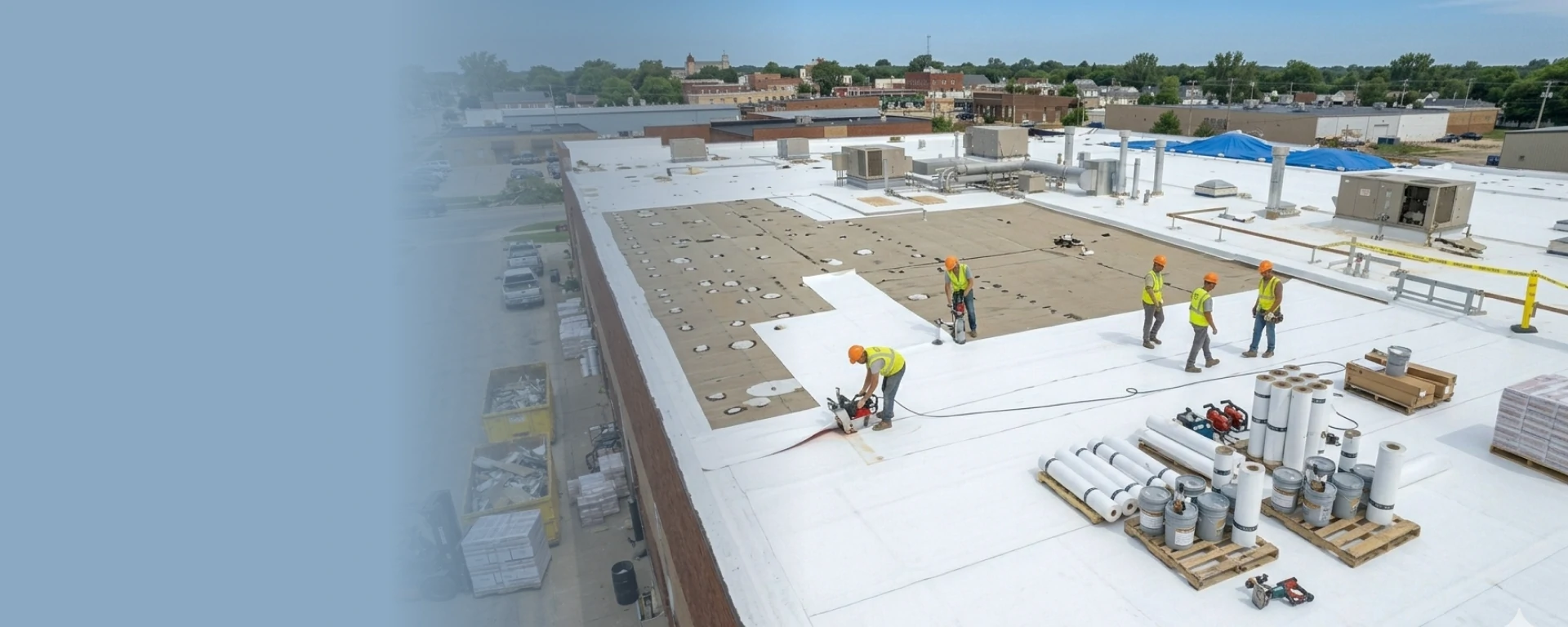
How to Identify Hail Damage on a Mason City Commercial Roof
Hail damage on commercial membrane roofs is not always visible from the ground. The most reliable indicators are punctures or indentations in the membrane surface, compromised seams, and dents in the soft metals — HVAC curbs, roof drains, scuppers, parapet caps, and penetration flashing. An experienced Mason City Iowa Roofing Contractor documents the following hail damage types on every inspection and marks each one with chalk for photo documentation.
- Punctures or indentations in TPO, EPDM, or PVC membrane surfaces
- Compromised or split seams from direct hailstone impacts
- Dented roof drains, scuppers, and gutter systems
- Damage to HVAC curbs, equipment pads, and penetration boots
- Cracked or fractured membrane from large hailstone direct impacts
- Soft metal flashing dents at parapet walls, equipment penetrations, and drain systems
What Hail Damage Roof Repair in Mason City Covers
Hail damage repair is not one-size-fits-all. Isolated impact zones on a roof that is otherwise in good condition point to targeted membrane patches or seam repairs. Widespread puncturing across the membrane field, combined with soft metal damage throughout and compromised seam integrity, typically indicates a total-loss roof where replacement is the more cost-effective and durable option. Every inspection starts with an honest assessment of which scope is right for your specific roof — not the most profitable one.
- Free hail inspection with chalk-marked strike documentation
- Photo package for insurance claim submission
- Partial membrane repair or patching for isolated damage zones
- Full membrane replacement when damage is widespread across the field
- Soft metal repair or replacement — drains, scuppers, HVAC curbs, and flashing
- Seam reinforcement or replacement
- Written inspection report for your insurance adjuster
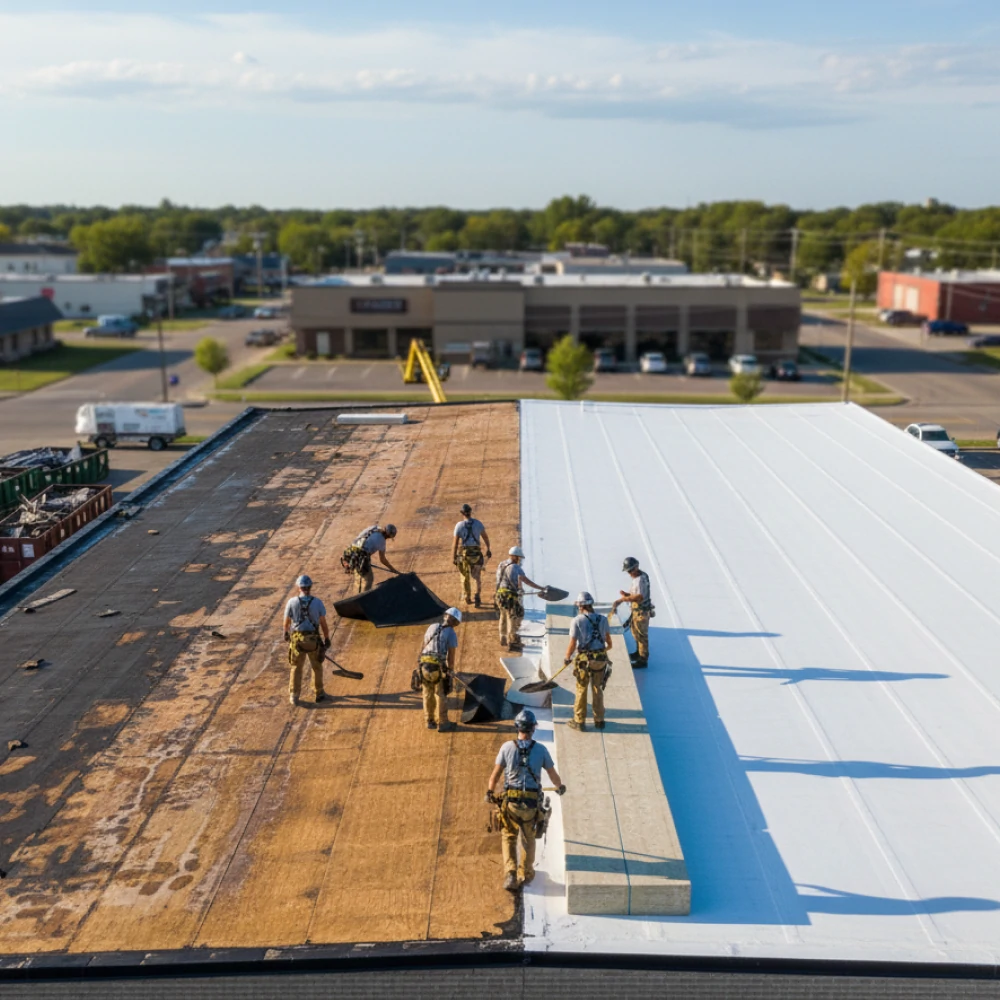
Why Hail Damage Must Be Repaired Before the Next Iowa Winter
Hail damage weakens the membrane's ability to shed water long before it causes an active leak. Punctures and compromised seams allow moisture infiltration into the insulation layer, which freezes and expands during winter months. This freeze-thaw cycle stresses the already-weakened membrane and surrounding areas. A Mason City commercial roof hit by a May hail event and left unrepaired often develops its first leaks during the following January or February — just when repair crews are hardest to schedule and ice complicates the work.
Document the hail damage first, then file. Insurance claims submitted promptly with strong documentation from a licensed contractor close at much higher rates than claims filed months after the event with no professional report attached.
- Punctured membranes allow moisture infiltration — aging accelerates immediately after impact
- Compromised seams fail through their first freeze-thaw cycle after impact
- Insurance claim filing windows in Iowa are typically one year — don't wait
- Contractor availability drops sharply from November through February
- Water damage from a winter leak costs far more than the hail repair itself
How Hail Size Affects Commercial Roof Damage in Mason City
Quarter-size hail — about 1 inch in diameter — is the threshold where commercial membrane roofs begin to show consistent damage on most low-slope roof systems. Larger hail causes proportionally more severe damage. Golf ball-size hail (1.75 inches) often causes total-loss damage on membrane systems that are 10 years old or more. Tennis ball-size events, which Mason City has seen multiple times in the past decade, frequently cause structural damage to decking and insulation in addition to the membrane surface.
- Pea size (0.25") — no significant membrane damage, soft metals may show minor dents
- Marble size (0.5") — minor surface indentation, soft metal damage begins
- Dime size (0.75") — moderate membrane indentation, inspection warranted
- Quarter size (1") — consistent membrane puncturing, insurance claim threshold
- Golf ball size (1.75") — severe damage, replacement likely on older membrane systems
- Baseball size (2.75") — structural damage possible, immediate inspection required
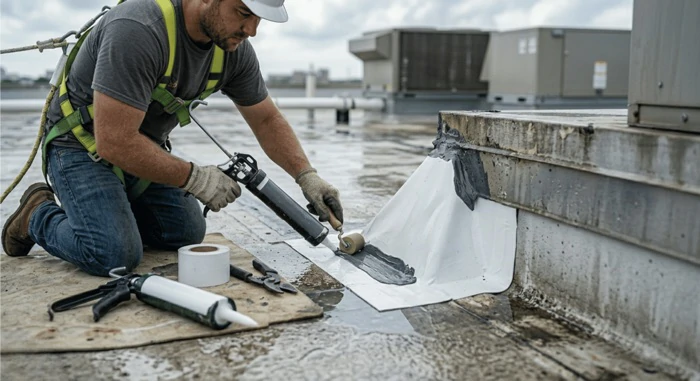
How the Hail Damage Insurance Claim Process Works in Iowa
Iowa commercial property policies cover sudden hail damage under the building coverage section of the policy. The standard process: report the claim, the insurance company assigns an adjuster, the adjuster inspects the roof, and a settlement is offered based on their assessment. The problem is that adjusters see dozens of roofs after a widespread hail event and occasionally miss damage points — especially membrane punctures and seam compromise that are harder to identify without chalk marking and close inspection.
Having a licensed contractor's independent inspection report in hand before the adjuster visits gives you a second set of eyes to compare against the adjuster's findings. If the adjuster misses damage that the contractor documented, you have the paperwork to request a supplemental review. The written report and photo package we provide are formatted specifically to support the insurance claim process.
- File the claim as soon as possible after the hail event
- Schedule a contractor inspection before or alongside the adjuster visit
- Get a written report with chalk-marked, photographed damage points
- Compare the adjuster's findings to the contractor's documentation
- Request supplemental review if damage was missed or undervalued
- Do not sign off on a settlement before reviewing the contractor's full scope
What to Look for When Hiring a Hail Damage Roofer in Mason City
After any significant hail event in North Iowa, out-of-state storm chasers move through Mason City neighborhoods. They are not licensed in Iowa, they do not have local references, and they are gone before problems surface. Iowa law requires a contractor license for roofing work. Any crew that cannot produce one is operating illegally. Ask for the Iowa license number, a local Mason City address, and at least three references from Cerro Gordo County work completed in the past year.
- Iowa contractor license number on the contract and truck
- Permanent Mason City or North Iowa address — not a temporary PO box
- References from Mason City and Cerro Gordo County work
- No pressure to sign before the adjuster has inspected
- Written warranty covering both materials and labor
- Permit pulled with the county for any full replacement