
What Goes Under a Metal Roof in Mason City, IA?
A proper metal roof install in Mason City needs three layers under the panels — solid decking, high-temperature underlayment, and ice and water shield along the eaves and valleys. Iowa❜s freeze-thaw cycles and ice dam risk make eave protection critical. An experienced Mason City roofer will also recommend a vented air gap or batten system in cold climates to manage condensation under the panels.
- Solid plywood or OSB decking — never spaced lath alone for home metal roofs
- Synthetic high-temperature underlayment rated for metal use
- Ice and water shield along eaves, valleys, and any roof penetrations
What a Proper Metal Roofing Installation in Mason City Actually Involves
A full metal install is more than just bolting panels to a roof. The job covers deck prep, ice and water shield, underlayment, panels, fasteners, flashing, ridge venting, and trim work. Each part has a job. Skip one and the whole system gets weaker — and the warranty often gets voided.
A lot of older homes in Mason City and the rural parts of Cerro Gordo County still have plank decking. Modern metal panels need a solid surface for the underlayment and panel attachment. Spaced plank decking on its own does not give you that. We catch this during the first check and tell you upfront if plywood overlay is needed before the panels go on.
- Deck check and plywood overlay if the existing decking needs it
- High-temperature synthetic underlayment across the whole roof
- Ice and water shield along eaves, valleys, and penetrations
- Vented air gap or batten system to manage condensation
- Metal panels — standing seam, exposed fastener, or architectural panel systems
- Manufacturer-spec fasteners with butyl tape at the right spots
- Ridge venting, eave flashing, and edge trim
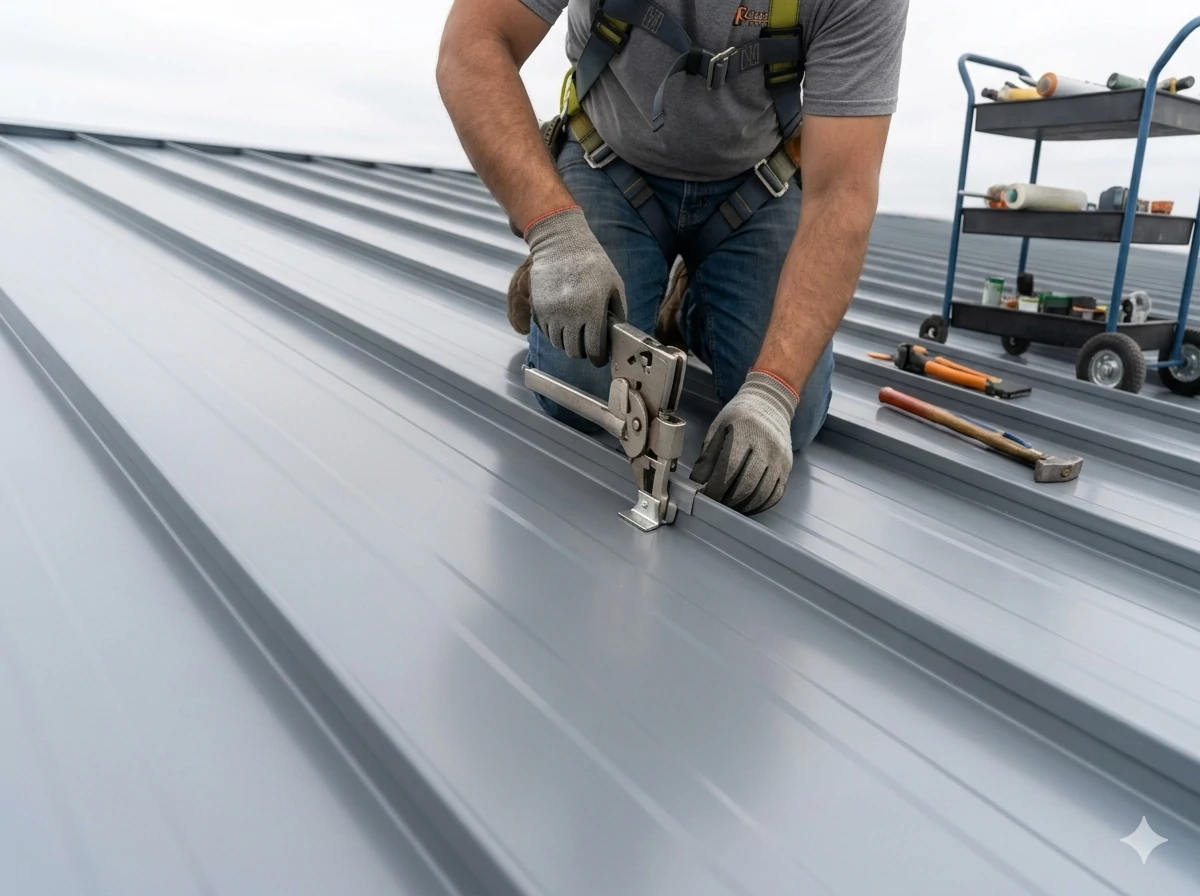
How to Choose Between Standing Seam and Exposed Fastener Metal Systems
Standing seam panels lock together with a raised seam. The fasteners are hidden under the seam, so nothing on the roof face can back out, leak, or wear from sun. They cost more upfront but last the longest. Metal roofing exposed fastener panels — sometimes called R-panel or screw-down — have screws that go right through the face of the panel. They cost less and install faster, but those exposed fasteners need check-ups over time.
For most Mason City homes, standing seam is the better pick. Steep pitches, complex valleys, and the long-term expectations of a home roof match what standing seam delivers. Exposed fastener panels work well on simpler roofs — pole barns, machine sheds, garages, and outbuildings common across North Iowa farms.
- Standing seam — hidden fasteners, longer life, best for home roofs and complex shapes
- Exposed fastener — screws through the face, lower cost, faster install for simple roofs
- Standing seam handles Iowa snow shed and ice dam stress better
- Exposed fastener works well on barns, sheds, and farm outbuildings
- Both can carry impact-resistant ratings — ask before you choose
What Goes Underneath a Metal Roof and Why It Matters in Iowa
The vented air gap is the part most installers from milder states leave out. Without it, warm air from inside the home meets cold metal on a winter day and condensation forms on the underside of the panels. That moisture drips onto the decking and slowly rots it from below — a hidden failure that can take years to show up. By the time you see ceiling stains, the deck is already gone.
- Synthetic underlayment — handles the heat under metal panels in summer
- Ice and water shield — blocks ice dam meltwater along the eaves in winter
- Vented air gap or batten system — keeps condensation off the deck
- Proper attic venting — works with the air gap to move moisture out
What the Metal Roof Installation Process Looks Like Day by Day
Day one starts with the crew arriving on time and protecting your yard. Plants, vehicles, and outdoor surfaces get covered. The deck gets checked and prepped. Ice and water shield, underlayment, and any battens or air gap framing go down before the first panel is set.
Iowa weather is part of every job. Wind is a bigger factor on metal jobs than on conventional roofing — large panels do not move safely in high gusts. We give you a real start window upfront and call you the same day if the weather pushes the schedule. Most home metal installs in Mason City wrap up in two to five days depending on roof size and shape.
- Day 1 — Yard protection, deck check and prep, underlayment and ice and water shield
- Day 2 — Battens or air gap framing, start panel install
- Day 3 — Continue panel install, fastener placement, sidewall flashing
- Day 4 — Finish panels on complex roofs, valleys, and penetrations
- Final day — Ridge venting, edge trim, cleanup, and walkthrough
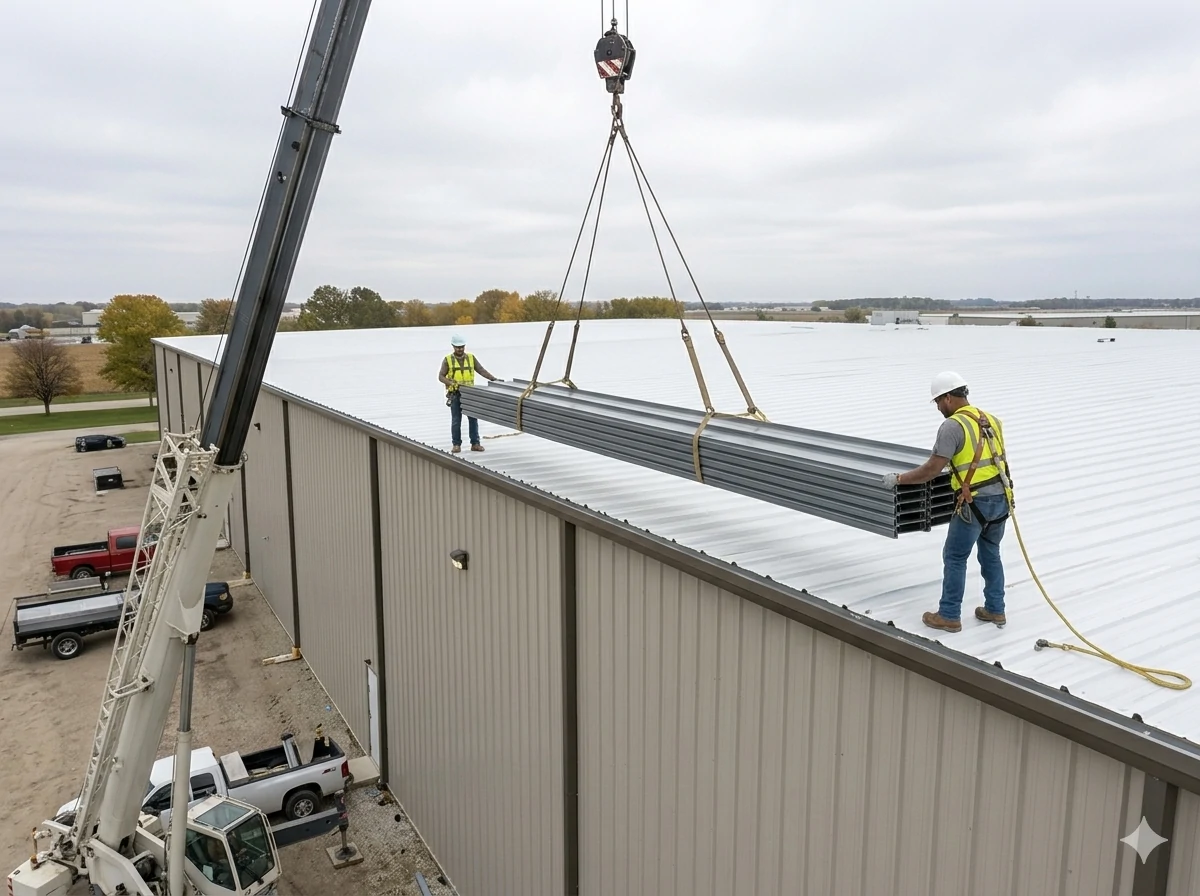
How to Verify Your Installer Knows Metal Roofing Best Practices
Metal roofing has a much smaller margin for installer error than asphalt. A bad metal install does not just look wrong — it leaks, rots the deck, and voids the warranty. Ask for the Iowa contractor license number. Ask if the crew is certified by the manufacturer of the specific panel system going on your roof. That certification often unlocks longer warranties.
Ask how many metal roofs the contractor has installed in North Iowa in the past year. A roofer who does one or two metal jobs a year is a generalist. A roofer who does ten or more a year is a metal specialist. The difference shows up in fastener placement, flashing details, and how the seams are finished.
- Iowa contractor license number on the contract and the truck
- Manufacturer certification for the specific panel system you chose
- Number of metal roofs installed in North Iowa in the last 12 months
- Three local metal roof references — drive past at least one
- Written scope of work listing the panel brand, gauge, and finish
- Named project lead — the person running your job on-site
How Proper Installation Prevents the Most Common Metal Roof Problems
Most metal roof problems do not come from bad panels — they come from install errors. Three issues account for the bulk of metal roof complaints in Iowa: oil canning, fastener back-out, and condensation rot. All three are preventable when the install follows manufacturer specs and accounts for cold-climate conditions.
Oil canning is the wavy look you sometimes see on flat metal panel sections — it comes from panels stretched too tight or pulled out of square. Fastener back-out happens when screws are overdriven or set at the wrong angle. Condensation rot starts when there is no vented air gap and the underside of the panel sweats into the deck.
- Panels stretched or torqued during install — causes oil canning
- Fasteners overdriven or set at the wrong angle — causes back-out
- Missing butyl tape at panel laps and trim joints — causes leaks
- No vented air gap or batten system — causes condensation rot
- Wrong fastener type for the panel system — voids warranty
- Skipped ice and water shield along eaves — causes ice dam leaks