
Mason City, IA & North Iowa
Is a Commercial Roof Replacement Tax Deductible for My Iowa Business?
Commercial Roof Replacements Are Deductible, Just Not Always All at Once
We get this question a lot. Yes, a commercial roof replacement in Indiana is tax deductible for your Iowa business. But how you deduct it? That comes down to how the IRS sees the work. Most building owners in Mason City, especially those with older places near downtown, don't think about this until it's too late. They really should.
The IRS puts roof work into two main types: repairs and improvements. This changes everything on your tax return.
Repairs vs. Improvements: Why It Matters
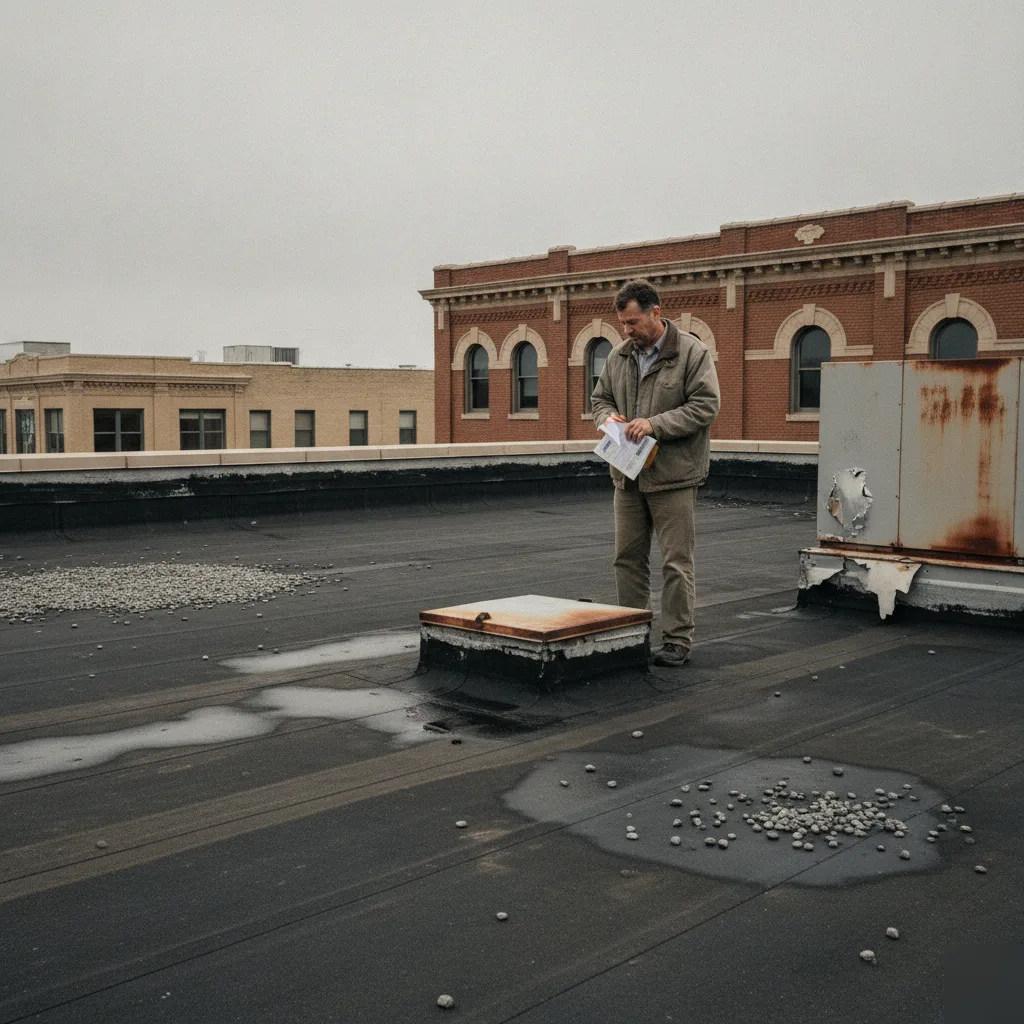
A repair keeps your roof going. It fixes what broke. Say you need flat roof repair after a spring storm, or a patch on your warehouse near the North Iowa Fairgrounds. The IRS lets you write off repair costs the same year you pay them. This hits your taxable income directly. Most business owners want that.
A full commercial roof replacement is a different story. The IRS usually calls it a capital improvement. You're not just patching a spot, you're putting on a whole new system. Capital improvements get written off slowly, over time. Not all at once. For our commercial buildings, that's usually 39 years.
Waiting 39 years for a full write-off? That's a long haul.
There's some better news. Section 179 of the tax code shifted things. After the Tax Cuts and Jobs Act of 2017, qualifying roof replacements on commercial buildings can get fully deducted the year you use them. The IRS even put roofs on the eligible list. So that new TPO roofing installation or EPDM roofing installation for your Mason City place, it might count for an immediate write-off. No 39-year wait.
What Qualifies Under Section 179
Not every job is the same. You need to know the basic rules before you plan any deduction. Here's what usually needs to happen:
- The building must already be in service. You can't deduct a roof on a property you haven't used yet.
- The roof work has to be on a commercial building. Not your house.
- Your total write-off can't be more than your business income that year.
- The roof has to be in use during the tax year you claim it.
We've seen business owners in Mason City get smart. They time their commercial roof replacement for years with higher income. Smart move. And your accountant can figure out if that timing works for you.
Bonus Depreciation Is Another Option
Section 179 isn't your only way. Bonus depreciation used to give 100% first-year write-offs for certain property. But bonus depreciation began phasing down in 2023. It dropped 20% each year. For 2025, it's 40%. Still a big piece, just not the whole thing.
The window for a top tax benefit on a commercial roof replacement is closing. We've noticed lots of folks near the South Federal Avenue corridor, traffic gets backed up there, who keep putting off roof work. The tax math right now says do it sooner.
We've seen this mess things up for people: mixing flat roof repair with a full commercial roof replacement. On the same job. If you do both, your contractor's invoice needs clear line items. Your CPA needs that breakdown. It helps classify each cost right. We make sure our invoices are detailed for this exact reason, by the way.

Look, your commercial roof replacement gets deducted. The real puzzle is how much you write off this year. Or if you spread it out. That depends on the tax rule you pick. And how the job gets documented. Get your roofer and accountant talking before we start. That one call saves people thousands.
Section 179 May Let You Deduct the Full Cost in One Year
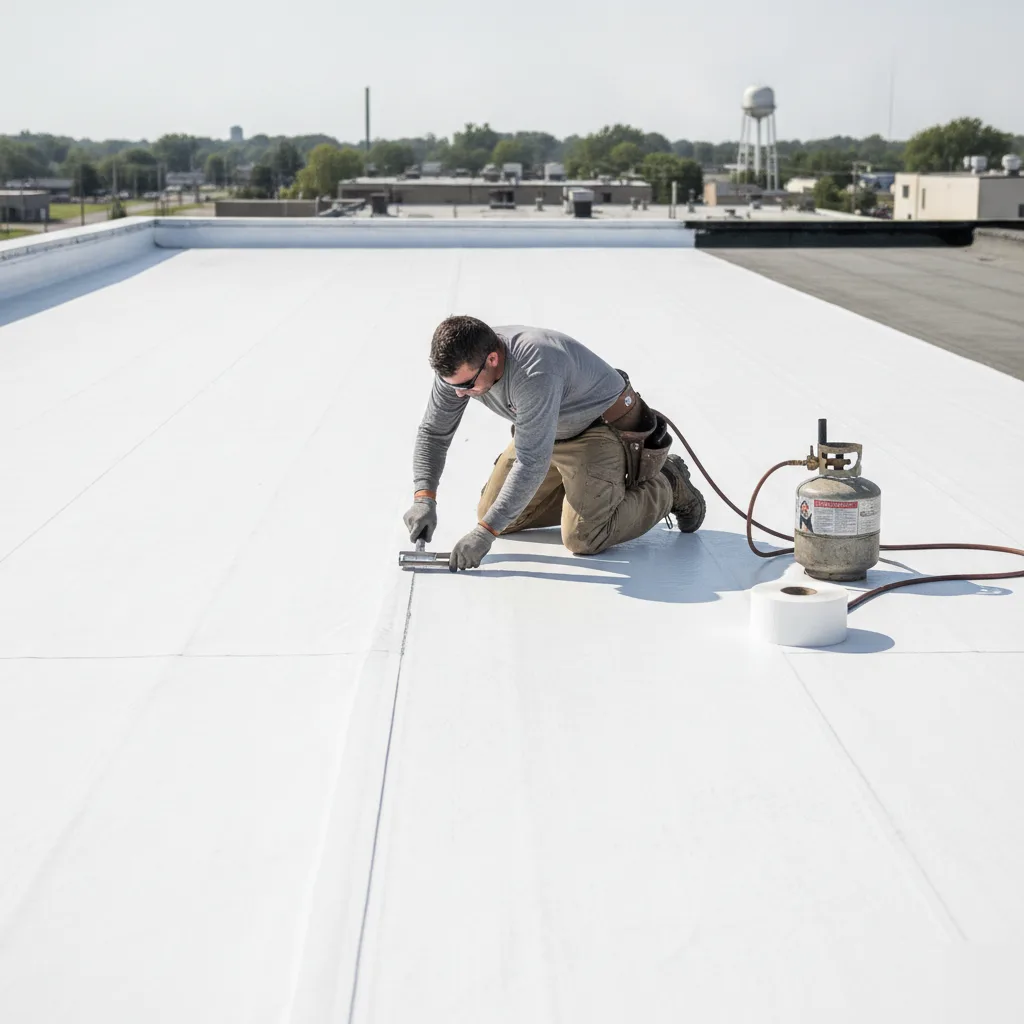
This is where things get interesting. Section 179 of the IRS tax code lets you write off the full cost of a commercial roof replacement. All in the same tax year you pay for it. Not over 39 years. Not in tiny bits. The whole thing. Up front.
Lots of Mason City business owners miss out. They leave money on the table because no one told them about Section 179. Before they filed. Know this before you sign anything.
How does this work? With Section 179, qualifying business property can be fully written off the year you start using it. The IRS changed the rules after the 2017 Tax Cuts and Jobs Act. Commercial roof replacements now count. The 2024 deduction limit for Section 179 is $1,220,000. That covers most commercial roof replacement jobs we do around here.
What Qualifies Under Section 179
Not every roofing expense counts. You have to follow certain rules:
- The building must already be in service. New construction doesn't count until it's actually used.
- The roof replacement has to be on a business building you own. Not residential. Rental properties are different.
- You need to install the new roof and start using it in the same tax year you claim the write-off.
- Your total property buys for the year can't go over the phase-out limit. That's $3,050,000 for 2024.
- The write-off can't be more than your business income that year.
That last one trips up a lot of people. Say your business made $80,000 taxable income. And the commercial roof replacement cost $120,000. You can only deduct $80,000 under Section 179. The other part might get covered by bonus depreciation. But that's a talk to have with your CPA.
A Real Scenario We See in Mason City
Think about a warehouse owner near the North Federal Avenue corridor. Their flat roof is 22 years old. It leaks in three spots. The membrane is done for. They've been patching it for years, doing everything to keep it going. They finally decide on a full flat roof replacement.
Without Section 179? They'd write off that cost over 39 years. A tiny bit each year. You'd barely see it on the tax return.
With Section 179, they deduct the whole amount in year one. Big cut to taxable income. It hits when they need it. The year they spent the cash.
We've seen this flip the whole calculation for business owners. They decide between flat roof repair and a full commercial roof replacement. The tax benefit can make a new roof cheaper in real money than just patching.
And here's what people often miss. Section 179 applies to the roofing system itself. TPO roofing installation, EPDM roofing installation, standing seam metal roofing, it all counts. The building just has to qualify. Your material choice won't disqualify you.
But you need to plan. If you want this write-off for the current tax year, the roof must be installed and running by December 31st. We've had calls in November, business owners wanting a full commercial roof replacement done in six weeks. In Iowa winter. That's a tough ask.
Talk to your tax advisor first. Before signing anything. Then call us. We'll get the work scheduled so you don't miss that deadline. If you're thinking about a commercial roof replacement, we can show you the timeline. We'll help you see what paperwork you'll need, too.
Iowa Does Not Always Follow Federal Bonus Depreciation Rules
This is where many Mason City business owners get confused. They hear "100% bonus depreciation." They figure they can write off the whole commercial roof replacement on both federal and Iowa returns. In year one. That's not how it goes.
Iowa has its own tax rules. They don't just copy federal ones.
For years, Iowa either capped bonus depreciation or didn't follow federal rules at all. You could write off the full cost on federal returns, but only some on Iowa ones, we've seen this happen. Business owners got blindsided at tax time. They planned for a big write-off. They ended up owing the state more, a surprise that really stings.
What Changed Recently
Iowa passed tax reform in 2022. It started bringing state rules closer to federal ones. The Iowa Department of Revenue says the state began aligning more with the Internal Revenue Code for tax years starting in 2023. But "closer" doesn't mean "exactly the same." There are still gaps. Iowa treats certain depreciation and asset types differently.
So if you put a new commercial roof on your building near the North Federal Avenue corridor. Or maybe out by the Mason City Municipal Airport (we've done a lot of spray foam roofs out there), your federal write-off and your Iowa write-off might not line up. Good to know before signing anything. Not after the job is done.
The Practical Impact on Your Deduction
Say you own a retail building downtown. You get a full commercial roof replacement. On your federal return, you might write off a big piece right away. Using bonus depreciation or Section 179. But on your Iowa return? You might have to spread that deduction out. Over years. With standard MACRS schedules.
That difference matters for your cash flow. Watch for these things:
- Iowa might make you add back some federal bonus depreciation on your state return.
- The state could let you take a smaller write-off the first year. The rest would spread over 39 years.
- New conformity changes don't go back to older roof jobs.
- Your business setup, LLC, S-corp, sole proprietor, changes how Iowa sees these rules.
And the rules keep moving. Federal bonus depreciation began phasing down in 2023. This was part of the Tax Cuts and Jobs Act. It fell from 100% to 80%. Then 60% in 2024. Iowa's take on each drop hasn't always been quick. Or easy to predict.
What We Tell Our Clients
We've done commercial roof replacement on buildings all over Mason City. For years now. One thing we always say is plain: get your CPA involved before the job starts. Not after. A new roof's tax benefit is real. But how big that benefit is? It depends on when you do it, what kind of business you run, and if Iowa's rules match federal ones that year.
We've seen what happens when that advice gets ignored. A building owner figures on a full write-off. Budgets everything. Then finds out Iowa only allows a sliver in year one. That's a nasty surprise come April.
If you're thinking about a commercial roof replacement. And you want to know what you're really facing. We can help with the roof part. We'll give you a free roof inspection. You'll know what the job involves. Then you take that info to your tax advisor. Make a smart choice.