
Mason City, IA & North Iowa
How Long Does a Commercial Roof Replacement Take?
Most Commercial Roof Replacements Take Longer Than the Installation Days Alone
Here's what most building owners don't realize. The crew-on-the-roof part is only a fraction of the total timeline. The rest is permits, material lead times, inspections, and weather. We see this catch Mason City building owners off guard constantly. Let me break it down.
A typical commercial roof replacement runs anywhere from two weeks to three months, start to finish. That's the full picture. The National Roofing Contractors Association's commercial roof replacement guidelines notes that timelines vary based on building size, roof system type, and local permitting. That lines up exactly with what we see here in North Iowa.
Before Anyone Touches Your Roof
The pre-installation phase eats more time than most owners expect. Free roof inspection first. Then material selection. Then permits from the city. In Mason City, permit turnaround can run a week or more depending on project scope and time of year.
Material orders are another big one. TPO roofing installation materials, EPDM membranes, PVC systems, standing seam metal panels. None of this sits on a shelf at the local hardware store. Lead times run two to four weeks on average, sometimes longer if there's a supply chain hiccup. Before a single fastener goes in, you could be looking at three to six weeks of prep work. Most contractors won't tell you that upfront.
The Actual Installation Window
Once materials arrive and permits clear, installation moves faster than you'd think. A flat roof replacement on a 10,000-square-foot commercial building might take five to ten working days. Bigger buildings with multiple penetrations, rooftop HVAC units, or drainage issues take longer.
Here's a real example. We did a commercial roof replacement on a retail building near Southbridge Mall. About 15,000 square feet, six rooftop units to work around. Installation took twelve working days. The full project from first inspection to final walkthrough was just under seven weeks.
Weather plays a big role too. Mason City winters are brutal. Most commercial roof replacement work happens between April and November, a project that starts in late October might get pushed into spring if we hit an early freeze. That's not a contractor dragging feet. That's just North Iowa reality.
What Adds Days You Didn't Plan For
Some delays are predictable. Others catch you off guard. The most common ones we run into:
- Hidden deck damage found during tear-off that requires structural repair
- Wet insulation that needs full removal and replacement
- City inspection scheduling gaps that hold up the next phase
- Rain days that push the crew back, especially during spring storms
Skipping proper deck repair to save a day or two is a mistake that shows up years later. We've seen it. A building owner ends up needing another commercial roof replacement five years ahead of schedule.
And here's something else worth saying. If your building is occupied during the replacement, there's real coordination involved. Noise, vibration, temporary exposure during tear-off. David always walks through the schedule with building owners before work starts so tenants and employees aren't caught off guard.
Plan for the full timeline, not just the installation days. If someone tells you they'll have your 20,000-square-foot commercial roof replaced in a week flat, ask more questions. That timeline probably doesn't include everything that happens before and after the crew shows up. Knowing the real timeline lets you plan around your business. That's the whole point.
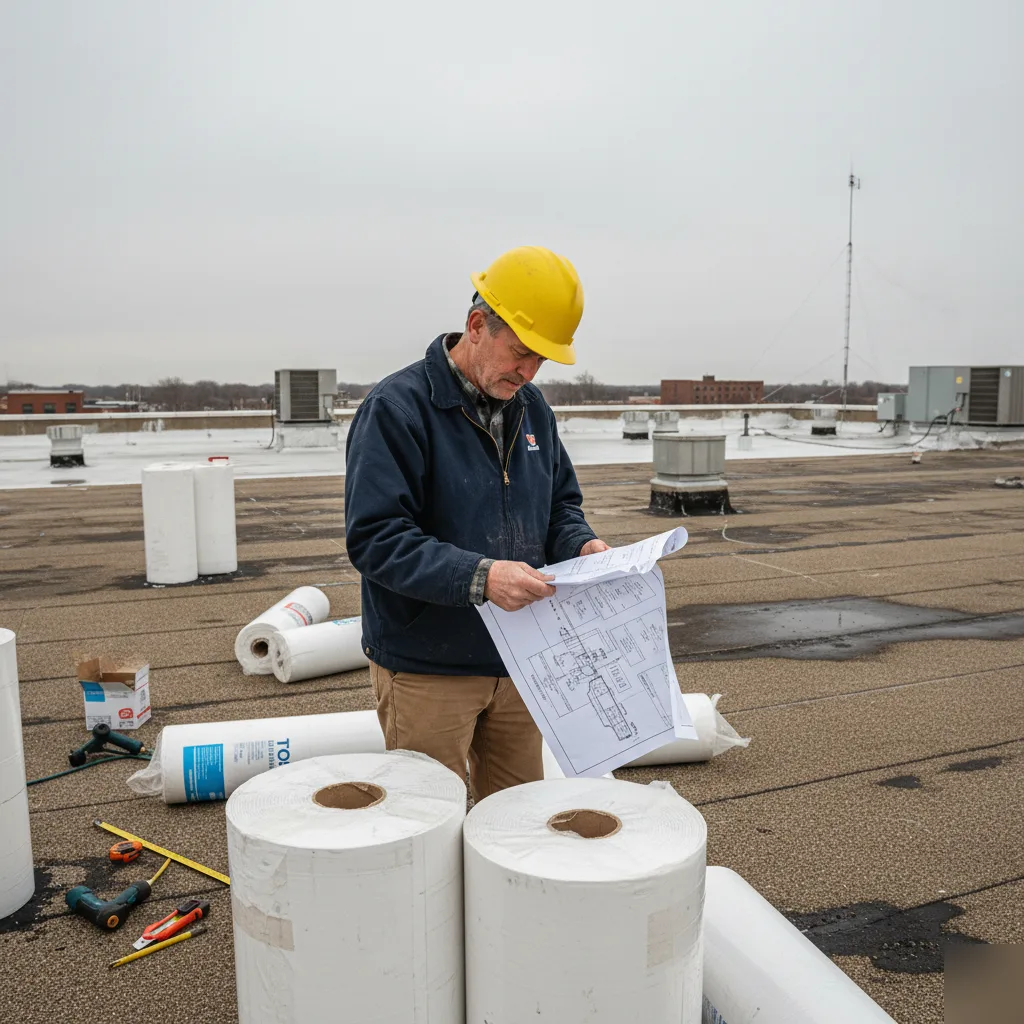
Key Factors That Affect Commercial Roof Replacement Timeline
No two commercial roof replacement jobs take the same amount of time. A 5,000-square-foot flat roof on a downtown Mason City retail building is a different animal than a 40,000-square-foot warehouse out near the industrial parks. But certain factors show up on every job, and they're what speed things up or slow them down.
Roof Size and Complexity
People still underestimate this one. A small commercial roof replacement might wrap up in three to five days. A large facility can take two to four weeks. And it's not just square footage. Rooftop HVAC units, vents, skylights, drainage systems, every penetration point adds time. We've worked on Mason City buildings where the roof itself was simple, but 30-plus penetration points each needed custom flashing. That kind of detail work adds days.
Existing Roof Condition
Here's something most contractors won't tell you. If your old roof has trapped moisture or rotted decking underneath, the crew can't just tear off and go. They have to remove damaged substrate, let things dry out, sometimes replace insulation boards. Ignoring that step means the new membrane fails within a few years.
A free roof inspection before work starts catches these problems early. It's the difference between a job that stays on schedule and one that hits a wall on day two.
Material Type
The roofing system you choose has a direct effect on the timeline. Here's how the most common commercial options compare:
- TPO roofing installation — typically one of the faster systems to install, the membrane comes in wide rolls and gets heat-welded at the seams
- EPDM roofing installation — similar speed to TPO, though adhesive-applied systems need dry conditions and proper cure time
- PVC roofing installation — heat-welded like TPO, handles well in cooler temperatures which matters for Mason City's climate
- Standing seam metal roofing — takes longer because each panel is custom-fitted and mechanically fastened, but the durability is hard to argue with
Metal roofing installation generally adds time compared to single-ply membranes. But the longevity often makes that tradeoff worth it.
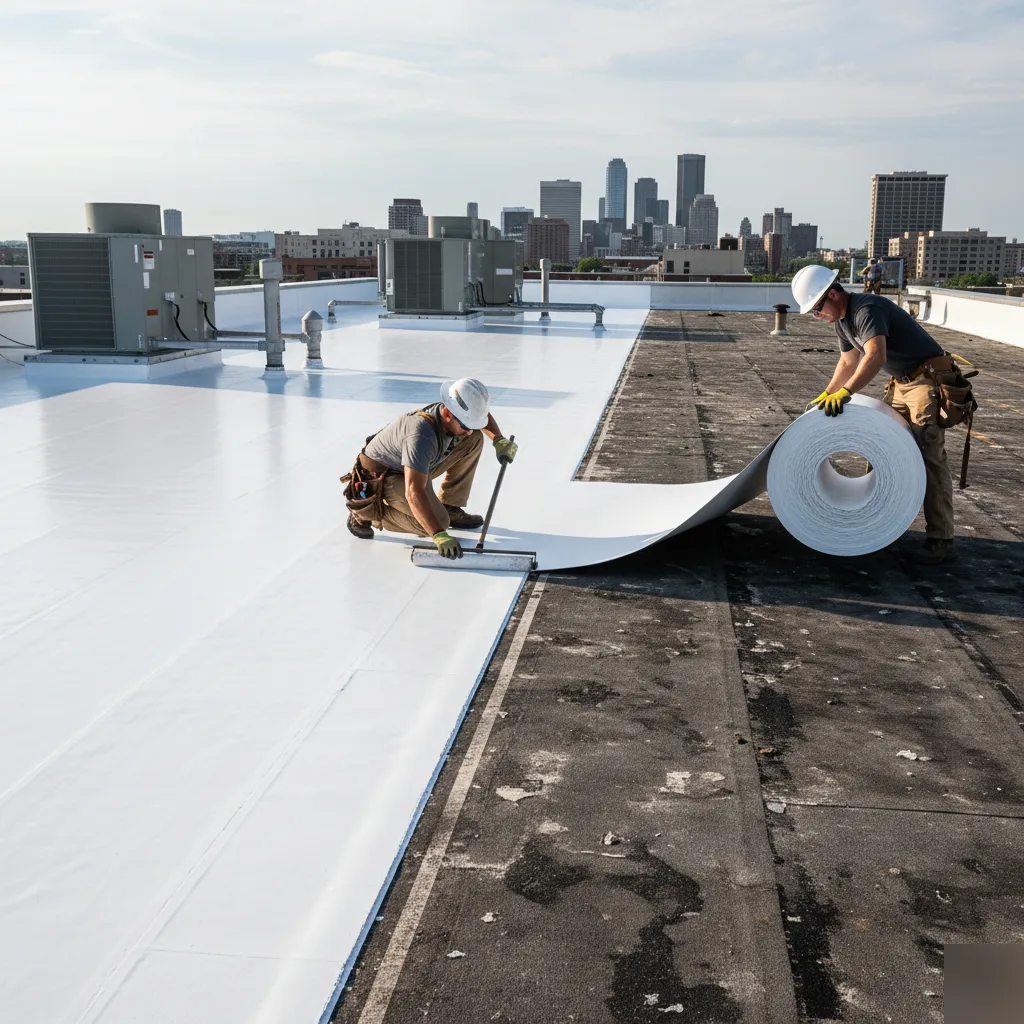
Weather and Season
Mason City weather doesn't care about your project schedule. Iowa winters can shut a commercial roof replacement down completely, and spring rain delays are common along the Winnebago River corridor. Most crews aim to work between late spring and early fall. Even then, a week of unexpected storms can push a timeline back. We build buffer days into every project for exactly this reason. Rushing roofing work because of a deadline is how corners get cut.
Permits and Building Codes
Cerro Gordo County requires permits for commercial roof replacement. The permit process can take a few days to a couple of weeks depending on scope. The clock doesn't really start when you sign a contract, it starts when that permit clears. Some building owners don't realize this until they're already waiting.
And if your building has specific code requirements, fire ratings, wind uplift specs, energy code compliance, those dictate material choices and installation methods. That can add time too.
Crew Size and Access
A bigger crew doesn't always mean a faster job. What matters more is whether the crew can access the roof efficiently. Buildings with limited staging areas or tight parking lots slow material delivery. Multi-story buildings need crane time for hauling materials up. We've done jobs where the roof work itself took five days but setup and material staging added two more.
David always says the timeline is only as good as the planning behind it. A detailed scope of work, a thorough storm damage inspection or hail damage inspection where needed, and honest communication about what's under that old membrane. That's what keeps a commercial roof replacement on track.
How Mason City's Climate Shapes Your Roofing Schedule
Most people don't realize this until it's too late. Mason City weather doesn't just affect your roof. It controls when we can replace it. We've had crews ready to go on a Monday morning, materials staged, lifts in place. Then a surprise ice storm rolls through North Iowa and shuts everything down for a week. That's not a scheduling failure. That's just life up here.
The Real Working Season
Our window for commercial roof replacement runs from late April through mid-October. Roughly six months. But even inside that window, you'll hit delays. June can bring heavy rain for days straight. July and August push heat indexes past 100 degrees near the Winnebago River corridor, which slows crew productivity and affects how certain materials bond.
Here's what each season actually looks like for commercial roof replacement work in Mason City:
- Spring (April–May): Ground is often still soft from snowmelt, rain is unpredictable, but temperatures are good for TPO and EPDM installs once things dry out
- Summer (June–August): Longest days mean more work hours, but thunderstorms and extreme heat can pause jobs for safety
- Fall (September–October): The sweet spot, cooler temps with less rain, but you're racing the first freeze
- Winter (November–March): Most commercial roof replacement stops entirely. Adhesives won't cure right below 40 degrees, and ice makes everything dangerous.
So if you're thinking about a commercial roof replacement, the time to start planning is winter. Not summer. By the time warm weather hits, we should already have your materials ordered.
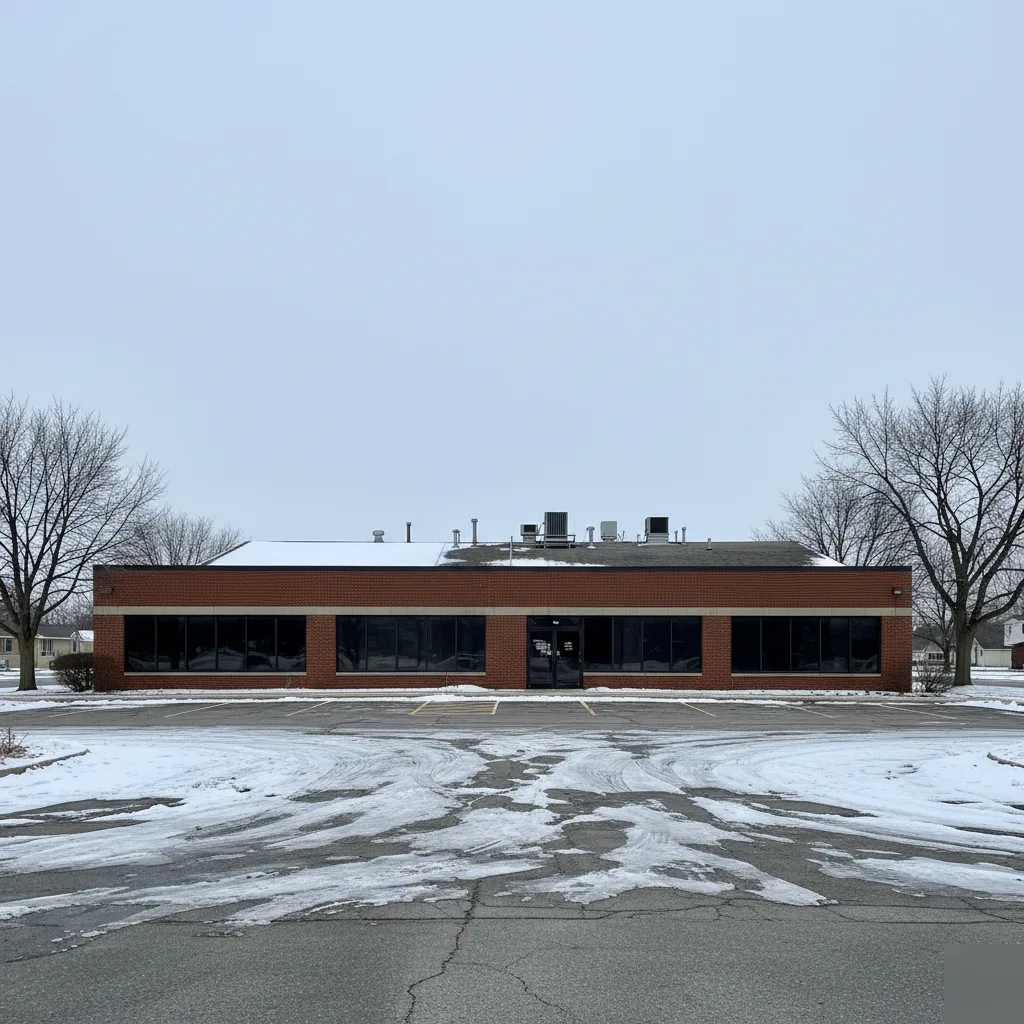
Freeze-Thaw Is the Hidden Problem
Mason City averages around 140 freeze-thaw cycles per year according to Iowa State University Extension data. That's brutal on flat commercial roofs. Water gets into small cracks, freezes, expands, then thaws and seeps deeper. By spring, what looked like a minor issue in November is now a full membrane failure.
One building owner near East Park thought they could patch through one more winter. By March the decking underneath had water damage across a 30-foot section. What could've been a straightforward commercial roof replacement turned into structural repairs plus a new roof. That kind of damage adds days to your timeline, sometimes weeks.
Wind and Storm Delays
North Iowa wind is no joke. We regularly see sustained winds above 20 mph during spring and fall. Most contractors won't tell you this, but you can't safely install large membrane sheets in those conditions. The material acts like a sail, one strong gust can rip loose material right off the building.
Storm damage roof repair calls spike every spring. When that happens, material suppliers get backed up. Crews across the region get stretched thin. If your commercial roof replacement coincides with a bad hail season, expect supply chain slowdowns that are completely outside anyone's control.
Plan early. If you know your roof is nearing the end of its life, don't wait until you see leaks. Get a free roof inspection during winter so we can schedule your commercial roof replacement for the first good weather window. That alone can shave weeks off your total timeline.
Mason City's climate isn't changing. But how you plan around it makes all the difference between a smooth project and one that drags on into the cold.