
Mason City, IA & North Iowa
Trusted Commercial Roofer in Mason City: What to Look For
Iowa Has No Statewide Roofing License, Here Is What to Check Instead
This one catches people off guard. Iowa doesn't require a statewide roofing license. Any person can call themselves a roofer, print some cards, and start knocking on doors in Mason City tomorrow. No test. No proof of skill. Nothing.
That's not a knock on Iowa. It just means the burden falls on you.
Most contractors won't tell you this, but the lack of a state license makes your own due diligence ten times more important. We've seen crews roll through Mason City after a big storm, set up shop in a parking lot near Southbridge Mall, and disappear two months later. The building owner is left with a leaking flat roof and no one to call back.
So what do you actually check? Here's the short list that matters more than any license ever could:
- Verify their business registration with the Iowa Secretary of State. Every legitimate company should be registered. You can look this up online in about 30 seconds. If they're not in the system, walk away.
- Ask for proof of general liability and workers' compensation insurance. Don't just take their word for it. Call the insurance company directly and confirm the policy is active. We've seen roofers hand over expired certificates like nobody would check. People don't check, that's the problem.
- Confirm they carry a Cerro Gordo County building permit for the job. Commercial roofing work in Mason City requires permits through the local building department. A trustworthy contractor pulls permits before work starts. If someone tells you permits aren't needed, they're either lying or they don't know the code.
- Look for manufacturer certifications. Brands like Carlisle and Firestone don't hand out installer certifications to just anyone. A manufacturer-certified contractor has been trained and vetted by the people who actually make the roofing materials.
- Check for a physical business address. Not a P.O. box. A real location you could drive to. If their "office" is a truck with out-of-state plates, you've got your answer.
And here's something people overlook. Iowa's Division of Labor does enforce contractor registration for certain commercial projects. If your building is over a specific threshold, the contractor may need to register under Iowa Code Chapter 91C. Worth asking about directly.
We've been doing commercial roofing in Mason City long enough to know what separates real contractors from fly-by-night operations. David keeps every certificate, every insurance document, and every permit on file. Not because someone forces us to, but because that's how you run a business that lasts 25 years.
The National Roofing Contractors Association found that unqualified roofing work is one of the top causes of premature roof failure on commercial buildings. That tracks with what we see in the field every week.
You don't need a study to tell you something's wrong when a roofer can't produce basic paperwork.
No state license means you have to be the gatekeeper. Ask the hard questions before anyone sets foot on your roof. A trustworthy contractor will hand you everything on this list without hesitation, they'll probably have it ready before you even ask. (We do. It's just how we operate.) If you're not sure where to start vetting a contractor for your building, our commercial roofing page walks you through exactly what to expect from a qualified crew in Mason City.
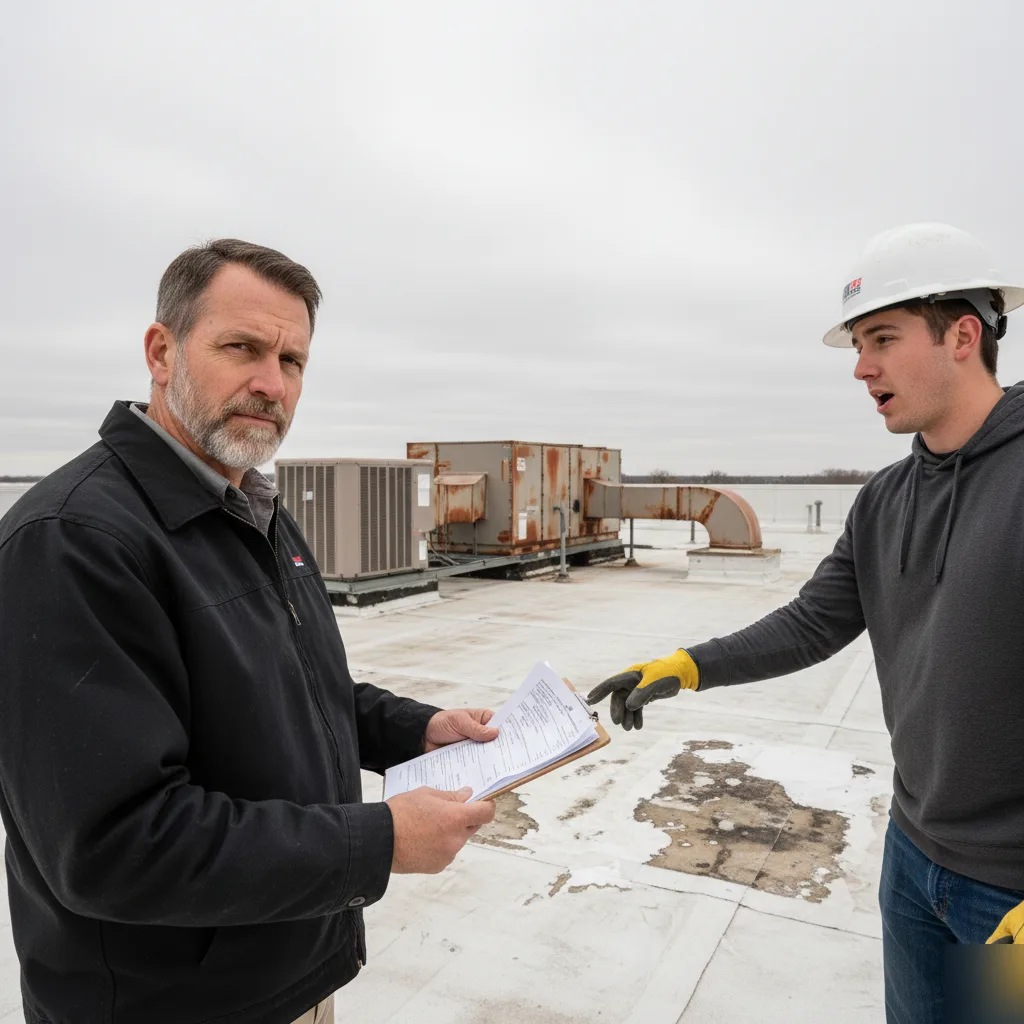
Insurance Verification Goes Beyond Asking for a Certificate
Here's something most contractors won't tell you. That insurance certificate they hand you? It might be worthless.
We've seen it happen right here in Mason City. A building owner hires a roofer. The roofer shows a printed certificate. Looks official. But when a worker gets hurt on the job, the owner finds out that policy lapsed two months ago. Now the building owner is on the hook. That's a real scenario, not a scare tactic.
A certificate of insurance is just a snapshot. It tells you coverage existed on the day it was printed. It says nothing about right now.
What You Actually Need to Do
Getting real proof takes a few extra steps. Those steps can save you from a six-figure liability nightmare. Here's the process we tell every commercial property owner in Mason City to follow:
- Ask the contractor for their certificate of insurance with your property listed as the certificate holder.
- Look at the policy dates. If the job runs past the expiration date, that's a problem.
- Call the insurance carrier directly. The phone number is on the certificate. Ask them to confirm the policy is active.
- Verify the coverage amounts meet your building's requirements. Most commercial jobs in Iowa need at least $1 million in general liability.
- Request that the insurer notify you if the policy gets canceled or lapses during your project.
That last step is the one people skip. It's also the most important one.
The Two Types of Coverage That Matter
You need to check for two things specifically. General liability covers damage to your property. If a crew member drops equipment through your flat roof membrane, general liability pays for it. Workers' compensation covers injuries on the job. Without it, an injured worker can file a claim against you as the property owner.
According to the Iowa Division of Workers' Compensation, businesses with employees are required to carry workers' comp coverage. A contractor who tells you they don't need it because their guys are "independent contractors" is waving a red flag the size of a billboard.
We run into this more than you'd think. A crew shows up, they're clearly employees, but the roofer has classified them as independent workers to dodge insurance costs. If someone falls off your building on North Federal Avenue, that distinction won't protect you in court. OSHA's roofing safety standards guide for commercial contractors outlines exactly what fall protection and safety requirements apply on jobs like these — worth reading so you know what a compliant crew should look like before they ever step onto your roof.
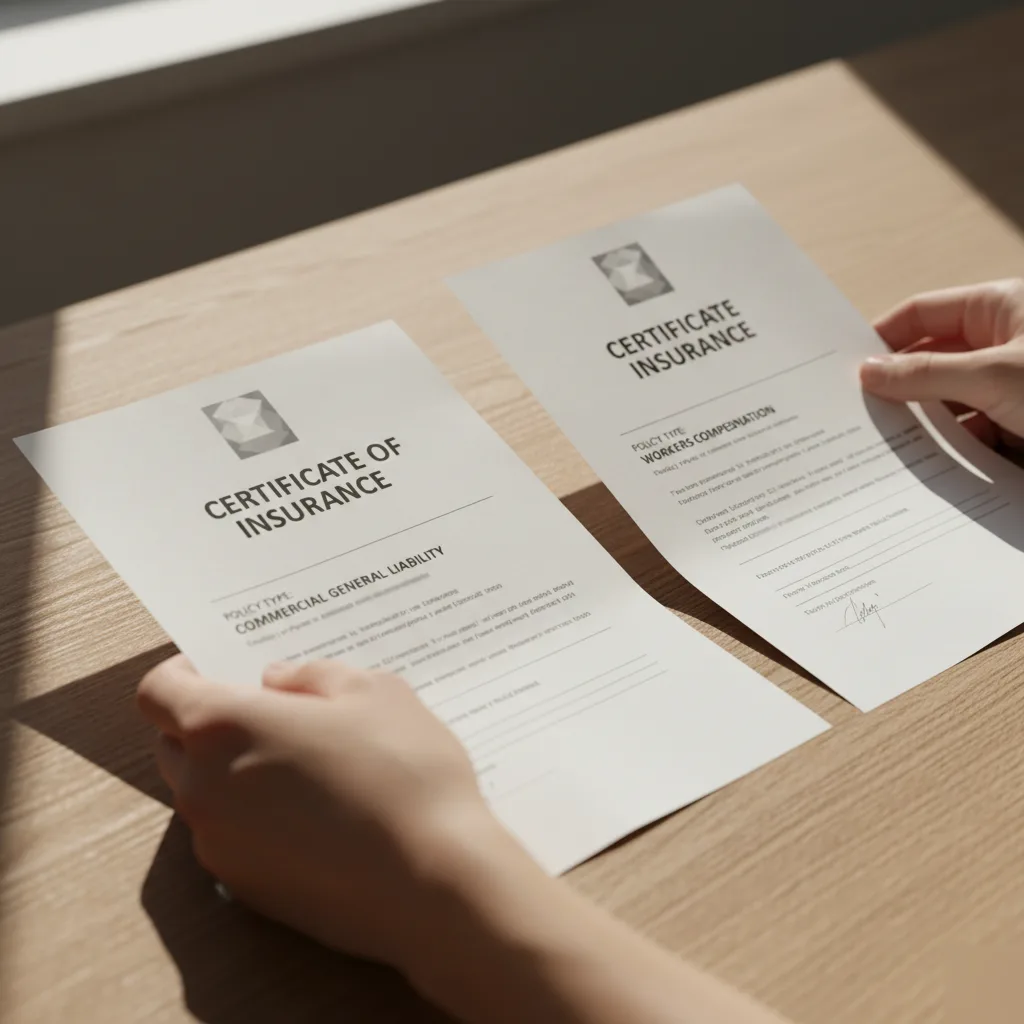
What Fake or Outdated Certificates Look Like
Some warning signs are easy to spot once you know what to look for:
- The certificate doesn't list a specific insurance company name
- Policy numbers look short or generic
- There's no agent or broker contact information
- The document is a photocopy with blurry text
But some fakes look perfect. That's why calling the carrier matters more than reading the paper.
David has been doing commercial roofing long enough to know that trustworthy contractors don't flinch when you ask to verify their insurance. They expect it. They want you to check. The ones who get defensive or try to rush past the question? Walk away.
Insurance verification is one piece of the puzzle. Our commercial roofing page covers what else to look for before you sign anything.
Do the homework now, it costs you nothing but a phone call. Skip it and you could be writing a very different kind of check later.
Commercial Roofing Experience Is Not the Same as Residential Roofing Experience
This trips people up more than almost anything else. A roofer who's done 500 homes doesn't automatically know how to handle a 20,000-square-foot flat roof on a warehouse near the North Federal Avenue corridor. The skills are different. The materials are different. The stakes are higher.
Most contractors won't tell you that.
Residential work usually means shingles on a pitched roof. Commercial roofing means TPO, EPDM, PVC membranes, standing seam metal roofing, built-up systems. These materials behave differently in Mason City's freeze-thaw cycles. They require different tools, different crews, different training. A guy who's great with shingles can make a real mess of a flat roof membrane if he doesn't know what he's doing.
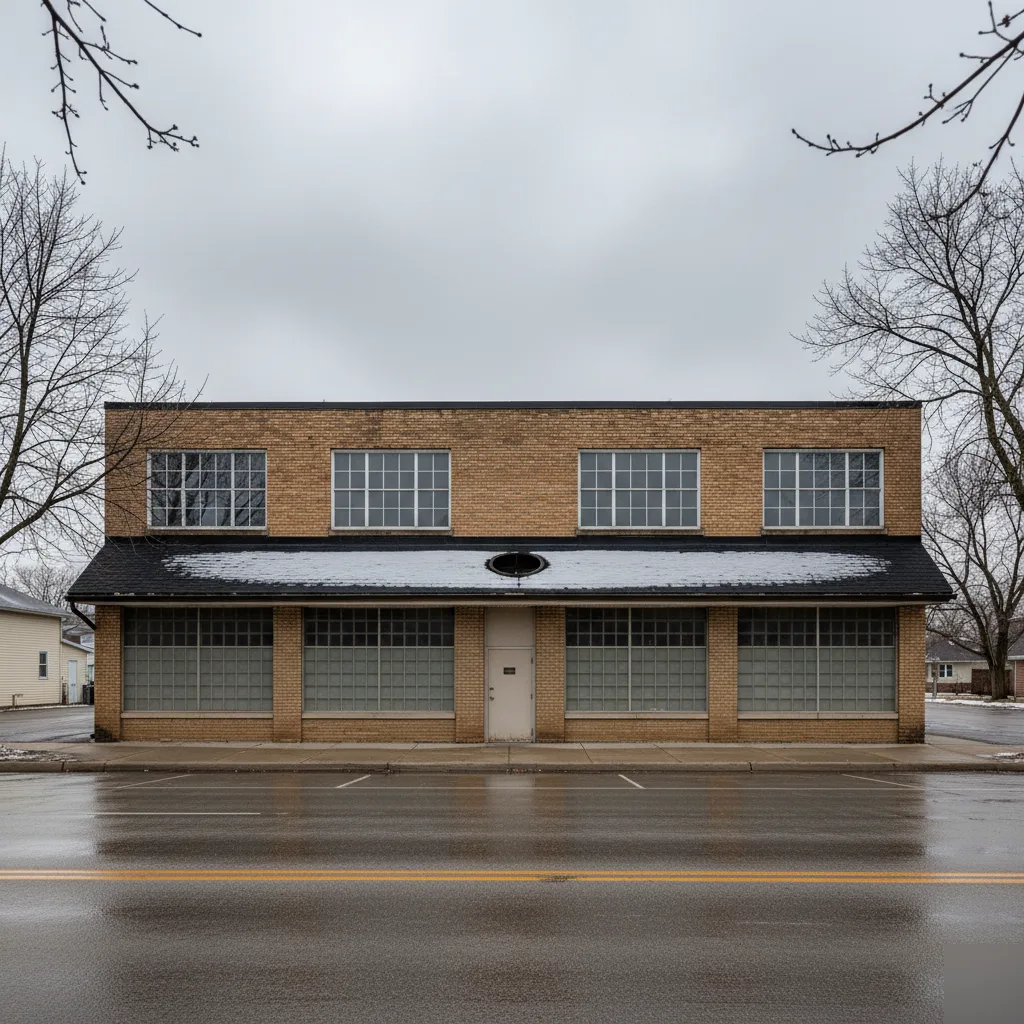
Why the Gap Matters on Your Building
Commercial roofs are mostly flat or low-slope. Water doesn't run off them the way it does on a house. Drainage design, proper slope calculations, and flashing details all have to be right. One small mistake and you've got ponding water slowly destroying the membrane. We've seen what happens when that gets ignored, it usually shows up as a leak in the worst possible spot about two years later.
Here's what separates real commercial roofing experience from someone figuring it out on your building:
- They've installed TPO, EPDM, and PVC systems on buildings your size or bigger
- They understand commercial roof decking and how it differs from residential framing
- They know local building codes for commercial structures in Mason City
- They can handle roof penetrations for HVAC units, vents, and other equipment without creating leak points
That last one is a big deal. Commercial roofs have far more equipment poking through them. Every penetration is a potential failure point if the flashing and sealing aren't done by someone who's done it hundreds of times. (We've seen brand-new roofs fail within a year because someone botched the HVAC curb flashing. Totally avoidable.)
Ask the Right Questions
So how do you figure out if a roofer actually has commercial experience? Don't just take their word for it.
- Ask how many commercial roofing projects they've completed in the last two years. Not total projects. Commercial specifically.
- Ask which membrane systems they install most often. If they can't name specific products or talk about heat-welded seams versus adhesive, that tells you something.
- Ask for references from commercial building owners. Not homeowners. Building owners, property managers, or facility directors.
- Ask if their crew does the work directly. Crews that aren't the contractor's own people can mean less quality control on the job.
David has been on commercial roofs for over 25 years. He knows the difference between a crew that's learning on the job and one that's done this work before.
Your building shouldn't be someone's training ground.
Think about it this way. Would you hire a dentist to do heart surgery just because they're both doctors? A roofer is a roofer, but commercial roofing is a different animal. The materials cost more. The labor is more involved. A failed commercial roof can shut down your business, damage inventory, or create real liability issues with tenants.
By the way, buildings along South Federal and near Southbridge Mall carry heavy snow loads every winter. North Iowa winters are no joke, and a contractor who actually works here knows that. They'll think about drainage and material selection differently than someone used to working on houses in a warmer climate. That local knowledge matters more than people realize.
When you're evaluating someone to work on your Mason City property, start by confirming they actually do commercial work as their main focus. Not as a side job. Not as something they're "getting into." You want someone whose core work is flat roofs, metal roofing installation, and commercial roof repair. That's the baseline before you even start talking about your project.