

How Do Inspectors Check for Hail Damage on a Roof in Mason City, IA?
A professional hail damage inspection follows a clear, repeatable process. Each step builds a stronger evidence base for the insurance claim that follows.
- Pull National Weather Service hail data for Cerro Gordo County tied to the specific storm date
- Inspect soft metals first — gutters, downspouts, vents, and flashing — for fresh dents and displacement
- Walk the roof and mark hail strikes on the roofing membrane using chalk to count impact density per square
- Assess each strike for surface punctures, membrane bruising, and substrate damage beneath the surface
- Check valleys, ridge caps, pipe boots, and skylights for concentrated impact damage
- Document all findings with dated photographs tied to the storm event
- Deliver a written inspection report with hail strike counts, damage assessment, and storm data for the insurance file
What a Professional Hail Damage Inspection in Mason City Actually Covers
A real hail inspection is not a two-minute look from the driveway. It covers the full property — soft metals on the ground, the full roof surface, every penetration, and the valleys where hail concentrates. Every strike gets chalk-marked and photographed. The written report ties findings to the specific storm date using National Weather Service data.
Cerro Gordo County hail events range from pea-sized to baseball-sized. Smaller hail causes invisible bruising that does not show from the street but weakens membrane integrity and opens the door to leaks within one to three seasons. Only a trained inspector on the roof finds and documents it. What a professional hail inspection covers:
- Full soft metal assessment — gutters, downspouts, vent caps, and flashing
- Full roof walk with chalk-marked hail strikes on every affected membrane section
- Hail strike density count per square — the number Iowa adjusters use to set scope
- Surface impact documentation and penetration depth assessment
- Valley, ridge cap, pipe boot, and skylight check for concentrated impact
- Dated photos of every marked strike and damage area
- National Weather Service storm data for Cerro Gordo County tied to your storm date
- Written findings report formatted for insurer and adjuster review
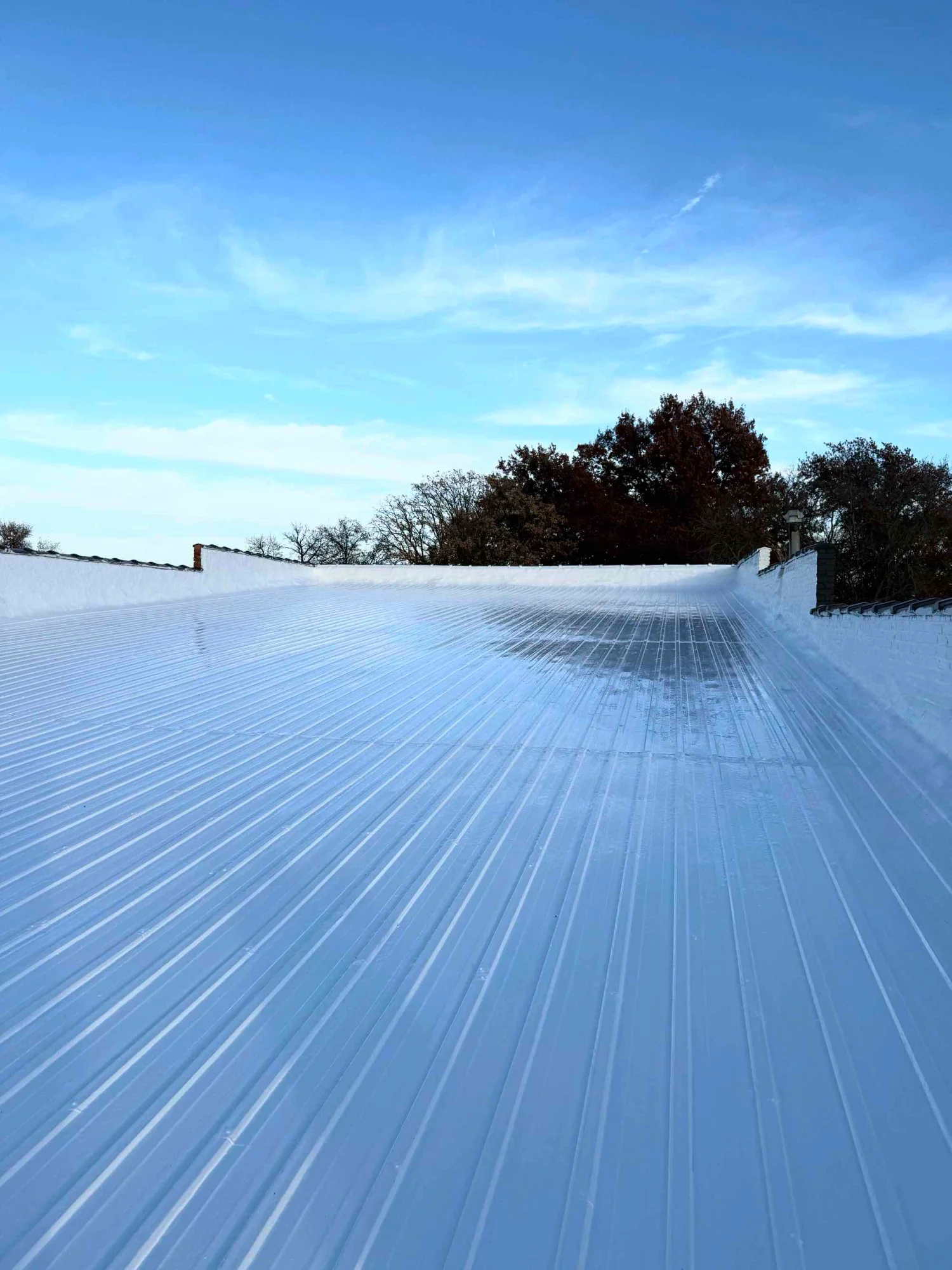
How to Know If Your Mason City Home Needs a Hail Damage Inspection
The clearest trigger is hail size. Any stone marble-sized or larger is big enough to damage commercial roofing membranes, dent soft metals, and crack older materials that have lost some flexibility. If your Mason City commercial property or building saw marble-sized or larger hail, book a free inspection within 30 days — even if everything looks fine from the driveway.
Ground-level signs also tell you a lot before you ever call. Dented gutters and downspouts confirm hail size and direction. Debris accumulation at the base of your downspouts after a storm confirms the roof took hits. Signs that a free inspection is worth scheduling:
- Any hail event with marble-sized or larger stones in your area
- Dents on gutters, downspouts, or vent caps after the storm
- Debris or membrane material at downspout exits after rain
- Cracked or damaged window screens
- A neighbor on your street whose claim was approved after the same storm
- A roof that is 10 or more years old and has lived through multiple hail seasons
What Inspectors Look for When Assessing Hail Damage on Iowa Roofs
Iowa insurance adjusters are trained to look for random impact patterns that match hail — versus directional wear patterns that match aging. The difference is specific and documentable. Commercial roofing experts serving Mason City and Clear Lake know that hail strikes appear as impact depressions or surface punctures, randomly distributed across the membrane field. Aging wear is directional, affects the whole roofing surface evenly, and does not produce the impact shape that hail leaves.
Inspectors document strike density per square — usually per 100 square feet of roof surface. Iowa carriers use that count to determine whether damage crosses the threshold for repair or full replacement. Specific damage indicators in a credible inspection report:
- Hail strike density count per square — the key threshold metric for Iowa adjusters
- Surface impact pattern and membrane displacement tied to impact points
- Impact depth — surface damage vs. substrate fracture beneath the membrane layer
- Soft metal dent shape — round dents from hail vs. irregular damage from debris
- Valley concentration — hail collects in valleys and causes higher strike density
- Ridge cap and hip damage — often missed but easily documented on the roof
- Pipe boot and skylight damage — common impact points on every inspection

What to Expect During Your Hail Damage Inspection Visit
We start on the ground — not on the roof. The full property walk covers gutters, downspouts, vent caps, window screens, and any outdoor items that confirm hail size and direction. Ground-level findings set the context for the roof walk. Then we get on the roof and chalk-mark every hail strike we find. Marked strikes make the damage easy for the adjuster to verify when they visit.
A thorough Mason City hail inspection also pulls Cerro Gordo County storm data tied to your specific storm date. Without that connection between physical damage and a documented storm event, Iowa insurers have grounds to deny otherwise valid claims. What the inspection visit looks like:
- Contractor arrives within the appointment window
- Ground-level property walk — soft metals, screens, and yard items
- Roof walk with chalk marking of every hail strike found
- Photo documentation of every marked strike and damage area
- Valley, ridge, and penetration check for concentrated impact
- National Weather Service data pull for the storm date
- On-site conversation about findings
- Written report with strike counts, dated photos, and storm data delivered same day or within 24 hours
How to Use Your Inspection Report to Support an Insurance Claim
The inspection report is the foundation of your claim. Submit it when you open the claim — not after the adjuster has already visited. An adjuster who arrives at your Mason City home with a contractor report already in hand starts from a baseline of documented damage, not a blank slate. How to use the report effectively:
- Submit the written report when you open the claim — before the adjuster schedules
- Share the report with the adjuster before the on-site meeting
- Ask your contractor to be present at the adjuster visit
- Compare the adjuster's approved scope line by line against the inspection report
- Flag any missing items to your contractor before signing the claim agreement
- Ask your contractor to file a supplement if documented damage items are not in the scope
- Save the full inspection report for your records — you will need it throughout the process
How Fast You Need to Act After a Mason City Hail Event
Most Iowa commercial property insurance policies allow claims to be filed within one year of the storm event. That sounds like plenty of time — but physical evidence of fresh hail damage becomes harder to document the longer you wait. Clean impact edges, sharp-edged dent patterns on soft metals, and chalk-markable strikes all become less distinct as weathering and UV exposure softens the indicators over months.
Acting within 30 days of a hail event produces the strongest claims in Mason City. The storm date is recent, National Weather Service data is easy to pull, the damage is still fresh, and the connection between the event and the damage is clear. Why timing matters:
- Fresh hail impact points have clean edges that are easy to photograph and chalk-mark
- Soft metal dents have sharp edges that distinguish hail from general wear
- National Weather Service data is easy to reference within 30 to 60 days of the event
- Iowa policy claim windows close — most require filing within one year
- Storm chasers get more aggressive the longer homeowners wait — a licensed local roofer is the safer first call