
How Long Does Flat Roof Replacement Take in Mason City, IA?
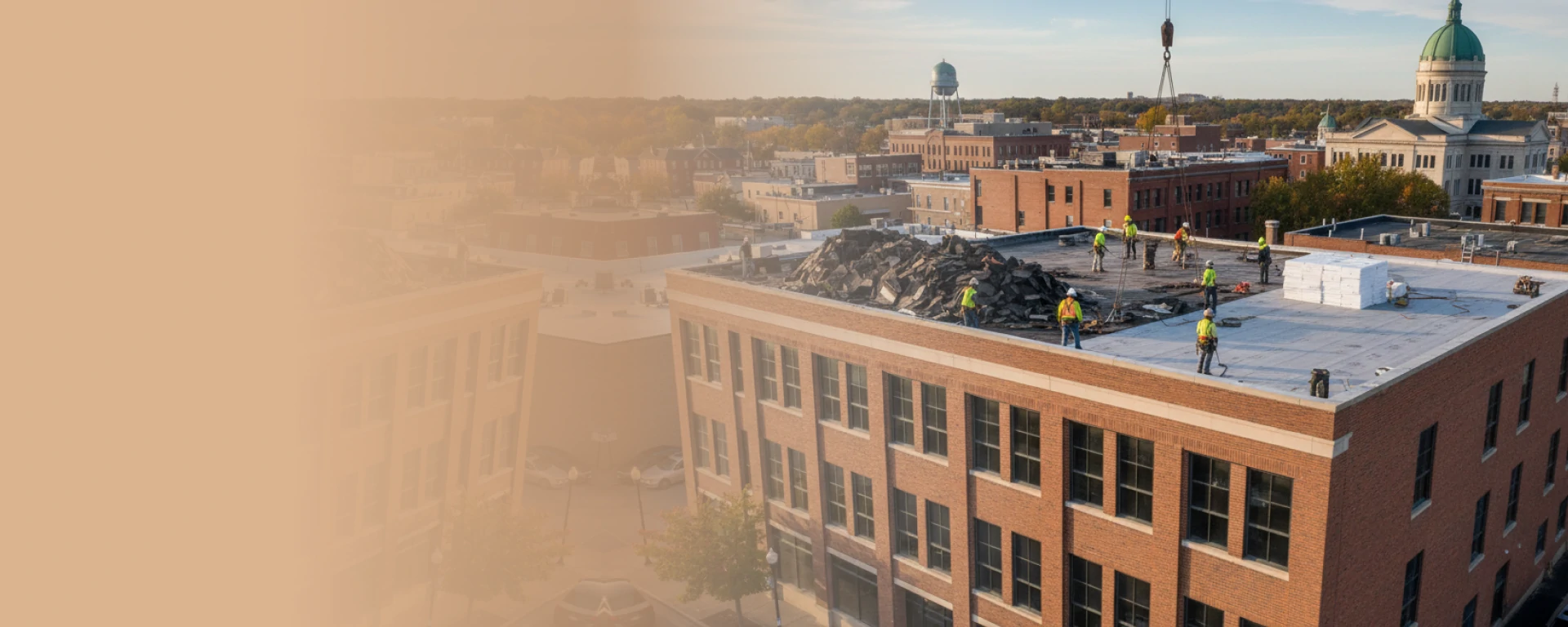
Most flat roof replacements in Mason City follow a clear path from first call to final cleanup. An experienced Mason City IA Roofing Contractor will walk you through the scope, pull required permits with the City of Mason City building department, complete the tear-off and deck inspection, install new insulation and tapered insulation to address drainage, install the new membrane to manufacturer spec, and finish with flashing, drains, edge details, and full site cleanup. Most flat roof replacements wrap up in two to seven days depending on size and system.
- Schedule a free flat roof replacement assessment with a licensed Mason City contractor
- Review system options, scope of work, and project timeline in writing
- Pull required permits with the City of Mason City building department
- Tear off the existing flat roof and inspect the deck and insulation
- Install new insulation, cover board, and tapered insulation to address drainage
- Install the new membrane — TPO, EPDM, or modified bitumen — to manufacturer spec
- Complete flashing, drains, edge details, and final site cleanup
What a Full Flat Roof Replacement in Mason City Actually Involves
A flat roof replacement is not always a full tear-off. There are two paths to consider. A recover lays a new membrane directly over the existing roof — it costs less upfront but only works when the underlying system is still sound and code allows it. A full tear-off removes everything down to the deck and starts fresh. It costs more but addresses any hidden damage, drainage problems, or wet insulation underneath.
A lot of older Mason City buildings have layered flat roofs from previous owners. Iowa code limits how many recover layers a roof can carry. If your building has hit that limit, a recover is no longer an option — and a licensed contractor will tell you that during the first check, before any contract is signed.
- Tear-off of all existing roof layers down to the deck
- Deck inspection and replacement of any rotted sections
- New insulation sized for Iowa❜s energy code
- Tapered insulation to fix any drainage issues
- Cover board to protect the membrane from foot traffic
- New membrane — TPO, EPDM, modified bitumen, or built-up
- Flashing, drains, scuppers, and edge metal
- Full site cleanup and disposal
Clear Signs Your Mason City Flat Roof Has Reached the End of Its Life
Widespread ponding water is one of the clearest signs a flat roof is done. Standing water that sits longer than 48 hours after rain wears the membrane fast. When ponding shows up across multiple areas of the roof, drainage has failed at a system level — not at one weak spot.
Multiple active leaks, large blistered areas, and repeated repair failures at the same spots all point to a roof past its life. A Mason City flat roof that has lived through 20 years of hard winters and a few hail events is usually past replacement age. North Iowa weather wears membranes down faster than milder climates.
- Ponding water across multiple sections of the roof
- Active leaks coming through in more than one spot
- Large blistered or bubbled areas across the membrane
- Repeat repair failures at the same locations
- Visible deck sag from inside the building
- Wet or compressed insulation found during repair work
- Roof age of 20 or more years on most membrane systems
How to Choose the Right Flat Roof System for Iowa❜s Climate
The right system depends on building use, roof access needs, how long you plan to own the property, and what Iowa weather throws at the roof every year. TPO is a strong all-around choice — energy-efficient, heat-welded seams, and good performance in temperature swings. EPDM is durable rubber and handles Iowa freeze-thaw cycles well. Modified bitumen and built-up roofing are heavier systems with longer track records on commercial buildings.
Tapered insulation is critical on most Mason City replacement projects. A lot of older flat roofs were built with poor drainage that creates ponding within a few years of installation. Fixing the slope during replacement prevents the same problem from returning.
- TPO — energy-efficient, heat-welded, strong in temperature swings
- EPDM — durable rubber, long track record in cold climates
- Modified bitumen — heavier system, good for buildings with foot traffic
- Built-up roofing — traditional layered system, very long lifespan
- Tapered insulation — fixes drainage on roofs with ponding history
What the Flat Roof Replacement Process Looks Like Step by Step
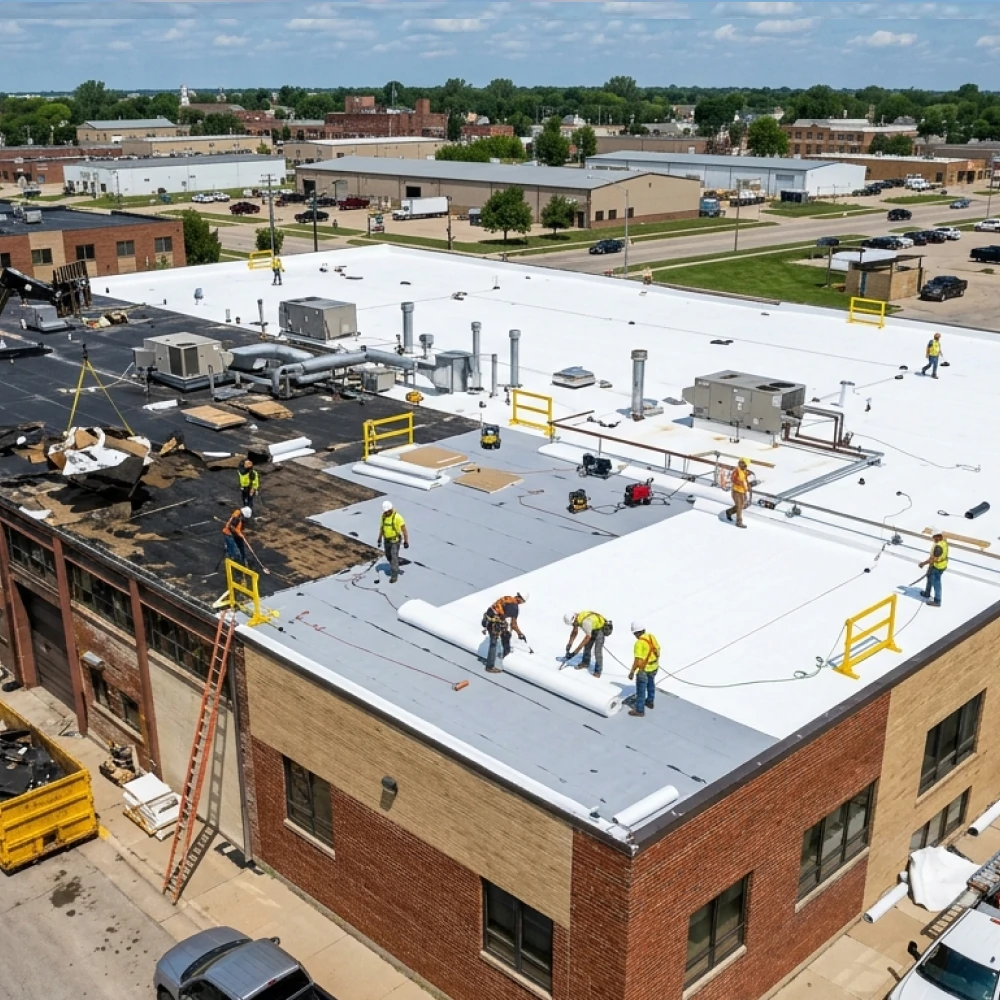
Day one starts with the crew arriving on time and protecting the building. Tarps cover landscaping, equipment, and any outdoor surfaces near the work zone. The tear-off begins in sections, and the deck is inspected as it is exposed. Any rotted decking or wet insulation gets pulled and replaced before the new system goes on.
Iowa weather is part of every flat roof replacement. Membrane work needs dry surfaces and specific temperature ranges. Heat-welded TPO cannot be installed in heavy wind. We give you a real start window upfront and call you the same day if conditions push the schedule.
- Yard and building protection setup
- Tear-off of old membrane and insulation
- Deck inspection and any required repair
- New insulation and tapered insulation install
- Cover board installation
- New membrane install with all seams sealed to spec
- Flashing, drain, scupper, and edge metal work
- Final cleanup and walkthrough
How to Verify Your Flat Roof Contractor Will Build It Right
Flat roof replacement has a much smaller margin for installer error than pitched commercial roofing work. Ask for the Iowa contractor license number. Ask if the crew is certified by the manufacturer of the specific membrane system going on your roof. Ask how many flat roof replacements they have completed in North Iowa in the past year. A roofer who handles one or two flat replacements a year is a generalist. A roofer who handles ten or more is a flat roof specialist.
- Iowa contractor license number on the contract and the truck
- Manufacturer certification for the specific membrane system you chose
- Number of flat roof replacements completed in the last 12 months
- Three local flat roof references — drive past at least one in Mason City
- Written scope of work listing materials by brand and thickness
- Named project lead — the person running the job on-site
- Manufacturer warranty terms in writing
How to Make Your New Flat Roof Last as Long as Possible
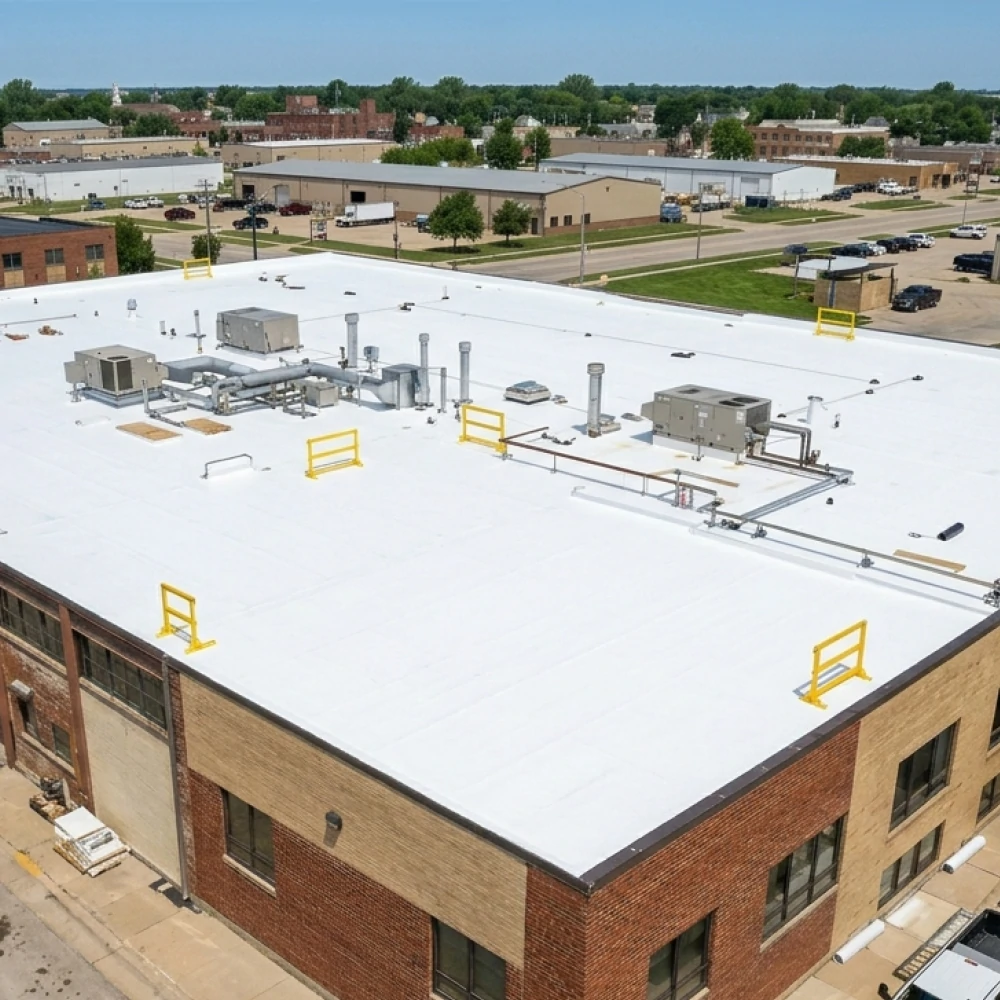
A new flat roof will last decades when it gets basic, consistent care. Two windows matter most in Mason City — the April inspection catches any freeze-thaw damage from winter, and the October cleaning clears drains and any debris before snow buries them. Missed checks during these windows cause most premature flat roof failures in North Iowa.
Beyond inspections, simple habits add real years. Clear drains and scuppers regularly. Limit foot traffic between service calls — punctures from HVAC technicians are a common source of leaks on otherwise sound flat roofs. Document every check for warranty and resale records.
- Spring inspection in April after freeze-thaw season
- Fall cleaning in October before winter
- Drain and scupper clearing every spring and fall
- Debris removal from corners and edges through the year
- Seam and flashing checks after every major storm
- Limited foot traffic between scheduled service calls
- Documentation of every inspection for warranty and insurance records