
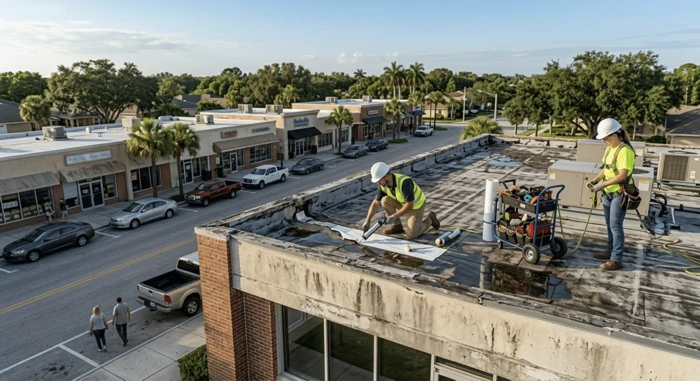
What Is the Best Way to Repair a Flat Roof in Mason City, IA?
The best flat roof repair method depends on the roof system. EPDM patches work for rubber membranes. Heat-welded patches are used for TPO. Torch-down patches handle modified bitumen. An experienced Roofing Contractor Mason City Iowa property owners rely on will match the repair material to the existing system to keep warranty coverage in place. Quick fixes like roof coatings or sealants only buy short-term time and rarely hold through Iowa winters.
- Identify the membrane type before any repair — wrong materials void warranties
- Address the underlying cause — ponding, failed seams, or flashing — not just the visible leak
- Document the repair with photos and a written scope for insurance and warranty records
What Flat Roof Repair in Mason City Actually Covers
A real repair visit starts with finding the leak source — not just sealing the spot where water shows up inside. The entry point on the roof can be feet away from where the ceiling stains. Without finding the real source, the patch never holds. We diagnose the actual failure, check the membrane, inspect the drains, and write a scope of work before any patching starts.
A lot of older Mason City buildings downtown and near East State Street still have built-up tar and gravel roofs from decades back. Identifying the original system is the first step before any repair work begins — because the wrong patch material can void the warranty and cause the next leak.
- Leak source diagnosis — not just the visible water entry point
- Membrane type identification and condition check
- Drain and scupper inspection
- Flashing and edge detail review
- Written scope of work and photo documentation
- Permanent fix matched to the existing roof system
- Clean-up and disposal of removed material
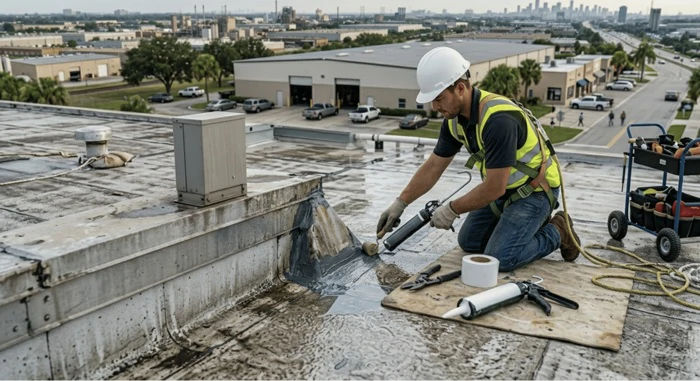
How to Tell If Your Flat Roof Needs Repair or Full Replacement
Isolated damage points to a repair. A failed seam, one cracked flashing section, or a single damaged area on a roof with otherwise sound membrane — those are repair jobs. Widespread membrane failure, leaks in multiple spots, or a roof that has needed work every season for two or three years points to a full replacement.
North Iowa freeze-thaw cycles crack aging flat membranes every spring. If your Mason City flat roof has leaked at the same spot two seasons in a row, repair money may only buy you one more year. The smart move at that point is to plan a replacement on your timeline — not after a major leak forces an emergency.
- Leaks coming through in multiple locations
- Widespread blistering, splitting, or membrane shrinkage
- Repeat repairs at the same spots year after year
- Roof age of 20 or more years on most membrane systems
- Visible deck sag from inside the building
- Insulation showing moisture damage at multiple points
The Most Common Flat Roof Problems on Mason City Buildings
Ponding water is the top flat roof repair call we get in Mason City. Iowa winter snow loads slowly create new low spots in flat roofs over time. Drainage that worked fine in year one often fails by year ten as the deck deflects under repeated heavy snow. Standing water that sits longer than 48 hours after rain wears the membrane fast and needs to be addressed before it causes a system failure.
Failed seams are the second most common issue. Membrane seams take the most stress from temperature swings and eventually open up. Other frequent flat roof problems we see across Mason City:
- Failed seams along membrane laps
- Blistering or bubbling across the membrane surface
- Cracked flashing around HVAC, vents, and parapet walls
- Damaged or clogged drains and scuppers
- Ice dam edge damage along eaves
- Pipe boot failure around plumbing penetrations
- Punctures from foot traffic during HVAC service
What to Expect During a Flat Roof Repair Visit
We start with a roof walk to find the actual source of the leak. Finding the real entry point often takes longer than the repair itself. After the walk, we sit down with you and explain what we found. You get a written scope of work with photos before any repair starts.
Iowa weather affects flat roof scheduling. Membrane work needs dry surfaces and specific temperature ranges to cure properly. Heat-welded TPO repairs cannot be done in heavy wind. Torch-down work cannot start on a wet surface. We give you a real schedule window upfront and call the same day if conditions push the start.
- Roof walk and full leak source diagnosis
- Membrane and drain inspection
- Photo documentation of all damage
- Written scope of work and estimate
- Scheduled repair window with weather check
- Repair completed with manufacturer-spec materials
- Final walkthrough and documentation for your records
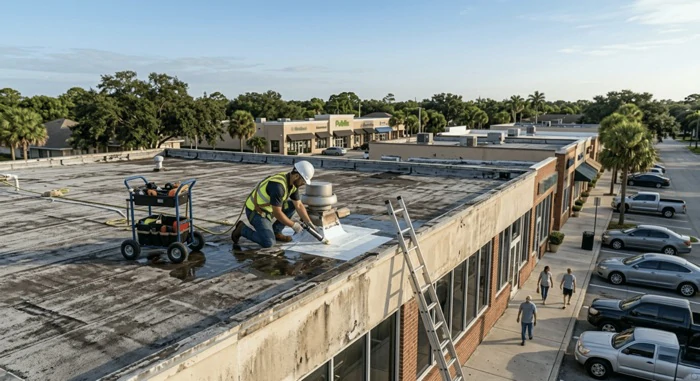
How to Verify Your Flat Roofer Knows the Right Repair Methods
Flat roof repair has a much smaller margin for error than sloped commercial roofing work. The wrong patch material — or the right material installed wrong — can void the warranty and cause a worse leak six months later. Ask for the Iowa contractor license number. Ask if the crew is certified by the manufacturer of the specific membrane system on your roof. Ask how many flat roof repairs they have done in Cerro Gordo County in the past year. A roofer who handles one or two flat repairs a year is a generalist. A roofer who handles fifteen or more is a flat roof specialist.
- Iowa contractor license number on the contract and the truck
- Manufacturer certification for the membrane system on your roof
- Number of flat roof repairs completed in the past year
- Three local references — drive past at least one in Mason City
- Written scope of work listing materials by brand
- Named project lead — the person running the repair on-site
How Routine Maintenance Prevents Future Flat Roof Repairs
A flat roof that gets inspected twice a year consistently outlasts one that only gets attention after a leak. Two windows matter most in Mason City — the April inspection catches freeze-thaw damage from winter before it opens into a full leak, and the October cleaning clears drains and any debris before snow buries them.
- Spring inspection in April after freeze-thaw season
- Fall cleaning in October before winter
- Drain and scupper clearing every spring and fall
- Debris removal from corners and edges throughout the year
- Seam and flashing checks after every major storm
- Limited foot traffic on the membrane between service calls
- Documentation of all checks for warranty and resale records