
How Southeast Mason City Commercial Buildings Handle Roof Wear
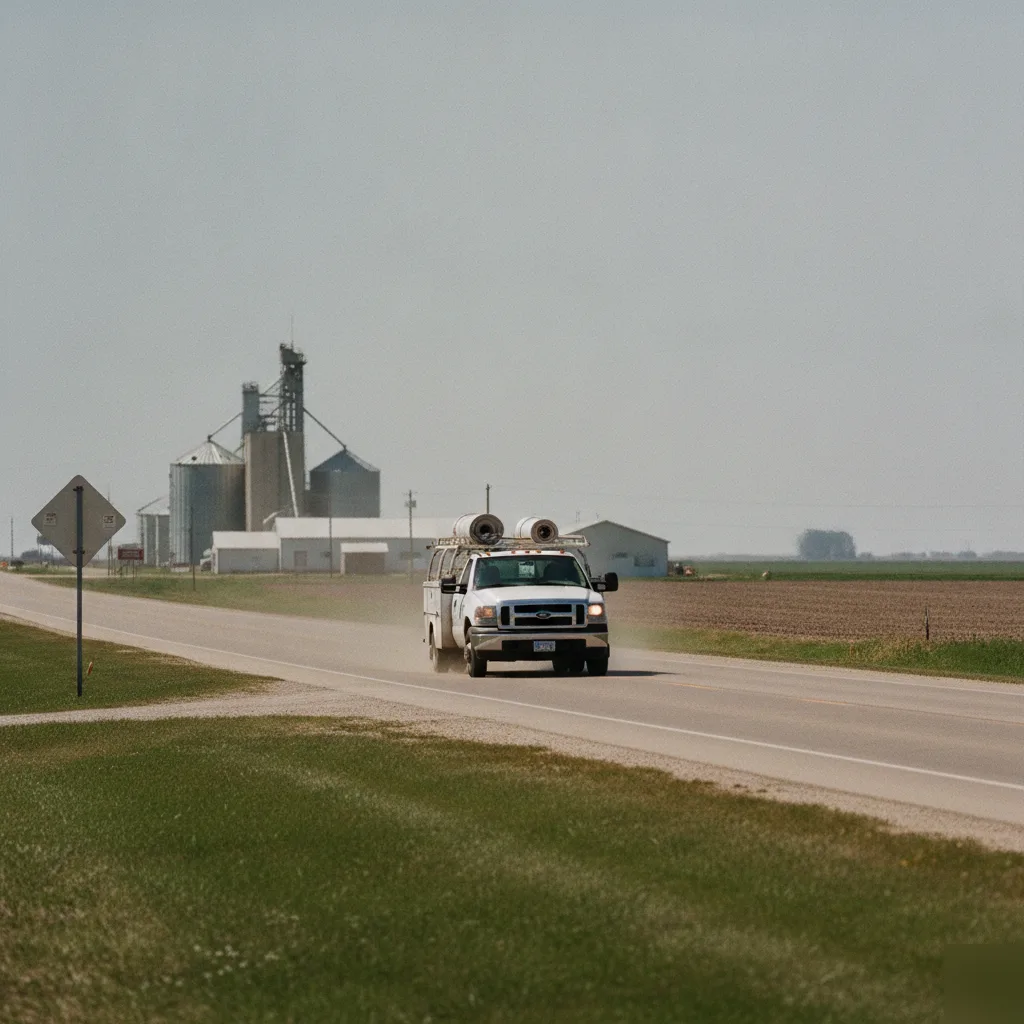
Southeast of Mason City towards Rock Falls, you can spot the roof wear from miles away. Drive down Highway 65, past the grain elevators on Highway 65, and you’ll see older metal-sided businesses, patched-up flat roofs with too many repairs for any one building, and small commercial buildings with simple, practical roof designs. It’s that landscape and the types of commercial buildings on this stretch that dictate the kinds of roofs that exist here, and how they wear.
We’ve handled commercial roofing near Mason City for many businesses in this area, including warehouses, machine shops, and smaller storefront buildings along Highway 65 in Rock Falls. Most of the buildings in this area have either flat roofs or low-slope metal roofs, not shingle roofs. David doesn’t install residential shingle roofs. He works with flat roofs, low-slope roofs, commercial and some residential metal roofs and flat roofs.
Once you’ve visited enough commercial buildings out this way, you can pretty much see how the roof’s going to wear once it starts aging. To the south of this region, there is wide-open farmland, so the buildings are more open to high winds and blowing rain than buildings tucked into more protected areas of Mason City. That open weather can easily find the seams, flashing, and other parts of a roof that are less resistant. Flat roofs that have stayed waterproof for several years will start leaking once the seam starts to crack, a problem many building owners won’t find until water stains appear on the ceilings inside.
Commercial roofs in the area of Cluster 4, in particular, are often affected by:
- Water collecting on older, flat roofs after the roof slope has settled unevenly
- Rusted seams and popped fasteners on standing seam metal roofs that have been exposed to open winds
- Membranes cracking on top of commercial buildings that have rooftop HVAC units and older flat roof systems with TPO or EPDM roofing materials
- Flashing failing along the parapet walls from rain running over the side
- Roof coatings wearing off after being exposed to direct UV rays with nearby buildings or other structures providing no shade
All these issues can be minor for several years. Flat roofs and commercial roofs don’t fail all at once. Roofing systems fail when one section breaks down, when one part starts leaking. A small leak can soak the roof insulation if ignored, leading to major problems down the line.
Buildings southeast of town can also experience greater seasonal changes than most commercial buildings. Open exposure means the roof heats up during summer and can drop at night. Those rapid and repeated expansions and contractions can be hard on flat roofing membrane materials and metal panels. So we check for that specifically when we’re doing a free roof inspection in this area, checking for not just surface damage, but also the state of the materials themselves as they’ve aged.
Waterproofing is also a major issue in commercial roof maintenance southeast of Mason City. Businesses near Rock Falls and on the Highway 65 corridor with flat roofs, especially lower ones, need to get roof deck waterproofing from the start. Because of the roofline, water on the roof will either flow out the sides or find its way inside.
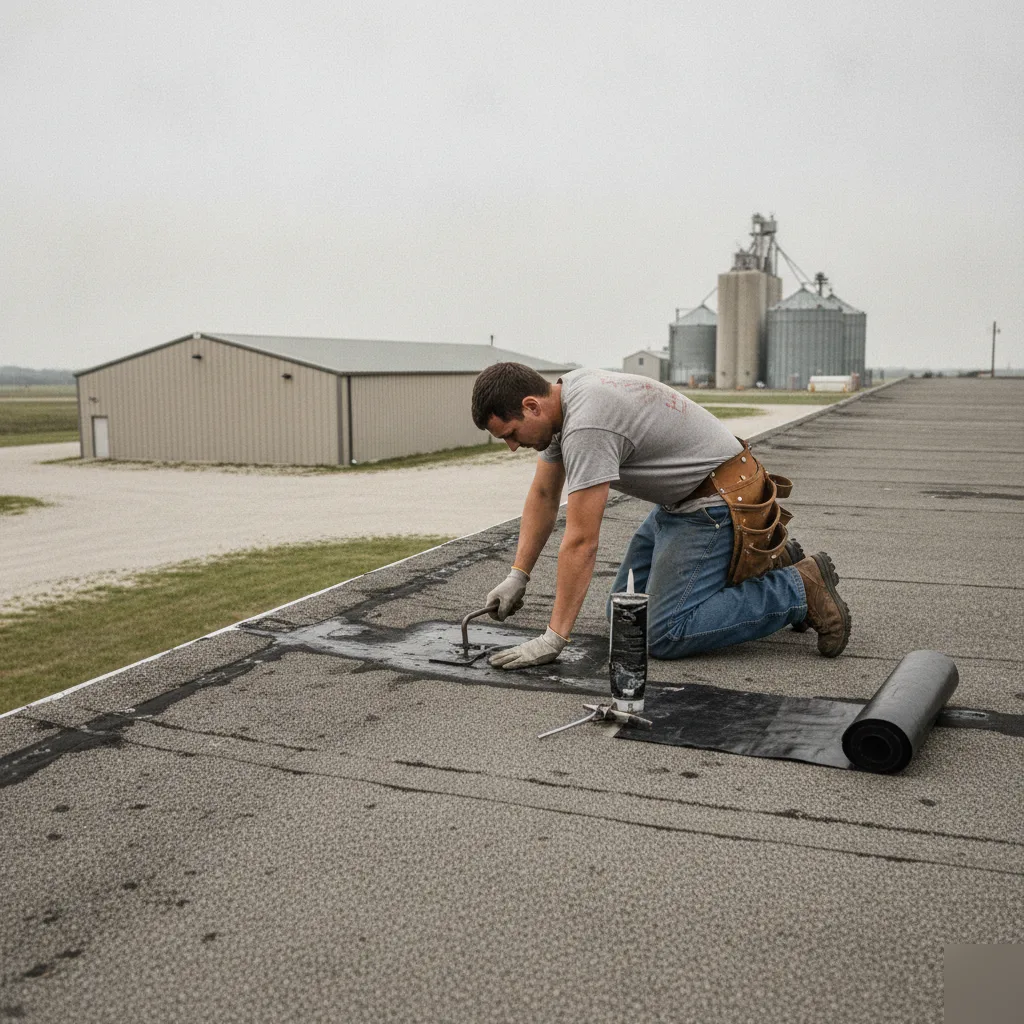
Waterproofing membrane installation and flat roof waterproofing are regulars on these jobs, and in these cases they tend to be the difference between a roof with a long life and a roof that's always on the receiving end of service calls.
How Our Crew Gets to the Rock Falls Area
We are based at 608 12th St NE, but Rock Falls is easy access for us. It's not like we make that trip every week or anything. David has been making the trip many times before, ladders, stuff, all up to a flat roof or metal roof, and he's done that many times out here, to the southeast of town.
Our standard route is the following:
- Leave 12th St NE and head toward the end of the city.
- Turn to the southeast and take any road out of the city.
- Enter the area that is the Rock Falls area, make sure the owner/occupant is present, and then unload any equipment.
That is not a hard road to take, though knowing the roads can matter more than most people realize. The properties that you are working with can be off main roads. The properties are often not off of a main road, but they are off of a gravel drive or a property set back from the road that is not easy for the GPS. We have learned the properties that can handle a heavy work truck and those that cannot. We did not learn this from the map. We did not learn this from any online directions. You learn this by driving the roads you will be driving to make the inspection.
You want us on time and you want us to know what to do when we arrive. If we are doing a roof inspection in this area, and the road is a backroad, we will not show up late to inspect your roof. We don't want to waste a person's time, and we don't want to be driving around in circles or circling a gravel road looking for the correct road.
That's why we have the drive times we do. We have made this route before and we've seen what happens if someone doesn't know their way around these parts, someone shows up late or, even worse, they show up at the wrong location. If you don't pay attention you could end up on one of several gravel roads that all seem to run into each other. We've been doing storm damage inspections for quite some time and we have been doing roof leak detection and roof inspections out of Rock Falls for a little time now. We know what we're doing.
When it comes to commercial roofs, especially flat roofs, we try to get on them as soon as possible after any storm comes through. Water is going to pool in a flat roof differently than it will on a pitched one, so even a small leak over a couple of hours has the potential to become a major problem. We take the drive from here to Rock Falls seriously, and it's part of the reason we can provide the service that we do.
And don't worry, even if you call us up to schedule your free roof estimate and aren't sure how to get to the Rock Falls area, or maybe just that portion of town, that's okay. We've already driven this road. Just tell us you are in the Rock Falls area, and we will find your place.
David's clocked up all the miles out this way that the drive just feels like part of the week now. We don't really even think of it. That's an advantage when a big storm rolls in and you need a company that knows where to go quickly, not one still looking at a map to see which highway exit to take.
Inside the Rock Falls / Cluster 4 Commercial Corridor
Drive out along the Rock Falls portion of SE Mason City's commercial corridor, and you see within seconds. This is not strip-mall territory. It's a working corridor with grain handling facilities, light industrial buildings, smaller agricultural-related structures, some older standalone business/office buildings and some newer office buildings that grew up next to the railroad tracks and rail spurs. The roofs are low-slope or flat here. Shingles will be few and far between.
We have done roofs in this area and the thing that we keep seeing repeatedly is a roof leak that starts around a rooftop HVAC unit, the water spreads underneath the roof membrane to the roof deck, the roof deck gets damaged and the leak is seen as a water stain or drip on the inside. You have a roof leak long before you have a leak. The majority of the buildings in this commercial corridor are low-slope roofs (with built up roofing or modified bitumen that are either past due or need to be maintained and sealed with a coating), are metal shop and warehouse buildings (often standing seam type roof system, which will have a roof system and maintenance inspection for seams and penetrations due to temperature extremes and freeze thaw cycles common to Iowa), some smaller flat roofs that have a TPO or EPDM type single-ply commercial roofing membrane and some smaller business and mixed use buildings that have some flat roof that does not properly allow for water to exit to the drain(s).
That is important because a TPO commercial roofing system installed on an office building is a little different than a standing seam metal roof that also has HVAC equipment on the roof deck that is located in a metal shop / warehouse. When we inspect a commercial property we always have a general idea of what kind of commercial building we are looking at and we look at the commercial property from the commercial roof system point of view.
The other thing about this commercial corridor specifically. The property is very close together and sometimes shares a common area (drainage system or parking lot). This means that a property may share in the common drainage and may be impacted by a neighboring commercial property that has a bad roof system. In the spring when we have major storms, this is a common problem that we see when one property with flat or low-slope roofs is flooding out the water that is on the commercial flat roof is backed up and spills into the neighbor's lot. This is not just a scare tactic for homeowners and business owners who want to know why they have a commercial roof leak. This is what happens when a commercial roof is not pitched correctly or even when a commercial roof is 1/2 inch too flat.
The other common roofing problem that we see out along Rock Falls are the old patched commercial HVAC roof penetrations. There are a lot of commercial buildings that were originally built with the HVAC equipment mounted above the roof system, where the old patch that was placed on the equipment was never resealed properly or was just a temporary solution with a caulk or mastic that was applied with a brush. Those patches hold out for years, and then do not. The bottom line is that if your commercial building was built before you owned the property, you do not know what is under that membrane on top of your roof system.
We offer a free roof inspection so that you can know exactly what is going on with your roofing system, we will climb up and look at the roof, inspect the seams and penetrations, look at the drainage to see if the water can properly drain off the roof system. We will let you know exactly what needs to be done and what is working properly. There is no room to gloss over. This commercial corridor is not a commercial district where you can treat every commercial property or business the same and expect to have the same solution. This area of Mason City includes buildings in the Rock Falls area, so you have buildings that are a wide range of ages, roof systems and roof systems types that require special attention, different solutions and different roof systems. And the commercial roof leak that starts small will eventually become a large repair job.