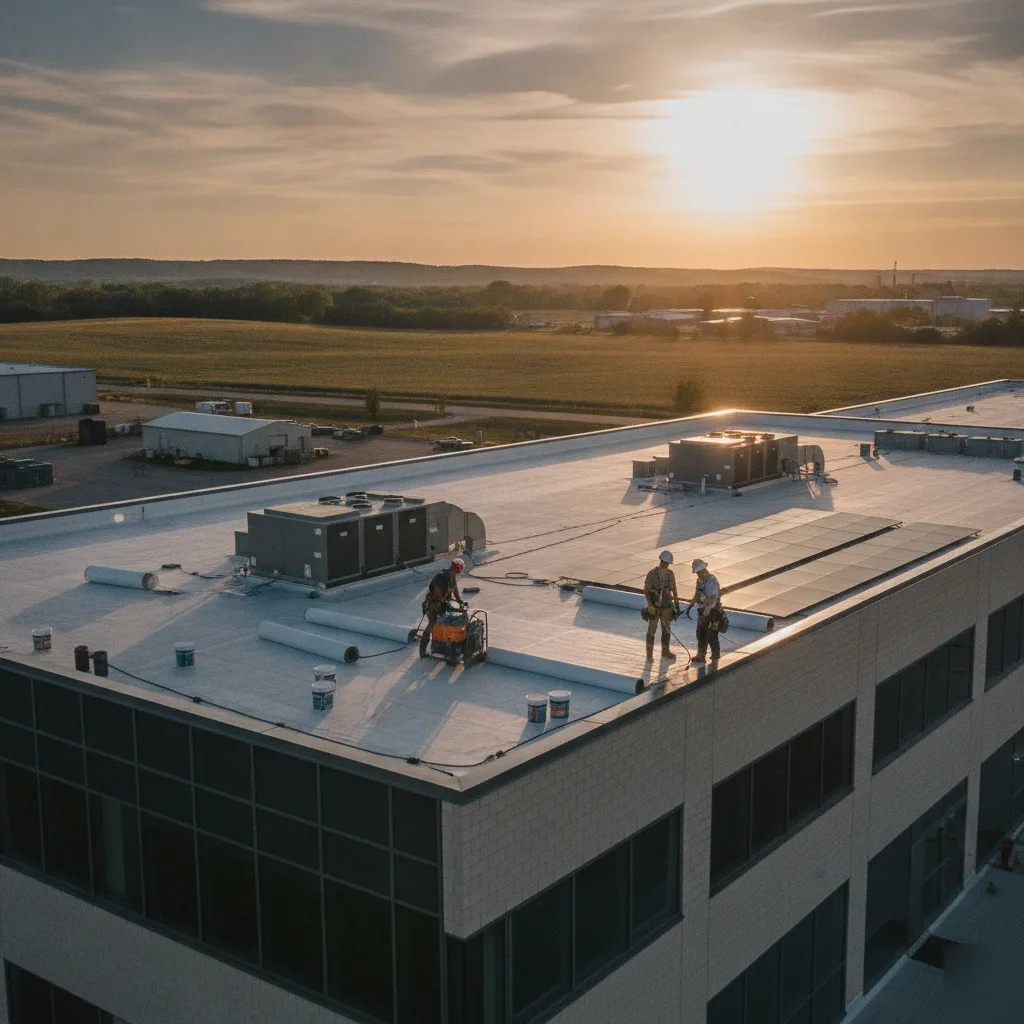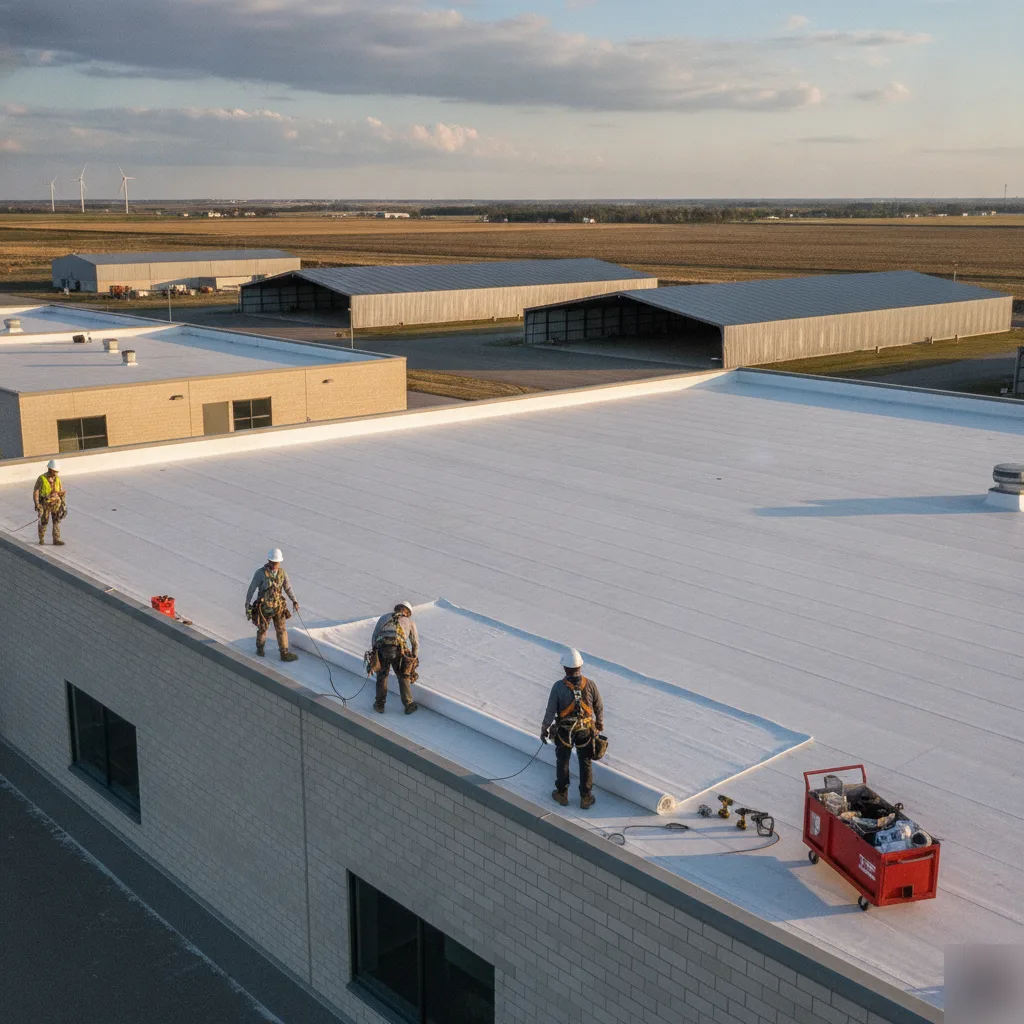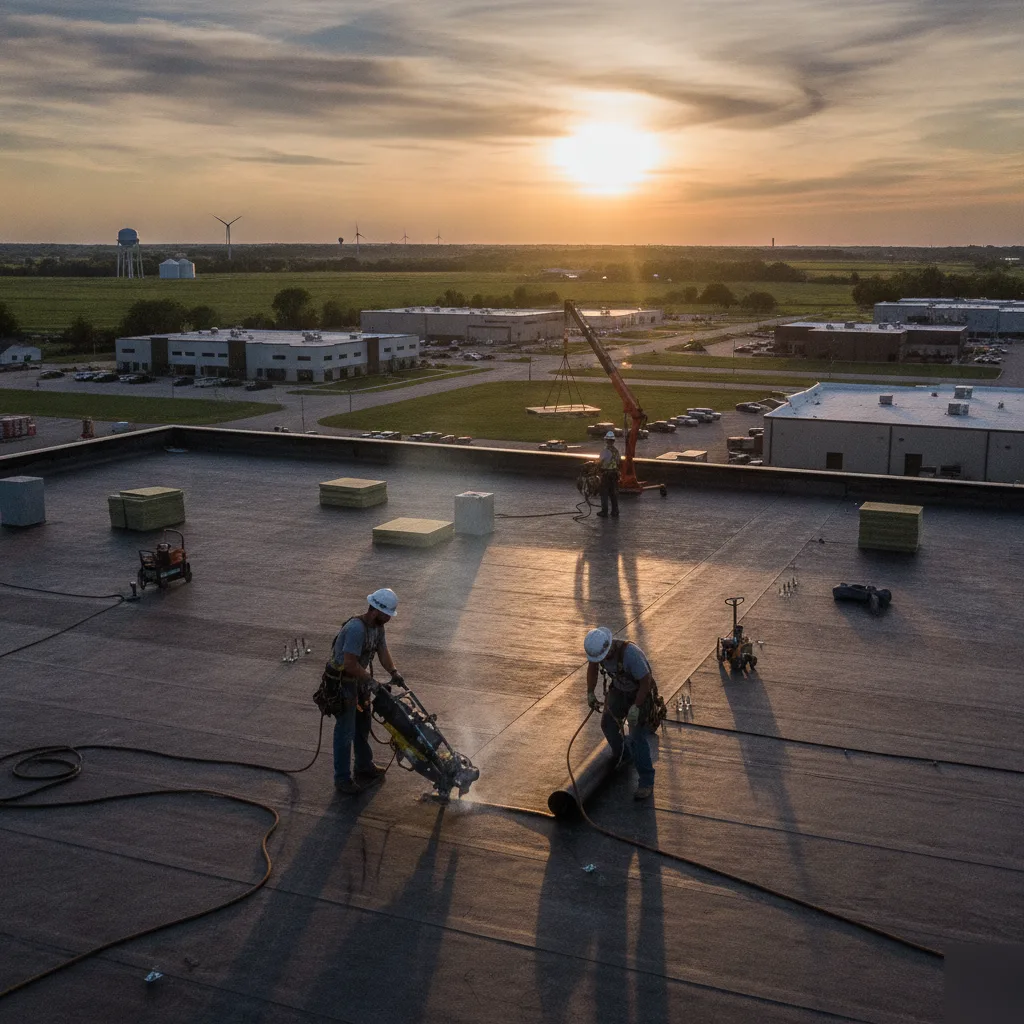
How the Commercial Roof Evaluation Works
Most roofers won't mention this, but a lot of commercial roof issues in the SW Rural Business District begin small. A metal panel seam might lift. A blister could pop up on a flat membrane that nobody has looked at in years. When water finally shows inside your building, the damage below has often been growing for months.
David handles every free roof inspection the same way out here. No shortcuts.
We start on the ground. The commercial buildings along Mason City's southwest corridors usually sit low and wide. Many are single-story retail or ag-related spots, mostly with flat or low-slope roofs. Before anyone climbs up, we walk the whole perimeter — it's how any commercial roofer in the Southwest Mason City area should start a job. We check the fascia, the gutters, any flashing around the roofline. That open-field wind coming off the farmland really beats these buildings up.
Then, we get onto the roof:
- Membrane health on TPO, EPDM, or PVC systems — punctures, seam breaks, sun damage
- Flashing at HVAC units, vents, and other rooftop gear you see on these commercial spots
- Drainage paths and scuppers — flat roofs on older places near the business clusters often pool water
- Metal panel fasteners and standing seam strength on all the steel-sided shops and storage buildings around here
We take pictures of everything — that's documentation for insurance claims. Not just a few shots.
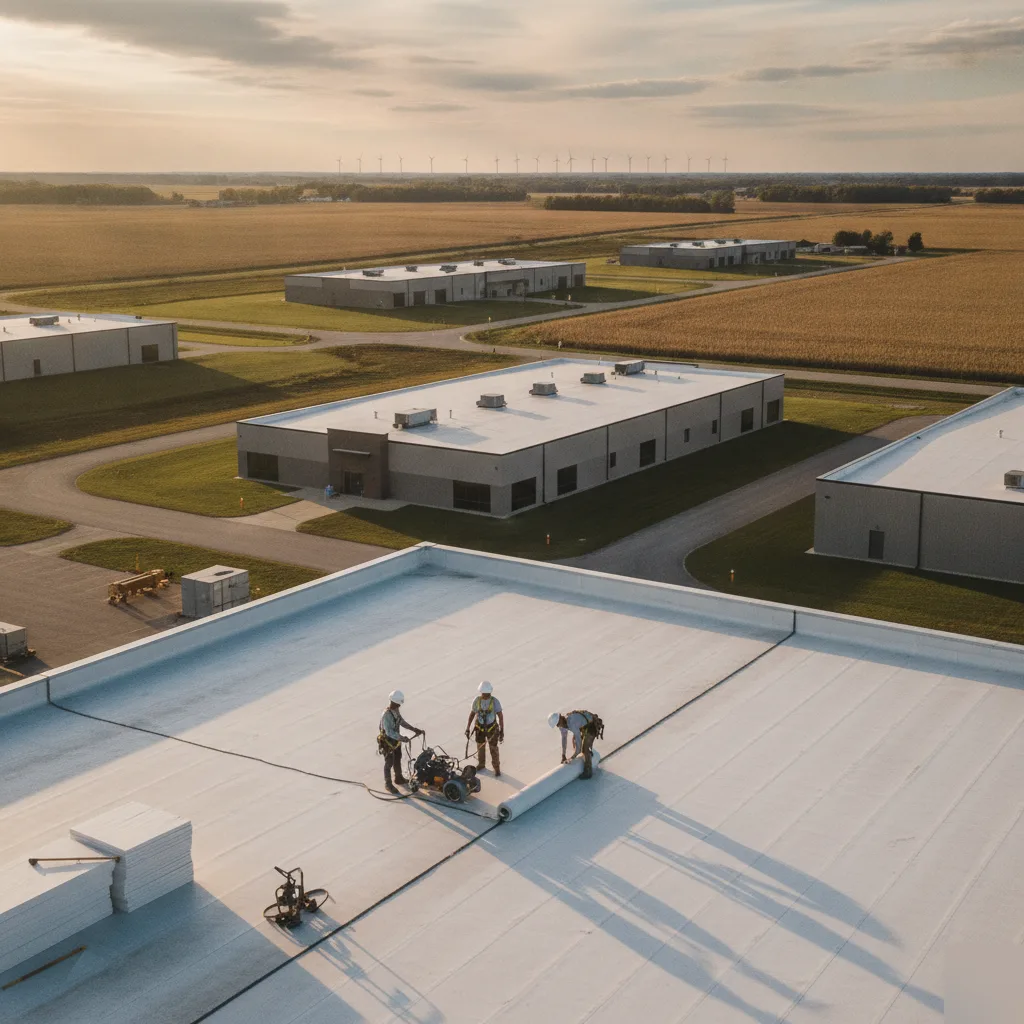
And this is what makes a true evaluation different from a sales pitch. We tell you what's working. If your roof coating has life left, we'll say it. If a minor flat roof repair fixes the problem, we won't push for a full commercial roof replacement, that just creates more headaches. We've seen contractors upsell property owners who only needed a patch near a drain, that's not how we operate.
And commercial properties along these southwest corridors have their own specific issues. That wide-open exposure means hail and wind damage often hit harder than buildings downtown. Downtown structures get some shelter. We're out here doing storm damage inspections after every real weather event, these roofs really take the brunt of it.
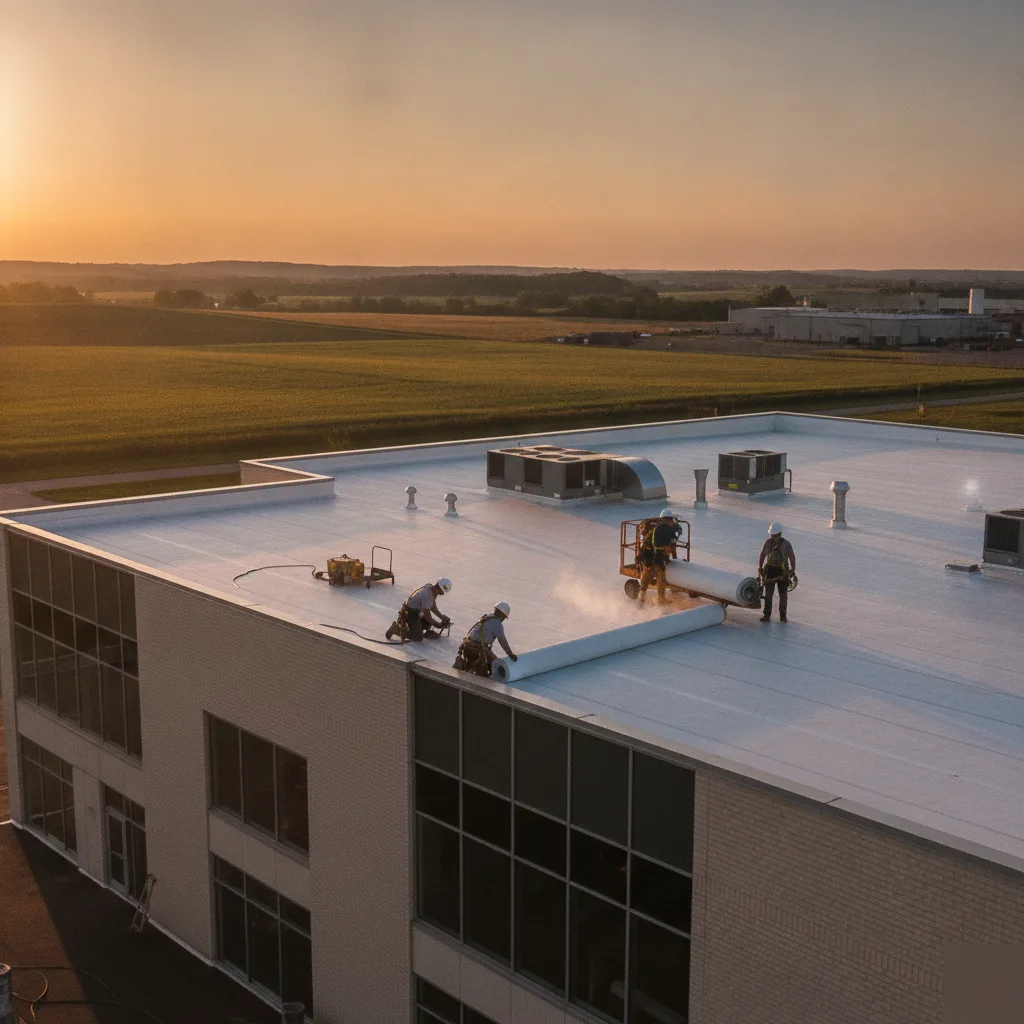
But the evaluation isn't only about damage right now. We also look at the roof's remaining years. A flat roof waterproofing system installed ten years ago on a machine shop (maybe one off Highway 122) shows different wear than one in the middle of downtown. It sees more sun, more thermal cycling, more wind stress. That context matters, you need to know what to plan for.
When we're done, you get a straight answer. What needs attention right now, what can wait a while, and what you should plan to budget for down the road, we just tell you. No pressure. No scare tactics. Just what David personally sees on your roof and what it means for your building.
Most commercial buildings here take about an hour to assess. We've been on enough roofs near Clusters 9 and 10 to know what to look for even before we park.