What Commercial Roofs in This Area Face
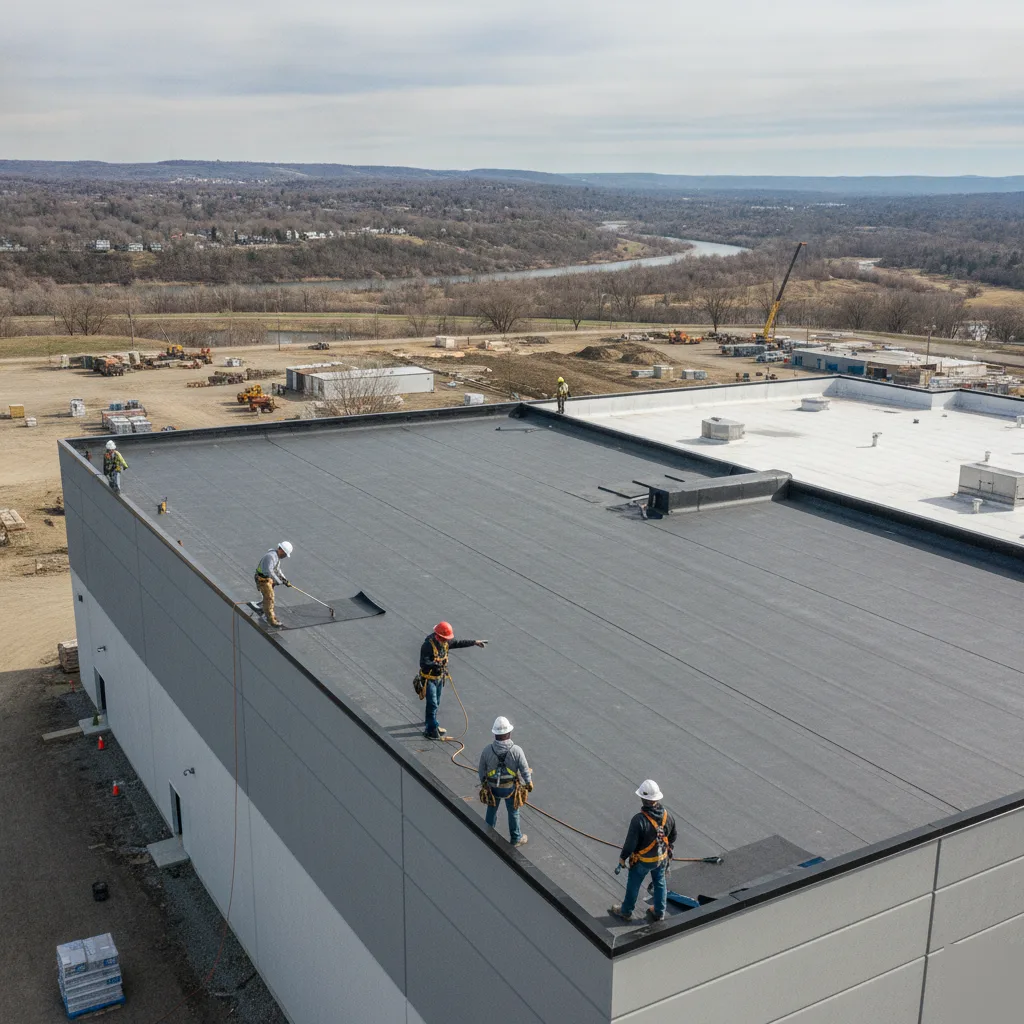
Out here in the North Mason City Rural Corridor, it's where farmland bumps up against light commercial. You've got feed stores, equipment dealers, small ag offices, storage buildings. Most of these have flat or low-slope roofs, and they take a real pounding that buildings closer to downtown just don't see.
Wind is the major issue. Nothing to block it out here.
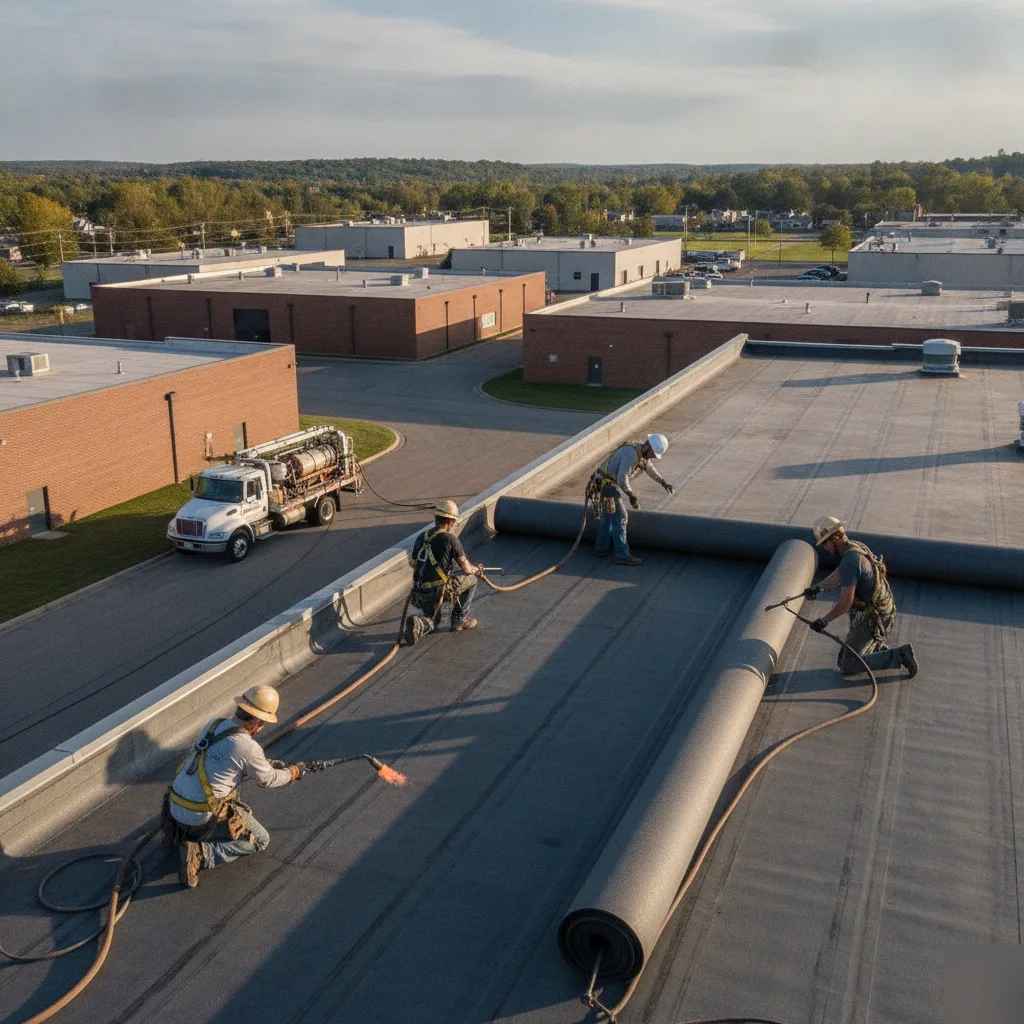
Past the homes near North Federal Avenue and into this corridor, the land stretches out. Those commercial roofs along these country roads catch every strong gust rolling across open fields. As a commercial roofer in the North Mason City Rural Corridor, we've done wind damage roof repair on metal panel buildings — David personally oversees these jobs — where whole sections lifted because fasteners wore out and nobody noticed. Most contractors won't tell you this, but an isolated flat commercial roof ages quicker than the same roof in town. No nearby structures, no buffer from the weather.
Hail is the other constant nuisance. North Mason City Rural Corridor properties lack the tree cover that can absorb even small stones. A June storm hits, and every TPO membrane and EPDM surface in the corridor gets a direct shot. We've seen what happens when this goes unaddressed. Small dents turn into cracks after one winter's freeze-thaw cycle. Then you find leaks, often not until inventory gets wet or insulation sogs out.
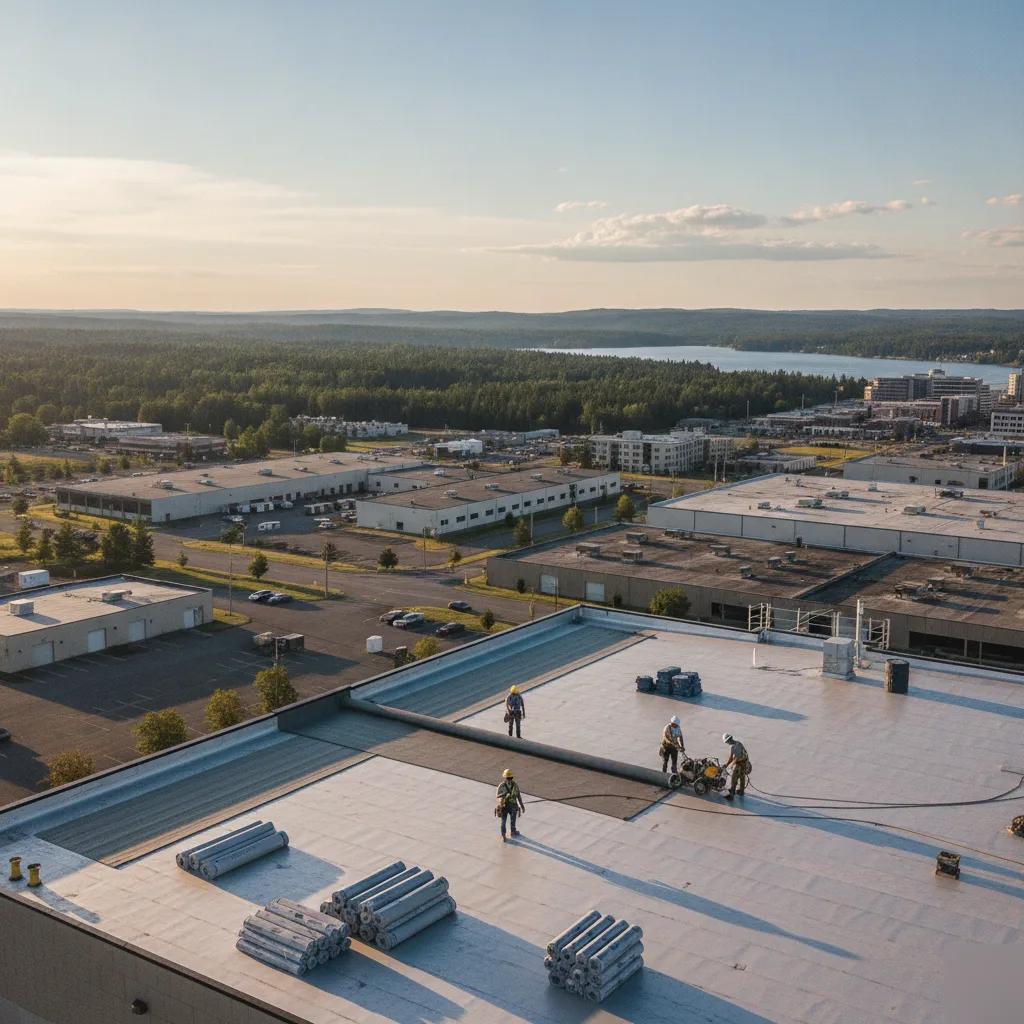
Here's what we see most often on commercial roofs in this particular area:
- Ponding water on flat roofs from poor original drainage, a common sight on older ag buildings and pole structures.
- Membrane shrinkage on EPDM roofs constantly exposed to full sun with no shade relief.
- Loose or backed-out fasteners on standing seam metal roofing from the constant thermal cycling North Iowa gives us.
- Flashing failure around rooftop HVAC units on smaller office and retail buildings, which we see all the time.
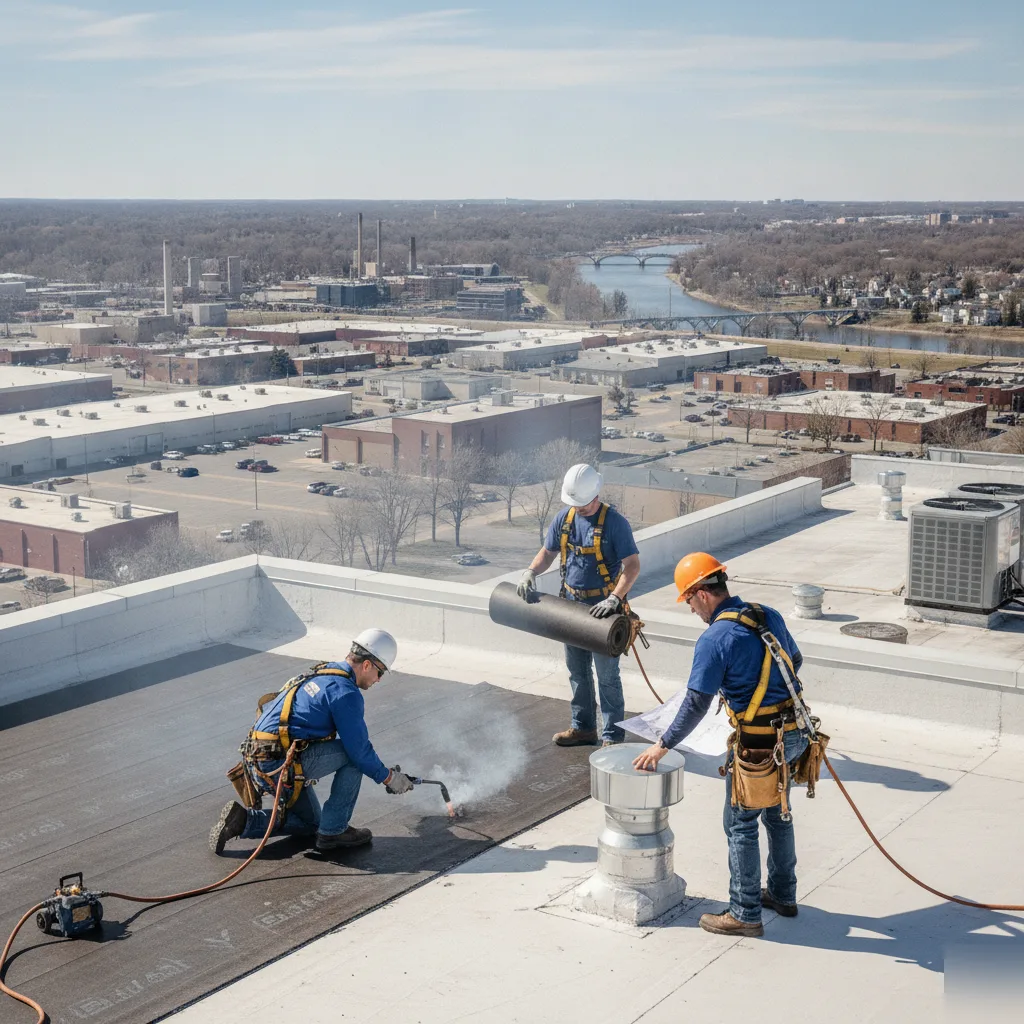
Snow load matters, too. A heavy March snow on a flat commercial roof with clogged drains can really strain the structure. Many of the older farm buildings and pole structures scattered through the corridor rely on wood truss framing that was never designed for standing water on top of snow load, and this roof truss installation guide lays out why proper truss support matters so much for these ag-style buildings. Buildings out in the corridor can sit for weeks without anyone checking the roof. That's just asking for problems.
David's been up on roofs along this stretch enough times to know the drill. A building owner calls about a ceiling spot, we show up, and find three issues that started a couple seasons back. The flat roof on a storage facility near the north end of town had six inches of standing water behind a debris dam last spring. That's not just a leak coming, that's a real collapse risk.
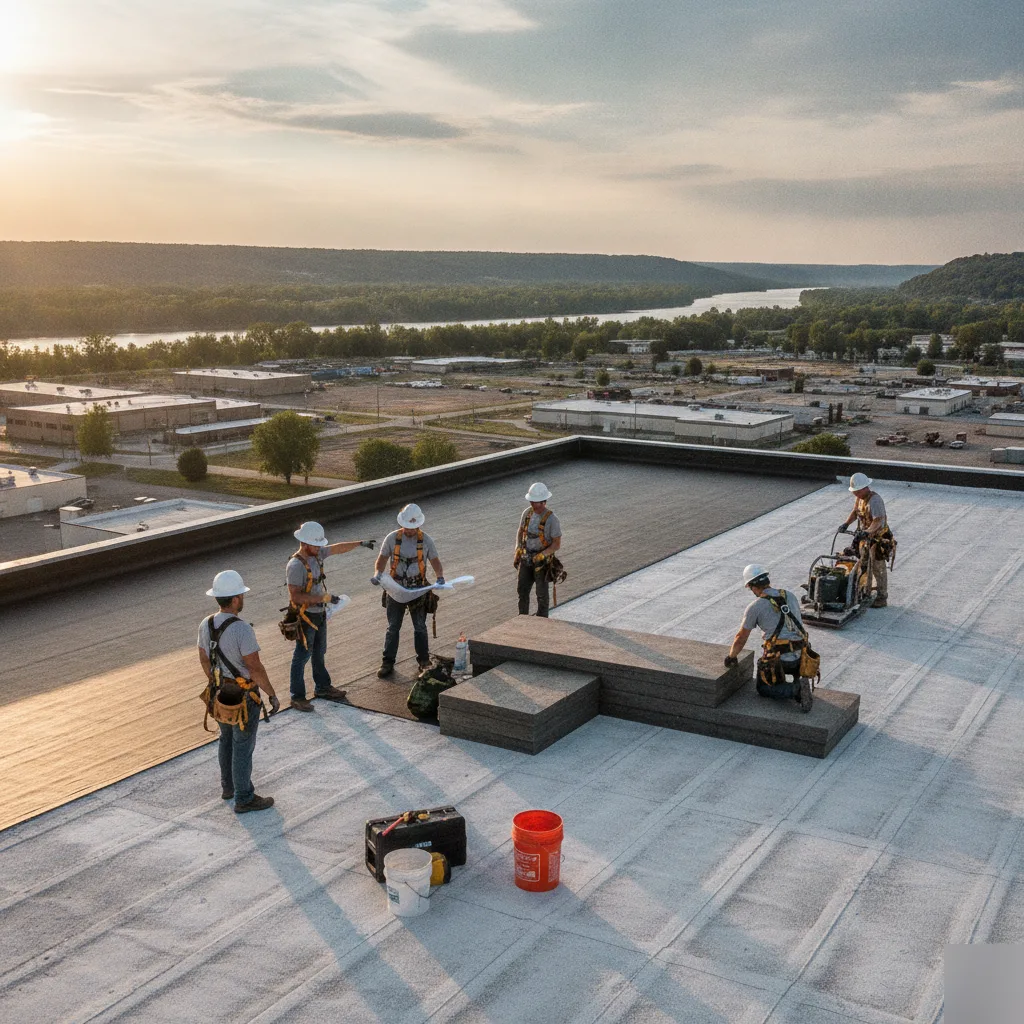
But the good news is, most of these problems are fixable before they get serious. A proper roof coating application on a flat commercial roof out here can add years of service. Early roof leak detection saves thousands compared to a full flat roof replacement later on.
The Mason City freeze-thaw cycle is tough on commercial roofing membranes. We see temperature swings of 80 degrees from January to July. Seams pull apart, caulk dries out, metal expands and contracts. Rural corridor buildings feel every bit of it, there's no protection from the elements. That constant exposure is the biggest factor we see in shortening roof life on commercial properties in this part of town.