Why Glenville Corridor Property Owners Visit Our Mason City Office
Deer Creek Valley sits right where Glenville Corridor meets open farmland. Those commercial buildings out there take a real pounding every season. It's why we're on those roofs so often, seeing it firsthand — the flat-roofed ag buildings, the metal-sided shops, the small retail spots along the corridor itself. They all face the same problem: water always finds a way in if nobody's watching, especially with North Iowa's nasty freeze-thaw cycles.
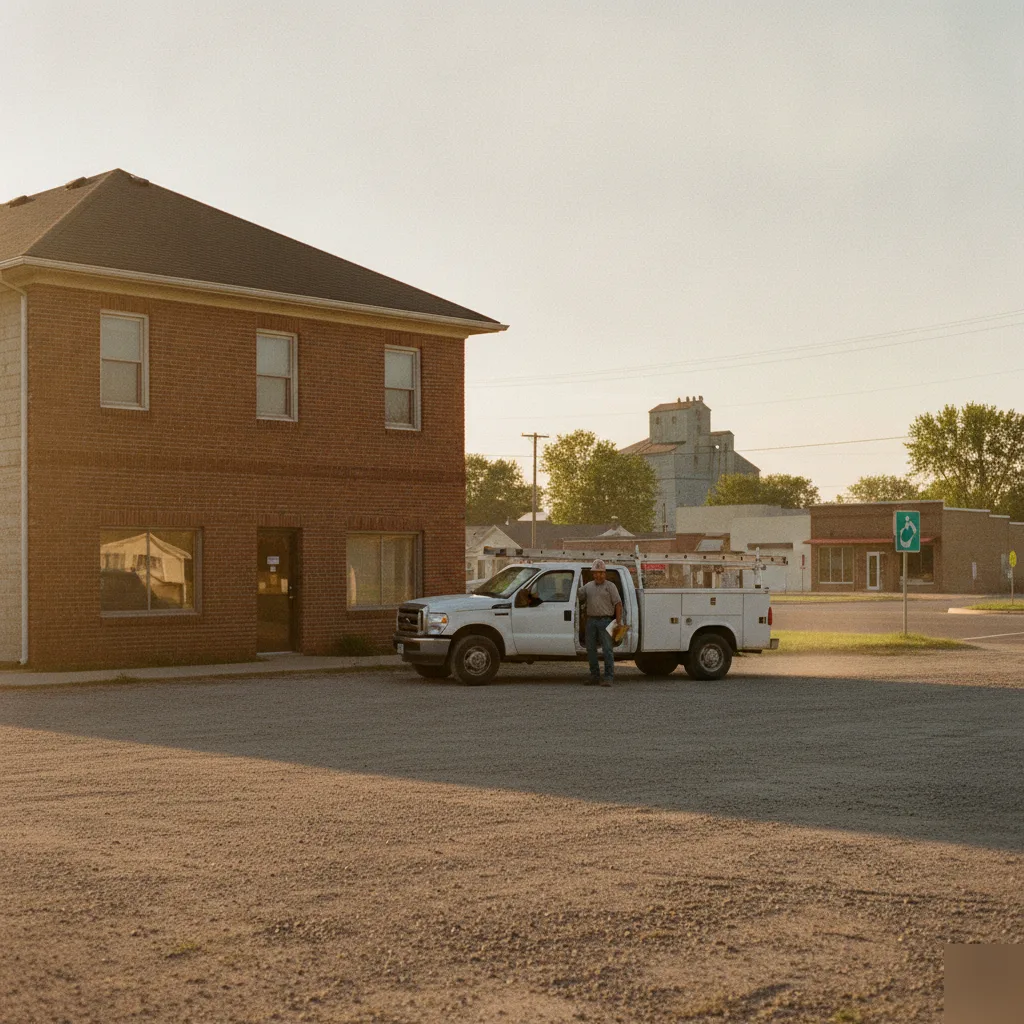
Most property owners in the Glenville Corridor don't have a commercial roofer in the Glenville MN area just down the street. So they make the drive up to our office at 608 12th St NE in Mason City. David's usually there most mornings, ready to show you photos of your actual roof, not some generic sales brochure. Bring your worries. Bring any insurance paperwork if you've got storm damage. We'll sit down and talk straight about what's really happening up there, no sugarcoating anything.
And here's what most contractors won't tell you. Many commercial roofs along Deer Creek Valley are older membrane systems or built-up roofs. They worked fine 15 years ago, but now they're showing age. We see splits at the seams, ponding water after every downpour, and bubbling where moisture got stuck underneath, especially after those massive spring rains we get around here. We've seen what happens when that gets ignored: a small fix turns into a full flat roof replacement because nobody caught the trouble early enough. Buildings near Mason City's downtown often get more regular checks, but out here, issues can fester.
The buildings along the Glenville Corridor usually fall into a few types:
- Low-slope commercial buildings with aging EPDM or TPO membranes
- Metal-roofed farm shops and equipment storage buildings
- Small commercial storefronts with flat roof sections that just collect standing water
- Mixed-use properties where a flat residential roof sits right next to a commercial space
Each one needs a different way of doing things. We handle TPO roofing installation, EPDM roofing installation, standing seam metal roofing, and flat roof repair. Whatever's on your building, we've worked on it before, and probably fixed a few just like it already.
But the real reason Glenville Corridor property owners come to us is the free roof inspection. You drive up to Mason City. You talk to David for ten minutes. Then we schedule a time to get on your roof with a camera. No guessing, no pressure. Just honest answers about what's going on and how long you've got before it becomes a real pain.
Storm damage hits that valley hard. Wind rips across those open fields with nothing to slow it down, and hail follows the same path every spring, sometimes for weeks. We do storm damage roof repair. We also help with roof insurance claims. If your commercial roof took a hit last season, we document everything your adjuster needs to see.
One common story we hear: a Glenville Corridor shop owner spots a leak after a heavy rain, patches it with tar, then forgets it. Six months later, the decking underneath is rotting out. By the time they call us, the repair bill has doubled, sometimes tripled, because the rot has spread. A free roof inspection would've caught that, preventing a much bigger expense later — it's just how flat roofs work.
We're a short drive north on US-65. It's an easy trip for anyone in the Deer Creek Valley area who wants real answers about their commercial roof.
Driving Directions from Glenville Corridor to Our Mason City Office
Deer Creek Valley sits right along the southern edge of the Glenville Corridor. David's crew knows this stretch well, almost like their own backyard. They head down that way regularly for commercial roof work — metal buildings, flat-roofed shops. Getting from that corridor to our office at 608 12th St NE in Mason City is a straight shot. No guessing.
Here's how you get to us:
- Head north out of the Glenville Corridor on US-65. You'll follow Deer Creek Valley as it winds along the low ground, passing the handful of farm operations and small commercial properties that line both sides of the highway — often these are the very buildings we're talking about.
- Stay on US-65 North for about 20 minutes. You'll pass through wide open country with a few crossroads. Don't turn off at any of the county roads unless you're looking for the scenic tour, which you probably aren't right now.
- As you enter Mason City from the south, US-65 turns into Federal Avenue. Keep heading north through the south side of town. It's pretty straightforward.
- Turn right (east) onto 12th Street NE. Our office is on the right side, 608 12th St NE. You can't miss the place.
The drive usually takes about 20 minutes in normal conditions. Most of the time there's zero traffic to deal with on US-65 between Glenville and Mason City. It's one of the easier drives in North Iowa.
But here's the thing. You probably don't need to come to us. We come to you.
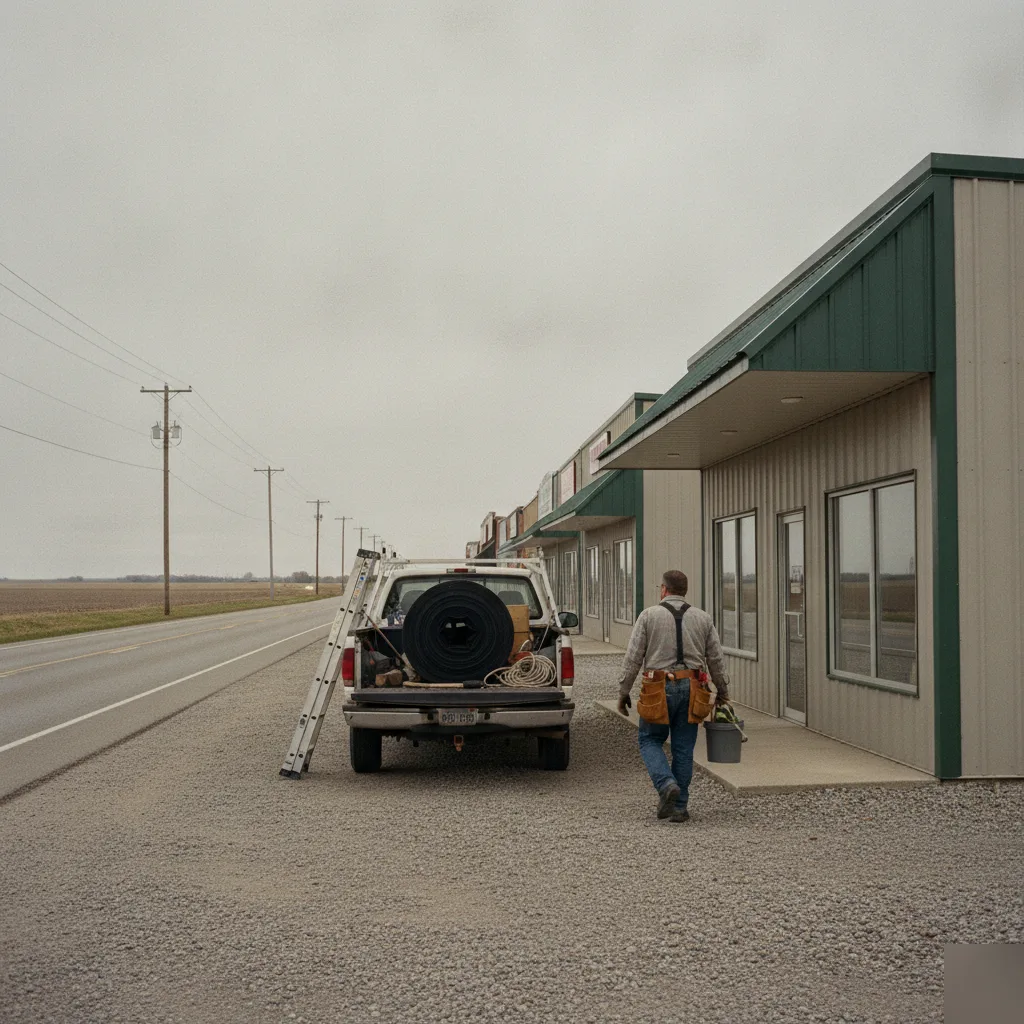
When a property owner in the Glenville Corridor calls about a commercial roof issue, we load up the truck and head south on US-65. We've done that trip enough times that we know exactly where the gravel shoulders get soft in spring, where the water pools near Deer Creek after a heavy rain. That kind of local insight matters when you're hauling equipment to a job site on a flat-roofed ag building or a metal-clad shop that took some nasty hail damage. It helps us plan and get to your site quickly.
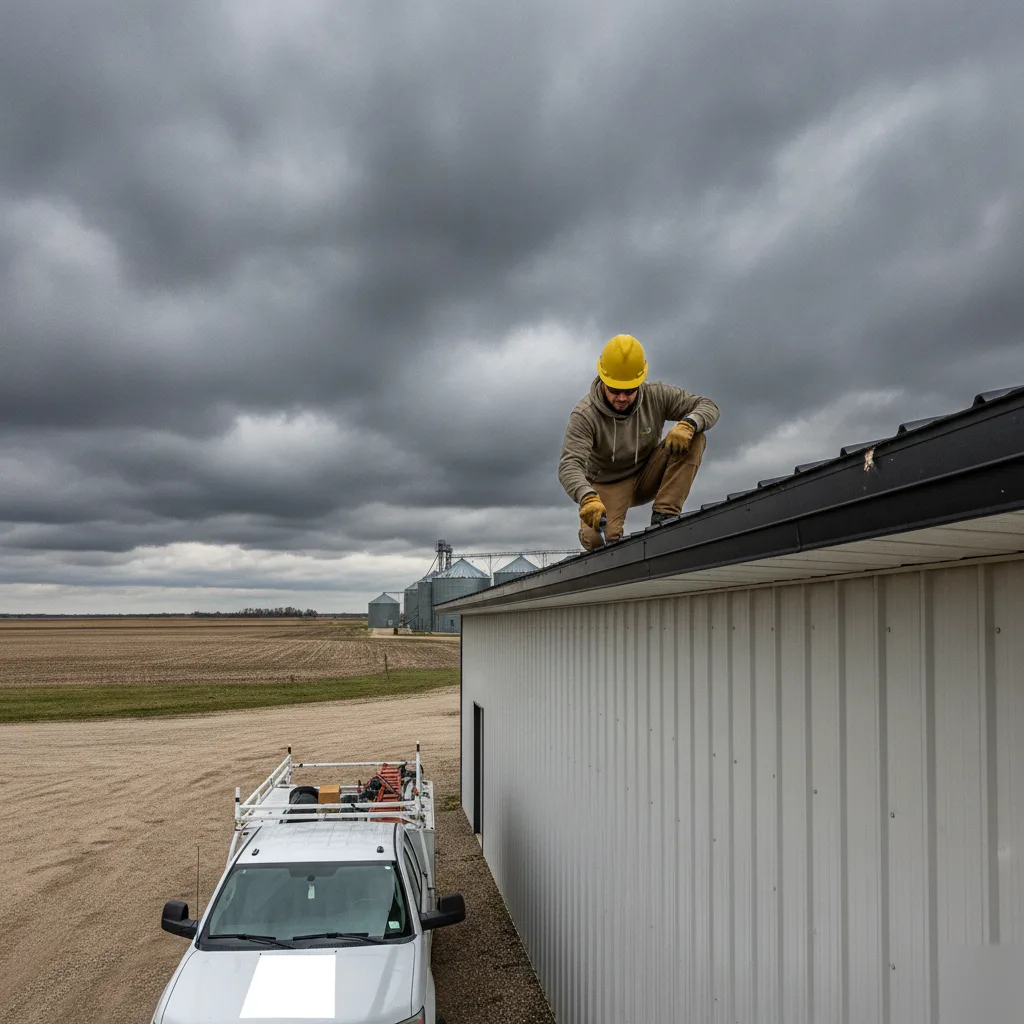
Most of our commercial roofing work along the Glenville Corridor involves buildings that sit low to the ground. They often have big footprints. Think grain storage facilities, machine shops, or small retail buildings with flat or low-slope roofs — the type of structures that really feel the brunt of the wind. That wind funnels right through Deer Creek Valley, a real problem. Ignoring that for a season or two causes real damage. Ponding water, membrane tears, fastener backout on standing seam panels, all of it shows up faster in that valley than on buildings with more wind protection back in Mason City.
If you own a property along the corridor and you want David to take a look at your roof, just call. We'll schedule a free roof inspection and drive down to you. There's no need for you to make the trip north unless you really want to stop by and talk through options in person. Either way works fine for us. And if you do drive up, there's plenty of parking right at our building on 12th Street NE. Easy in, easy out.
What Low-Slope Commercial Roofs Need in Flood-Prone Areas
Deer Creek doesn't just look pretty running through the Glenville Corridor. It floods, plain and simple. When it floods, the commercial buildings along that valley deal with specific problems. Most roofers in Mason City never even think about them because they don't work in flood plains like this.
Low-slope roofs are standard on the shops, ag buildings, and storage facilities scattered through this stretch south of Mason City. That's fine in normal weather, but the Glenville Corridor sits in a natural drainage path. The creek swells fast after heavy rain, especially during spring melt or those huge summer storms we get, and standing water becomes a real threat on any roof that doesn't drain perfectly. This isn't just a concern for the structures closest to the creek, either; the entire valley experiences elevated moisture.
Here's what we see on commercial roofs near Deer Creek Valley — stuff other contractors often miss:
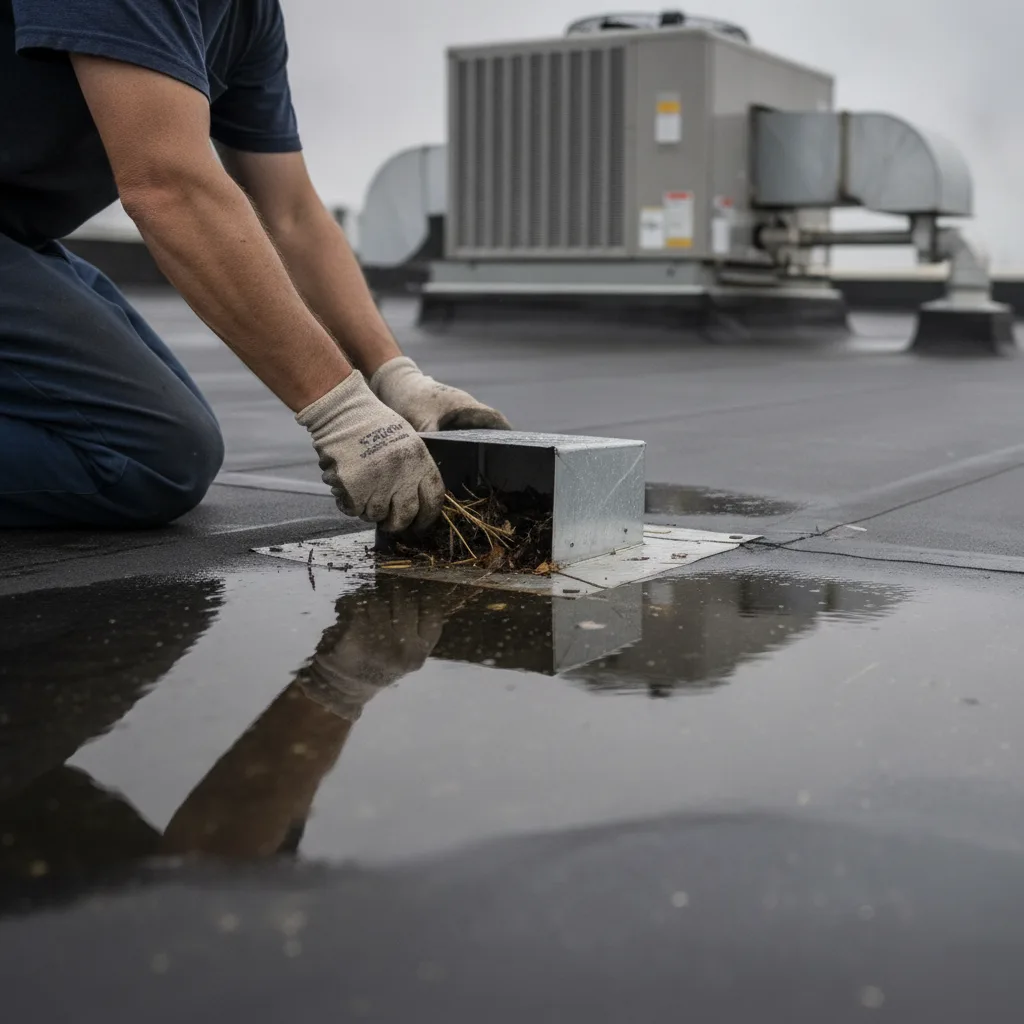
- Drain lines clogged with sediment and field debris that blows in from surrounding farmland
- Membrane seams lifting where ponding water just sat too long after the spring thaw
- Flashing failures around rooftop HVAC units, caused by freeze-thaw cycles unique to this particular low-lying corridor
- Interior leaks that owners blame on the roof, but actually start at parapet walls that take wind-driven rain right off the open fields to the west
Most contractors won't tell you this, but a flat roof in a flood-prone area needs a different approach. It's not the same as one sitting on high ground in town, like a building on North Federal Avenue. The humidity alone along Deer Creek changes how fast a TPO or EPDM membrane ages. We've pulled back membrane on buildings in the Glenville Corridor and found moisture trapped underneath that had been sitting there for years, just slowly rotting the deck. Nobody caught it because the roof looked fine from the outside, but underneath, it was a mess.
That trapped moisture rots the deck. Slowly. By the time you notice a soft spot, you're not looking at a small commercial roof repair anymore. You're looking at a full commercial roof replacement, and that's a big deal.
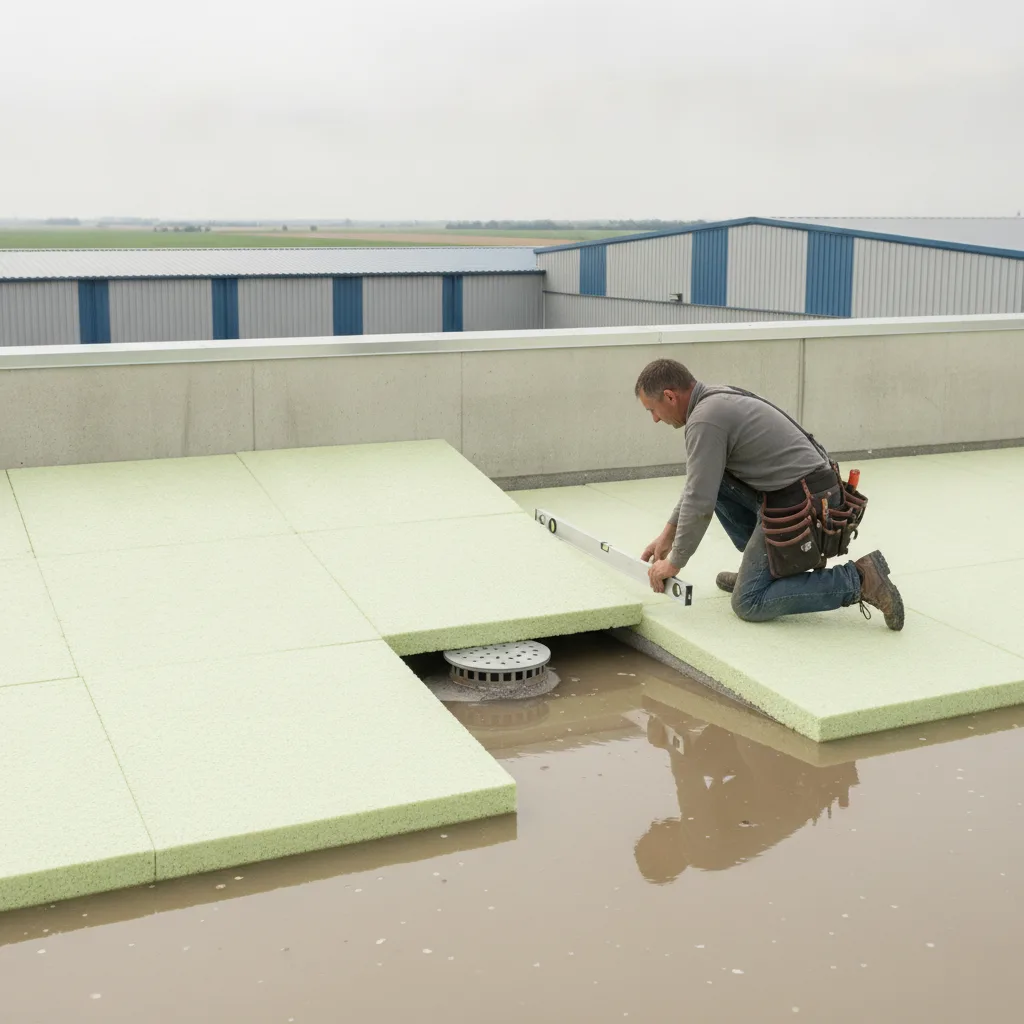
David's been on roofs in this corridor enough times to know the pattern inside out. A building owner calls about a small leak after a big rain. We get up there. And we find the real issue isn't a puncture or a failed seam, not usually. It's drainage. The roof was installed flat when it should've had tapered insulation, directing water toward the drains. Water just pools in the same spots every single time, and every pool is a future failure waiting to happen.
For buildings along the Glenville Corridor, we push hard for proper waterproofing membrane installation. This isn't just slapping a coating on and calling it good. We're talking about a real system, one that accounts for the constant moisture load this valley creates, along with the harsh local weather. Getting the air and vapor barrier basics right matters just as much as the membrane itself when moisture is pushing up through the deck from underneath, which is exactly what happens on buildings this close to the creek. PVC roofing installation handles it well in most cases. PVC welds hold up better than adhesive seams when water sits on them, which is a common problem here. It's a smart choice for the long haul.
And the flat roof waterproofing conversation is different here than it is for a building on Federal Avenue in Mason City. Up there, you're dealing with normal Midwest weather. Down in Deer Creek Valley, you're dealing with normal Midwest weather plus a flood plain that pushes humidity up through the building itself. It's a double whammy. Ignore that long enough, and it turns expensive fast. Very fast.
So if you own a commercial building in this corridor, get a free roof inspection. Do it before the next heavy rain season. Let us look at your drainage, your membrane condition, your flashing. That's the stuff that actually fails first in low-lying areas like this one.