
Does Commercial Insurance Cover Roof Leaks in Mason City, IA?
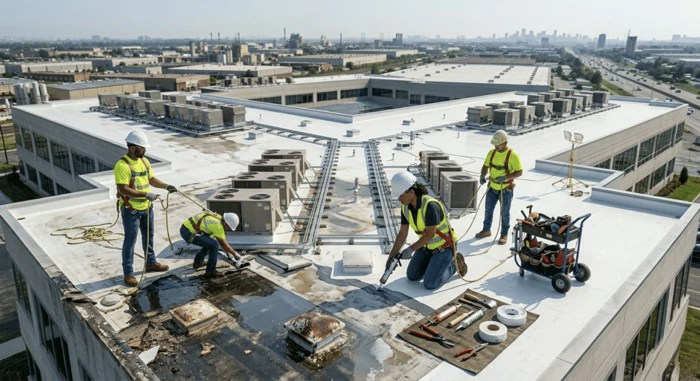
Iowa commercial property insurance typically covers roof leaks caused by sudden events — hail, wind, fallen trees, or storm damage. Damage from age, deferred maintenance, or normal wear is usually excluded. A licensed Roofing Contractor Mason City IA property owners trust can document storm-related damage properly to support your claim.
- Sudden storm events qualify most often — slow leaks from aging membranes typically do not
- Get a written inspection report with photos before filing — adjusters require documentation
- Iowa hail and wind events tied to specific dated storms strengthen claims significantly
What Commercial Roof Repair in Mason City Actually Covers
A real repair visit starts with finding the leak source — not just sealing the spot where water is dripping. We diagnose the original failure point, check the deck where it is accessible, and write a scope of work before any patching starts. You know exactly what is being fixed and why before the crew gets on the roof.
Mason City's older commercial buildings — especially downtown and along North Federal Avenue — often have layers of past repairs from previous owners. A patch on top of a patch hides the real problem and pushes the cost down the road. We trace the failure to its actual source.
- Full leak source diagnosis, not just the visible water entry point
- Deck inspection where access is available
- Written scope of work and photo documentation
- Permanent fix — not a stopgap patch on top of older repairs
- Clean-up and disposal of any removed material

How to Tell If Your Commercial Roof Needs Repair or Full Replacement
Isolated damage points to a repair. A failed seam, a cracked pipe boot, one section of damaged membrane — those are repair jobs. Widespread membrane failure, leaks coming through in multiple locations, and a roof that has needed work every season for three or more years point to replacement.
North Iowa freeze-thaw cycles split aging commercial membranes every spring. If your Mason City building leaks after every thaw, repair money may only buy you one more season. The numbers usually favor a planned replacement over endless small repairs at that point.
- Leaks appearing in multiple locations across the roof
- Membrane splits or shrinkage across large sections
- Repeat repairs in the same areas year after year
- Roof age of 20 or more years with no major restoration
- Rising energy bills tied to insulation moisture damage
- Visible deck sag from inside the building
The Most Common Commercial Roof Repairs Mason City Buildings Need
Failed seams are one of the most common issues we fix on Mason City flat roofs. Membrane seams take the most stress from temperature swings — they expand and contract every day. Eventually they open up and water gets in. Resealing or re-welding the seam usually solves the problem when caught early.
Ponding water at low-slope drains is the top repair call we get on Mason City flat roofs. Iowa winter snow loads slowly push deflection points lower over time, creating new low spots that did not exist when the roof was new. Standing water that sits longer than 48 hours after rain accelerates membrane wear and needs to be addressed before it causes a full system failure.
- Cracked or lifted flashing around HVAC, vents, and parapet walls
- Damaged or split pipe boots around plumbing penetrations
- Ponding water at drains and low spots
- Hail bruising on TPO, EPDM, or metal panel surfaces
- Open seams along membrane laps
- Ice dam damage along eaves and parapet edges
What to Expect During a Commercial Roof Repair Visit
We start with a roof walk to find the actual source of the leak. This often takes longer than the repair itself — a leak shows up where water finally drips inside, but the entry point on the roof can be 20 feet away. Without finding the real source, the patch never holds. After the walk, we sit down with you and explain what we found.
You get a written scope of work with photos before any repair starts. Iowa weather can push outdoor commercial work — wind, rain, and cold all affect how membrane repairs cure. We give you a realistic schedule window and call you the same day if conditions push the start.
- Roof walk and full leak source diagnosis
- Photo documentation of all damage
- Written scope of work and estimate
- Scheduled repair window with weather check
- Repair completed with manufacturer-spec materials
- Documentation provided for your insurance or maintenance file
How to File a Commercial Insurance Claim for Roof Damage in Iowa
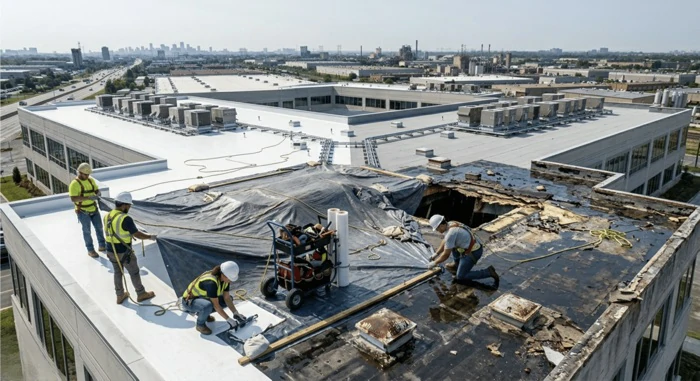
Document everything before you make any calls — photos of interior damage, photos of exterior damage, and the date the damage occurred. Call a licensed Iowa commercial roofer first to stop active damage and produce a written report. Then call your carrier with that report in hand.
Cerro Gordo County hail and wind events are logged by the National Weather Service. A licensed contractor can pull storm data tied to your specific damage date — exactly what Iowa commercial carriers need to approve a claim. Do not sign a full repair contract until the adjuster has visited and the claim is approved.
- Photograph all damage immediately — interior, exterior, and surrounding evidence
- Note the storm date and any local weather coverage
- Call a licensed Iowa contractor for emergency stabilization or repair
- Get a written contractor report with photos and storm date documentation
- File the claim with your commercial carrier
- Wait for the adjuster visit before signing repair contracts beyond emergency work
How a Repair Maintenance Plan Extends Your Commercial Roof Lifespan
A commercial roof that gets inspected twice a year consistently outlasts one that only gets attention after a leak. A simple maintenance plan — semiannual inspections, prompt small repairs, drainage cleaning, and seam checks — adds 5 to 10 years to most commercial roof systems and prevents the costly tear-off projects that come from years of deferred maintenance.
Two windows matter most in Mason City. The April inspection catches freeze-thaw damage from winter before it opens into a full leak. A post-storm check after any major hail event documents damage while it is fresh and supports any insurance claim you may need to file.
- Spring inspection in April after freeze-thaw season
- Fall inspection in October before winter
- Post-storm checks after any major hail or wind event
- Drain and scupper cleaning every spring and fall
- Seam and flashing checks at each visit
- Documentation of all findings for your maintenance file